
Twyla Tharp Biography Quotes 30 Report mistakes
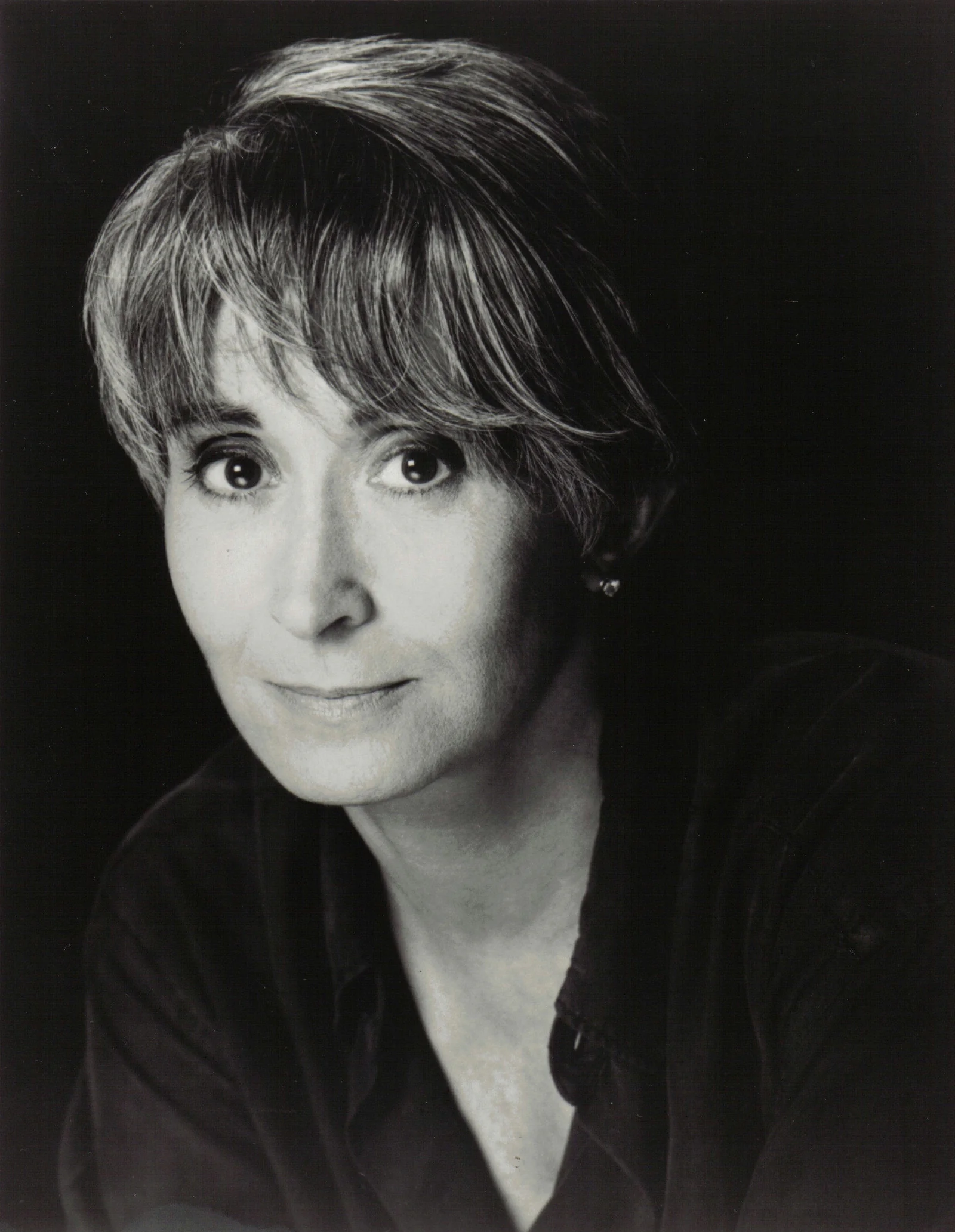
| 30 Quotes | |
| Occup. | Dancer |
| From | USA |
| Born | July 1, 1941 |
| Age | 84 years |
| Cite | |
Citation Formats
APA Style (7th ed.)
Twyla tharp biography, facts and quotes. (2026, February 2). FixQuotes. https://fixquotes.com/authors/twyla-tharp/
Chicago Style
"Twyla Tharp biography, facts and quotes." FixQuotes. February 2, 2026. https://fixquotes.com/authors/twyla-tharp/.
MLA Style (9th ed.)
"Twyla Tharp biography, facts and quotes." FixQuotes, 2 Feb. 2026, https://fixquotes.com/authors/twyla-tharp/. Accessed 12 Feb. 2026.
Early Life and Background
Twyla Tharp was born July 1, 1941, in Portland, Indiana, and grew up in the small town of New Carlisle, Indiana, in a Midwestern culture that prized practicality, churchgoing discipline, and visible achievement. That environment gave her an early awareness of the gap between private ambition and public expectation - a tension that later powered her art, which could look spare and plainspoken while hiding ferocious complexity.Her family life was both structured and emotionally catalytic. Her mother, a teacher and a formidable organizer of her childrens schedules, treated culture as a daily obligation rather than a special occasion; Tharp has described her mother as a dominant, shaping presence and a relentless advocate for breadth. The result was a childhood of constant training, where industriousness was not simply encouraged but engineered, and where talent had to prove itself through repetition, punctuality, and self-command.
Education and Formative Influences
Tharp left Indiana for New York City and earned a degree at Barnard College (Columbia University) in the early 1960s, while also studying dance in the citys studios at a time when modern dance, ballet, jazz, and the avant-garde were colliding in shared neighborhoods. She absorbed the rigor of modern technique and the compositional intelligence of ballet, registering the authority of older masters even when she resisted labels; she also encountered the downtown scene that would become her laboratory, and the cross-disciplinary energy of New York - visual art, experimental music, and new theater - that made it plausible to treat dance as both craft and concept.Career, Major Works, and Turning Points
In 1965 Tharp founded Twyla Tharp Dance, emerging alongside Judson-era experimentation but distinguishing herself through a rare blend of pedestrian movement, musical sophistication, and unromantic work ethic; early pieces like The Fugue (1970) and Deuce Coupe (1973, with the Beach Boys, for Joffrey Ballet) helped open ballet to popular music and contemporary movement without parody. Her breakout Into the Upper Room (1986) married athletic abstraction to a gospel-like sense of uplift, while In the Middle, Somewhat Elevated (1986) signaled her command of large-scale ballet structures. Tharp also became a defining Broadway choreographer - most famously with Movin Out (2002), set to Billy Joel - and a trusted architect for film and pop performance, including her choreography for Milos Formans Hair (1979). Across decades she moved fluidly between concert dance, ballet companies, and commercial stages, turning that permeability into a signature rather than a compromise.Philosophy, Style, and Themes
Tharps inner life reads as a negotiation between control and risk: she is a choreographer of systems who keeps courting the unruly. Her dances often look like arguments staged in motion - between ballet line and streetweight, between cool structure and exuberant velocity - and her rehearsal culture is famous for its insistence on daily labor as a moral practice. That insistence is not puritanical so much as protective; routine is her way of ensuring that inspiration arrives to a prepared mind and body. Underneath the brisk professionalism is a deep suspicion of stagnation, and a psychological preference for forward motion as survival.Her themes are equally pragmatic and metaphysical: how discipline produces freedom, how communities cohere under rhythmic pressure, how the body thinks faster than language. She frames art as a form of interior transport: "Art is the only way to run away without leaving home". The line captures her recurring strategy - to convert ordinary gesture into a portal, and to make the stage a place where personal restlessness can be transmuted into form. She also treats the audience as a partner in the transaction, not an adversary to be tricked: "It is extremely arrogant and very foolish to think that you can ever outwit your audience". That respect explains her clarity of structure and her refusal to hide behind jargon, even when her movement is dense. And the engine beneath it all is her addiction to change: "The only thing I fear more than change is no change. The business of being static makes me nuts". In Tharps work, change is not novelty for its own sake - it is a disciplined metabolism, the constant remodeling of technique, music, and scale so the dance can stay alive.
Legacy and Influence
Tharp endures as one of the most consequential American choreographers of the late 20th and early 21st centuries because she made hybridity believable: she proved that rigor and accessibility can coexist, that ballet and vernacular movement can share a spine, and that a choreographer can speak fluently to downtown experimentation, major ballet institutions, Hollywood, and Broadway without abandoning seriousness. Her books, especially The Creative Habit (2003), amplified her impact by translating dance-world discipline into a general theory of creativity, while her repertory continues to challenge dancers to be both technicians and fully sentient performers - fast, musical, articulate, and unafraid of work.Our collection contains 30 quotes written by Twyla, under the main topics: Funny - Art - Learning - Work Ethic - Student.
Other people related to Twyla: Mikhail Baryshnikov (Dancer)
Source / external links