
Ulrich Beck Biography Quotes 28 Report mistakes
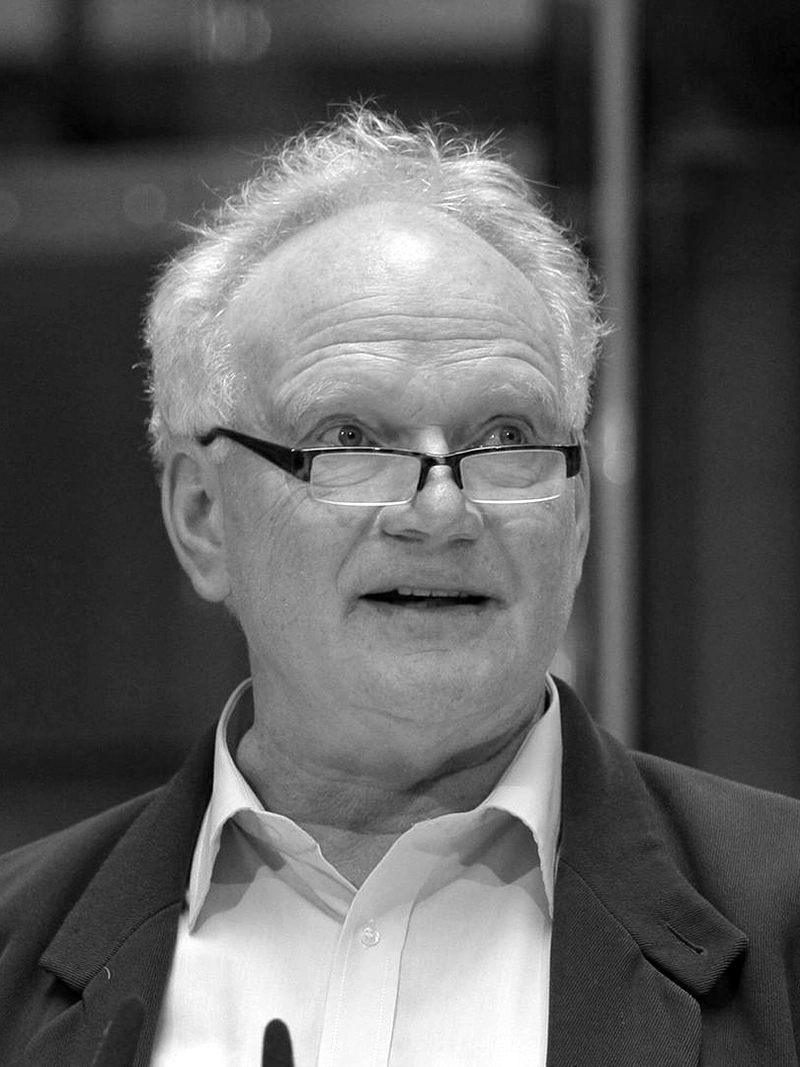
Attr: deutschlandfunk.de
| 28 Quotes | |
| Occup. | Sociologist |
| From | Germany |
| Born | May 15, 1944 Stolp (now Slupsk, Poland) |
| Died | January 1, 2015 Munich, Germany |
| Aged | 70 years |
| Cite | |
Citation Formats
APA Style (7th ed.)
Ulrich beck biography, facts and quotes. (2026, February 11). FixQuotes. https://fixquotes.com/authors/ulrich-beck/
Chicago Style
"Ulrich Beck biography, facts and quotes." FixQuotes. February 11, 2026. https://fixquotes.com/authors/ulrich-beck/.
MLA Style (9th ed.)
"Ulrich Beck biography, facts and quotes." FixQuotes, 11 Feb. 2026, https://fixquotes.com/authors/ulrich-beck/. Accessed 6 Mar. 2026.
Early Life and Background
Ulrich Beck was born on May 15, 1944, in Stolp in Pomerania (then Germany; today Slupsk, Poland), in the last, collapsing year of the Third Reich. His earliest horizon was shaped less by personal memory than by the aftershocks of war: displacement, the redrawing of borders, and a West Germany that rebuilt itself materially while living with moral and political fracture. That generational position - too young to be implicated, old enough to inherit consequences - later fed his insistence that modernity manufactures not only wealth but also collective side effects.Raised in the Federal Republic during the Wirtschaftswunder and the Cold War, Beck came of age amid accelerating modernization: expanding higher education, new mass media, and a state that promised security while quietly relying on nuclear deterrence and high-risk industrial growth. The contrast between postwar optimism and the latent threats embedded in technology, bureaucracy, and global interdependence became a defining tension for his inner life: a disciplined, analytical temperament trying to name the unease that prosperity could not dispel.
Education and Formative Influences
Beck studied sociology, philosophy, psychology, and political science at the University of Munich, completing his doctorate in sociology in 1972 and his habilitation later in the decade. He absorbed the legacies of Max Weber and critical theory while distancing himself from grand, closed systems; the student movements of 1968 and debates over technocracy, nuclear power, and democratic legitimacy gave his work a live target. Early research on work and professions trained him to track how institutions translate abstract change into everyday insecurity, a skill he would later apply to hazards that cross borders and escape classical oversight.Career, Major Works, and Turning Points
Beck became professor of sociology at the University of Munster before returning to Munich, where he held a chair at LMU Munich and helped shape European sociology through research institutes, editorial work, and international appointments (including the London School of Economics). His global reputation crystallized with "Risikogesellschaft" (1986; "Risk Society"), which argued that advanced modernity increasingly organizes itself around preventing, distributing, and denying the harms it produces. The Chernobyl disaster in 1986 gave the thesis historical force: an invisible, transnational danger that did not respect class boundaries or national jurisdictions, yet was managed through expert claims and political reassurance. He extended these ideas through "World Risk Society" (1999), "What Is Globalization?" (1997), and later writings on cosmopolitanism, the European project, and "individualization" with Elisabeth Beck-Gernsheim, diagnosing how biographies become do-it-yourself projects under flexible labor markets and weakened traditional supports. Beck died suddenly on January 1, 2015, leaving a body of work that read the early 21st century - financial volatility, climate risk, terrorism, migration politics - as the normal condition of reflexive modernity rather than an exception.Philosophy, Style, and Themes
Beck's signature move was to treat risk as a social fact with political consequences, not merely a technical probability. He argued that modern hazards are often produced by modernization itself, and that the struggle over defining them becomes a struggle over power. His voice combined sociological diagnosis with a public-intellectual urgency, aiming to retool democracy for a world where expertise is necessary but never sovereign. The calm precision of his categories - risk, reflexive modernization, subpolitics, cosmopolitanization - masked a deeper moral drive: to keep societies from confusing managerial control with genuine security.His psychology as a thinker is visible in the insistence that control has become the wrong fantasy for the age. “Neither science, nor the politics in power, nor the mass media, nor business, nor the law nor even the military are in a position to define or control risks rationally”. This was not anti-science, but anti-monopoly: he distrusted any institution that claimed final jurisdiction over dangers that were systemic, delayed, and often irreversible. In the same spirit he warned, “We are living in a world that is beyond controllability”. The phrase captures his recurring emotional register - not despair, but a bracing realism that forced new ethics: precaution, transparency, and cross-border responsibility. His cosmopolitan turn pushed this further, arguing that national frames misrecognize global entanglement: “Accordingly, globalization is not only something that will concern and threaten us in the future, but something that is taking place in the present and to which we must first open our eyes”. The throughline is reflexivity: modernity must reflect on its own consequences, or be governed by them.
Legacy and Influence
Beck reshaped sociology's vocabulary for late modernity: "risk society" became a standard lens in environmental sociology, science and technology studies, political theory, and policy debates about nuclear power, climate change, pandemics, and financial contagion. His work helped legitimate the study of uncertainty as a structuring principle of institutions and everyday life, and it offered European integration a normative justification beyond economics - shared sovereignty as risk governance. Critics challenged the universality of his claims and pressed him on inequality and uneven vulnerability, yet even these debates testify to his impact: he made it difficult to talk about modernization without also asking who defines danger, who bears it, and what democracy means when consequences travel faster than borders.Our collection contains 28 quotes written by Ulrich, under the main topics: Justice - Nature - Freedom - Deep - Reason & Logic.