
Ulrike Meinhof Biography Quotes 1 Report mistakes
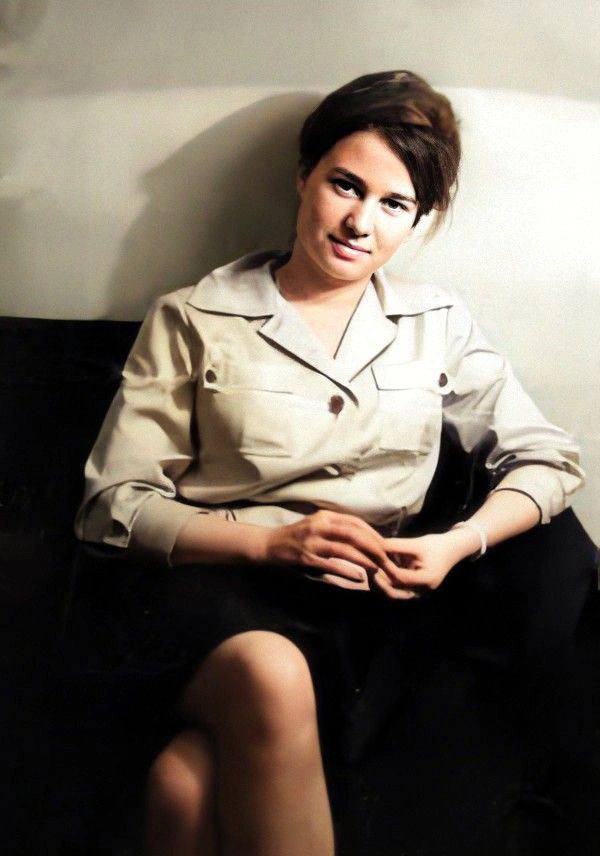
| 1 Quotes | |
| Born as | Ulrike Marie Meinhof |
| Occup. | Journalist |
| From | Germany |
| Spouse | Rainer Rössner |
| Born | October 7, 1934 Oldenburg, Germany |
| Died | May 9, 1976 Stammheim Prison, Stuttgart, Germany |
| Cause | Suicide |
| Aged | 41 years |
| Cite | |
Citation Formats
APA Style (7th ed.)
Ulrike meinhof biography, facts and quotes. (2026, February 19). FixQuotes. https://fixquotes.com/authors/ulrike-meinhof/
Chicago Style
"Ulrike Meinhof biography, facts and quotes." FixQuotes. February 19, 2026. https://fixquotes.com/authors/ulrike-meinhof/.
MLA Style (9th ed.)
"Ulrike Meinhof biography, facts and quotes." FixQuotes, 19 Feb. 2026, https://fixquotes.com/authors/ulrike-meinhof/. Accessed 5 Mar. 2026.
Early Life and Background
Ulrike Marie Meinhof was born on October 7, 1934, in Jena, Germany, into a country sliding from Weimar fragility into Nazi dictatorship and then total war. Her early childhood unfolded amid air raids, shortages, and the moral disorientation of a society mobilized for catastrophe. The political vocabulary that later surrounded her name - culpability, state violence, resistance - had an intimate origin in a generation raised in ruins, asked to rebuild while also learning, often belatedly, what had been done in its name.She lost her father, art historian Werner Meinhof, during her youth and later her mother, Ingeborg Meinhof, leaving her effectively orphaned as a teenager. She was taken in by the theologian and historian of religion Renate Riemeck, whose home in West Germany offered both protection and an education in moral seriousness. That guardianship mattered: it gave Meinhof a model of principled dissent and a sense that intellectual life carried obligations. It also sharpened a trait that would follow her - a tendency to experience politics not as opinion but as personal reckoning.
Education and Formative Influences
In the 1950s she studied pedagogy, sociology, and philosophy at the University of Marburg and later at the University of Munster, moving through the Federal Republic at a time when economic recovery masked unresolved continuities with the Nazi past. The early Cold War, rearmament debates, and the slow normalization of former Nazis in public institutions fed a student milieu that prized moral critique. Meinhof entered the orbit of the Socialist German Student Union (SDS) and the extra-parliamentary opposition, absorbing anti-authoritarian ideas, anti-nuclear activism, and a widening identification with anti-colonial struggles abroad.Career, Major Works, and Turning Points
Meinhof became a prominent left-wing journalist, best known for her work in Hamburg for the magazine konkret, where she wrote incisive columns that combined reportage with moral indictment. She covered West German rearmament, emergency laws, and the ways consumer prosperity coexisted with authoritarian reflexes; she also addressed the Vietnam War and global liberation movements, arguing that the Federal Republic was aligned with imperial violence even when it spoke the language of democracy. The late 1960s radicalization of the West German left - catalyzed by the 1967 killing of student Benno Ohnesorg, the 1968 assassination attempt on Rudi Dutschke, and police crackdowns - pressed her from commentary toward militancy. Her decisive rupture came in 1970 when she participated in the armed liberation of Andreas Baader, stepping from the role of critic into illegality and helping form what became the Red Army Faction (RAF), a shift that transformed her public identity from journalist to wanted insurgent.Philosophy, Style, and Themes
Meinhof wrote with a sharp, prosecutorial clarity, treating language as a tool to expose euphemism - "security", "order", "reason of state" - as cover for coercion. Psychologically, her prose reveals a mind intolerant of passive complicity, haunted by the suspicion that comfortable distance is itself a form of consent. The distinction she later articulated between private refusal and active opposition captures the inner motor of her radicalization: “Objection is when I say: this doesn't suit me. Resistance is when I make sure that what doesn't suit me never happens again”. The sentence reads like self-instruction - a demand that thought pay its debts in action - and it also shows the danger in her moral absolutism, where the urgency to prevent harm can license escalating means.Her central themes were continuity and rupture: the continuity of authoritarian habits from the Third Reich into the Federal Republic, and the hoped-for rupture of revolutionary intervention. She depicted the state less as a neutral arbiter than as an apparatus that could turn violent when challenged, and she saw mainstream media as a partner in that management of perception. Yet her own trajectory exposed a tragic tension between emancipatory aims and coercive practice. The journalist in her sought to name structures; the militant accepted the logic of clandestinity, which narrows empathy and turns politics into a battle of wills. Her writing, even when polemical, keeps returning to the question of responsibility - who is responsible for suffering, and what forms of response are still human.
Legacy and Influence
Meinhof died on May 9, 1976, in Stammheim Prison in Stuttgart, officially by suicide, though controversy and mistrust of authorities ensured lasting dispute. She remains one of postwar Germany's most contested figures: a talented journalist whose moral intelligence helped articulate the extra-parliamentary left, and a founding member of a group whose bombings and killings scarred the Federal Republic and hardened state security. Her life continues to shape debates about the boundary between dissent and violence, the psychology of radicalization, and the unresolved afterlife of fascism and Cold War power in West German institutions. For writers and historians, she endures as a warning and a provocation - evidence that words can illuminate a society's blind spots, and that the demand to make history can also destroy the self who makes it.Our collection contains 1 quotes written by Ulrike, under the main topics: Freedom.
Ulrike Meinhof Famous Works
- 1971 The Urban Guerilla Concept (Essay)
- 1970 Bambule (Screenplay)
Source / external links