
Ulysses S. Grant Biography Quotes 22 Report mistakes
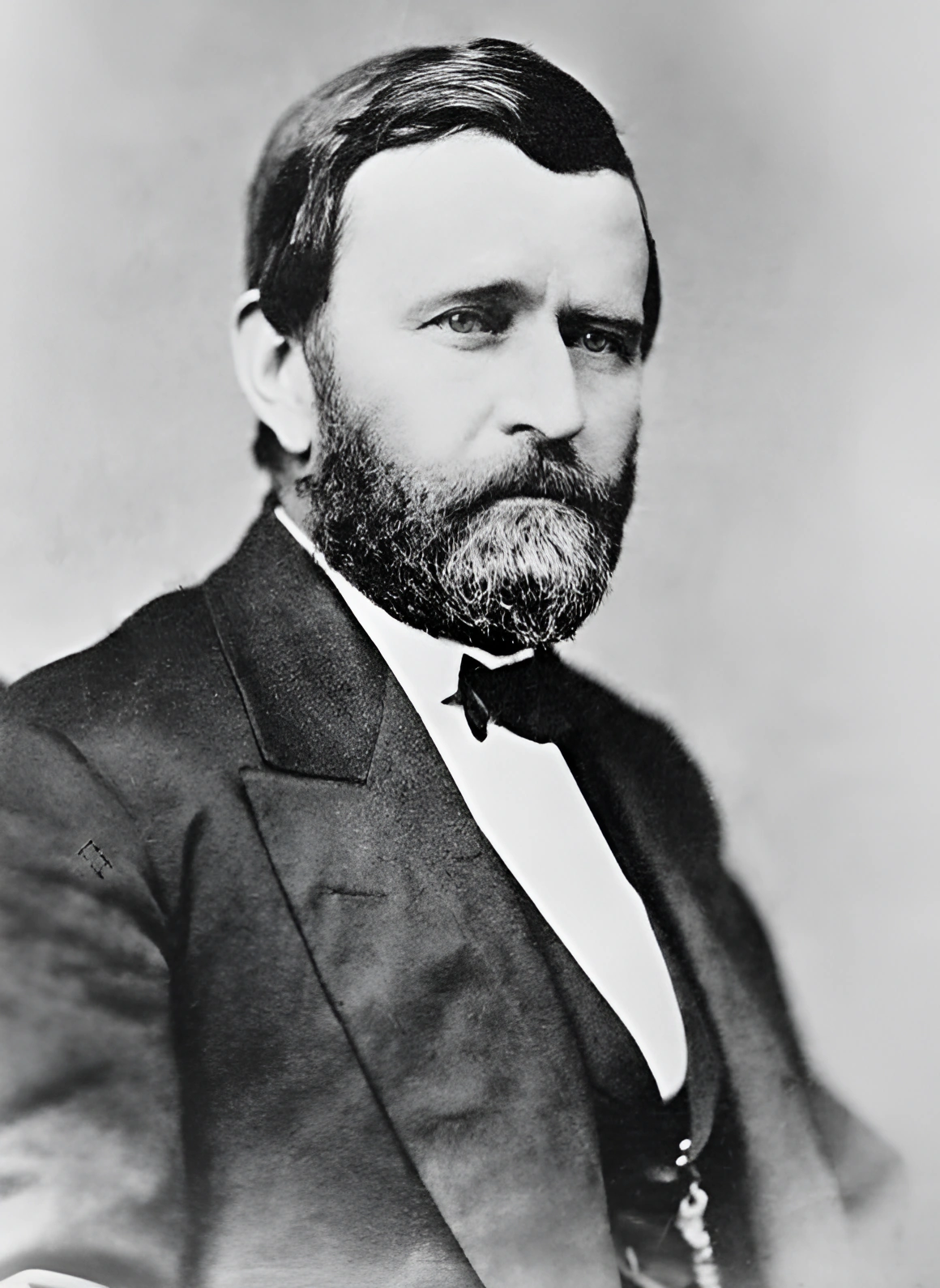
| 22 Quotes | |
| Born as | Hiram Ulysses Grant |
| Occup. | President |
| From | USA |
| Spouse | Julia Dent Grant |
| Born | April 27, 1822 Point Pleasant, Ohio, US |
| Died | July 23, 1885 Wilton, New York, US |
| Cause | Throat Cancer |
| Aged | 63 years |
| Cite | |
Citation Formats
APA Style (7th ed.)
Ulysses s. grant biography, facts and quotes. (2026, February 11). FixQuotes. https://fixquotes.com/authors/ulysses-s-grant/
Chicago Style
"Ulysses S. Grant biography, facts and quotes." FixQuotes. February 11, 2026. https://fixquotes.com/authors/ulysses-s-grant/.
MLA Style (9th ed.)
"Ulysses S. Grant biography, facts and quotes." FixQuotes, 11 Feb. 2026, https://fixquotes.com/authors/ulysses-s-grant/. Accessed 25 Mar. 2026.
Early Life and Background
Ulysses S. Grant was born Hiram Ulysses Grant on April 27, 1822, in Point Pleasant, Ohio, and grew up in nearby Georgetown in a family shaped by the small-town borderland economy of the Old Northwest. His father, Jesse Root Grant, was a tanner and merchant with strong antislavery politics; the tannery gave the boy an early sense of work as necessity rather than romance, and of the social friction between labor and respectability that would mark his mature outlook.Quiet, inward, and notably uncomfortable with self-promotion, Grant preferred horses, solitary tasks, and competence without display. His early life unfolded amid the market revolution, partisan argument, and the slow hardening of sectional conflict, yet he seemed less a born ideologue than a person who instinctively valued steadiness, loyalty, and plain dealing - traits that later made him both resilient under pressure and vulnerable to trusting the wrong people.
Education and Formative Influences
In 1839 Jesse Grant secured his son an appointment to the US Military Academy at West Point; a clerical error recorded him as "Ulysses S. Grant", a name he kept. At West Point he was an undistinguished student but an exceptional horseman, absorbing the Army's engineering-minded pragmatism and the professional habits of a small officer corps. Commissioned in 1843, he served in the Mexican-American War under Zachary Taylor and Winfield Scott, learning logistics, initiative, and the brutal arithmetic of movement and supply - lessons that later fed his preference for directness over theatrical maneuver.Career, Major Works, and Turning Points
After Mexico, isolation on frontier posts and separation from his wife Julia Dent Grant strained him; he resigned from the Army in 1854 amid financial difficulty and rumors of drinking, then failed at farming near St. Louis and at business in Galena, Illinois. The Civil War restored his vocation: from 1861 he rose rapidly through Fort Donelson (1862), Shiloh (1862), the Vicksburg Campaign (1863), and Chattanooga (1863) to general-in-chief in 1864, coordinating relentless pressure that culminated in Appomattox (1865). As 18th president (1869-1877) he backed Reconstruction, fought the Ku Klux Klan with federal enforcement, supported the 15th Amendment, and pursued civil service and fiscal steadiness, even as his administration was damaged by scandals often rooted in associates rather than his own enrichment. After a world tour, the collapse of Grant and Ward and his diagnosis of throat cancer pushed him into his final great work, the Personal Memoirs of Ulysses S. Grant (1885), written with ferocious discipline to secure his family's future and to fix his own narrative before death on July 23, 1885, at Mount McGregor, New York.Philosophy, Style, and Themes
Grant's inner life was marked by a stoic need to act rather than explain. In war he distrusted ornament, preferring pressure, contact, and continuity: “The art of war is simple enough. Find out where your enemy is. Get at him as soon as you can. Strike him as hard as you can, and keep moving on”. The sentence is not bravado so much as self-discipline - a way of mastering anxiety by reducing chaos to executable steps. His calm in crises often came from accepting suffering as the cost of ending the larger suffering, which helps explain both his willingness to absorb casualties in 1864 and his generous terms at Appomattox.His moral psychology centered on intention, accountability, and the belief that institutions must be made real through enforcement. “My failures have been errors in judgment, not of intent”. This is the confession of a man who knew his blind spot was not greed but trust - a tendency to assume others shared his plain standards, which made him susceptible to corrupt intermediaries during Reconstruction-era patronage politics. Yet he also believed law, once enacted, should be carried out to expose its harms and force reform: “I know no method to secure the repeal of bad or obnoxious laws so effective as their stringent execution”. In his memoirs and orders alike, his style is spare, concrete, and oddly intimate in its refusal to dramatize: he writes as a working professional intent on outcomes, and as a private man who guarded his feelings by turning them into duty.
Legacy and Influence
Grant's reputation traveled a long arc - lionized at his death, later diminished by Lost Cause narratives and by the real scandals of the 1870s, then substantially rehabilitated as historians re-centered emancipation and federal protection of civil rights as the era's core struggle. Militarily, his insistence on coordinated theaters, logistics, and sustained offensives helped define modern American generalship; politically, his determination to crush Klan terror and defend Black citizenship made him a pivotal, if imperfect, architect of Reconstruction. The Memoirs remain a classic of American prose and self-examination: a terminal work of honesty and control, in which the shy Ohioan finally turned his reticence into authority, securing both his family's livelihood and his enduring voice in the national story.Our collection contains 22 quotes written by Ulysses, under the main topics: Witty One-Liners - Wisdom - Justice - Never Give Up - Friendship.
Other people related to Ulysses: Frederick Douglass (Author), Horace Greeley (Editor), Roscoe Conkling (Politician), James Longstreet (Soldier), Belva Lockwood (Lawyer), John Hay (Writer), Horace Porter (Soldier), Bruce Catton (Historian), Lyman Trumbull (Politician), John B. Hood (Soldier)
Frequently Asked Questions
- Ulysses S Grant accomplishments: Led Union Army to victory in the Civil War and served two terms as U.S. President.
- Ulysses S Grant nickname: Unconditional Surrender Grant.
- Ulysses S Grant Fun Facts: He was once fined for speeding with his horse-drawn carriage.
- When was Ulysses S Grant born: April 27, 1822.
- Ulysses S Grant family: Married to Julia Dent with four children: Frederick, Ulysses Jr., Ellen, and Jesse.
- Ulysses S Grant education: United States Military Academy at West Point.
- Ulysses S Grant cause of death: Throat cancer.
- What did Ulysses S Grant do as president: He worked on Reconstruction, fought against the Ku Klux Klan, and supported the 15th Amendment.
- How old was Ulysses S. Grant? He became 63 years old
Ulysses S. Grant Famous Works
- 1885 The Complete Personal Memoirs of Ulysses S. Grant (Book)
- 1885 Personal Memoirs of Ulysses S. Grant (Book)