
Ursula von der Leyen Biography Quotes 9 Report mistakes
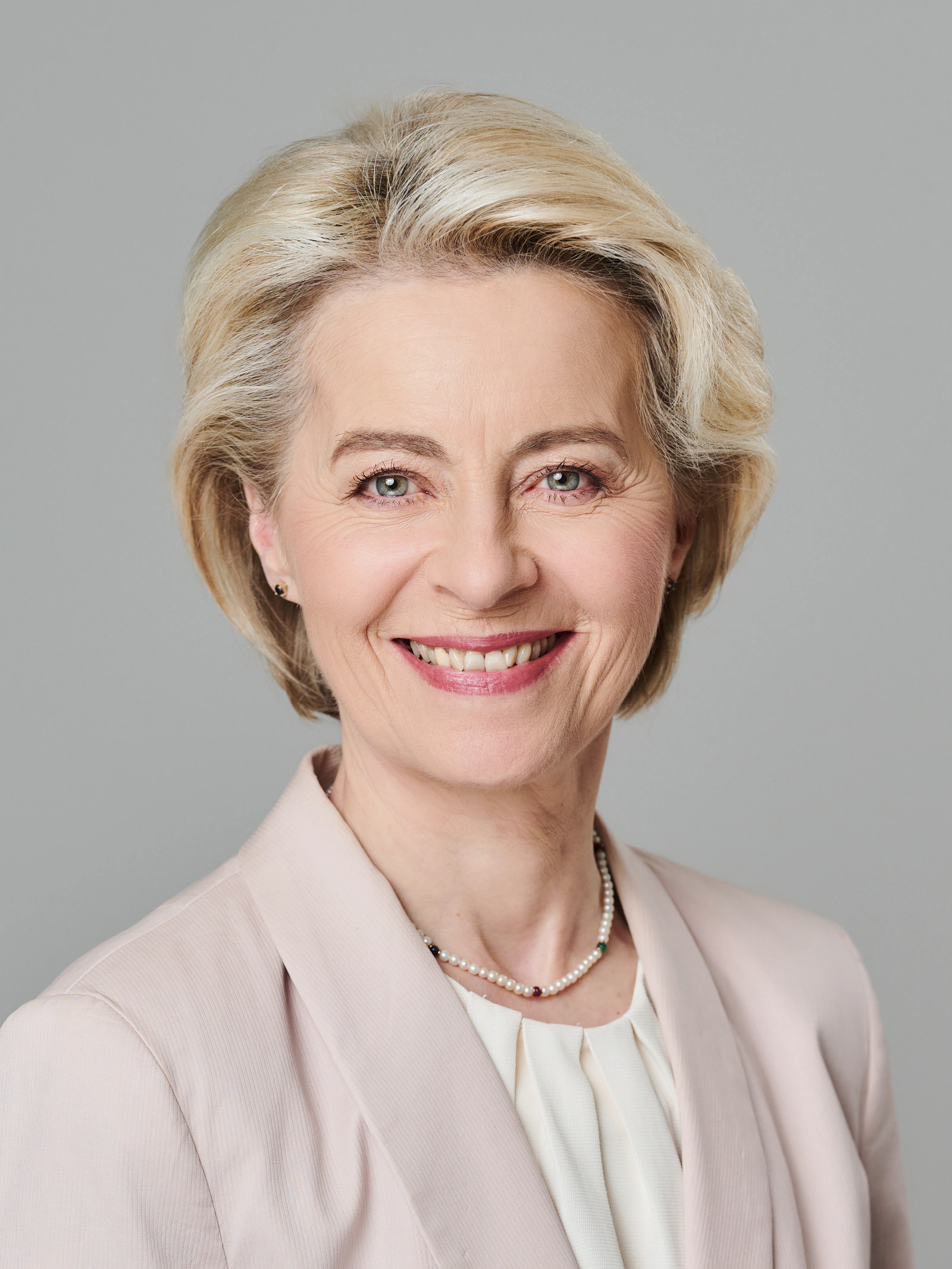
Attr: European People's Party
| 9 Quotes | |
| Born as | Ursula Gertrud Albrecht |
| Occup. | Politician |
| From | Germany |
| Spouse | Heiko von der Leyen (1986) |
| Born | October 8, 1958 Ixelles, Brussels, Belgium |
| Age | 67 years |
| Cite | |
Citation Formats
APA Style (7th ed.)
Ursula von der leyen biography, facts and quotes. (2026, February 11). FixQuotes. https://fixquotes.com/authors/ursula-von-der-leyen/
Chicago Style
"Ursula von der Leyen biography, facts and quotes." FixQuotes. February 11, 2026. https://fixquotes.com/authors/ursula-von-der-leyen/.
MLA Style (9th ed.)
"Ursula von der Leyen biography, facts and quotes." FixQuotes, 11 Feb. 2026, https://fixquotes.com/authors/ursula-von-der-leyen/. Accessed 28 Mar. 2026.
Early Life and Background
Ursula Gertrud Albrecht was born on October 8, 1958, in Ixelles (Brussels), Belgium, into a German family already living at the fault line between national politics and the European project. Her father, Ernst Albrecht, was a senior European Commission official before becoming Minister-President of Lower Saxony, and the household moved between Brussels and Germany with the cadence of elections, appointments, and public scrutiny. That early proximity to institutions gave her an unusually intimate view of how ideals become regulations, and how compromise can be either cowardice or craft.In the 1970s, amid left-wing militancy in West Germany, the Albrecht family lived with heightened security; the young Ursula experienced what politics can cost in privacy and ease. The environment was patrician but not soft: she learned to read signals, manage risk, and keep emotion under control in public. Marriage in 1986 to Heiko von der Leyen, a physician and later academic administrator, and the raising of seven children added a domestic sphere defined by logistics and resilience - a private training ground for the stamina and triage that later marked her political style.
Education and Formative Influences
Von der Leyen studied economics at the University of Goettingen and the University of Muenster, then spent time at the London School of Economics in 1978-1979 (using the name "Rose Ladson" amid security concerns). She ultimately switched to medicine at Hanover Medical School, earning her medical degree in 1987, and later working in gynecology. The combination - economics, public administration by osmosis, and clinical medicine - formed a pragmatist: comfortable with data and budgets, but also with the ethical burden of decisions that touch bodies, families, and long time horizons.Career, Major Works, and Turning Points
Entering the Christian Democratic Union (CDU) and rising through Lower Saxony politics, she entered Angela Merkel's federal cabinet in 2005 as Minister for Family Affairs, Seniors, Women and Youth, where she pushed expanded childcare and parental benefits that modernized the CDU's social profile. As Minister of Labour and Social Affairs (2009-2013), she dealt with labor-market management after the financial crisis, then became Germany's first female Minister of Defence (2013-2019), a tenure marked by Bundeswehr procurement and readiness controversies but also by a sharper German engagement in NATO and missions abroad. In 2019 she became President of the European Commission, the first woman in the role, steering the EU through Brexit's aftermath, the COVID-19 pandemic and joint vaccine procurement, Russia's full-scale invasion of Ukraine and the sanctions-and-support regime, and the accelerating contest over energy, technology, and industrial policy. A second-term mandate in 2024 signaled that, for all criticism, she had become the EU's default crisis executive.Philosophy, Style, and Themes
Her governing instinct is to treat the European Union less as a debating society than as a machine that must be forced to run at speed. That preference for operational politics - targets, deadlines, instruments, enforcement - emerged in the pandemic, in emergency energy measures, and in the translation of climate ambition into a legislative pipeline. “The European Green Deal is our new growth strategy”. The sentence is revealing: it reframes sacrifice as competitiveness, and morality as modernization, a persuasive move aimed at keeping a coalition together across north-south fiscal anxieties and east-west industrial fears.Psychologically, her rhetoric is shaped by a formative sense that stability is contingent. She speaks like someone who has watched security arrangements shift quickly and remembers that public order can feel permanent until it breaks. “Democracy has the power to quickly spread. But its erosion can happen just as fast”. In that warning is her core political emotion - vigilance - which translates into a readiness to use EU tools (rule-of-law conditionality, sanctions, regulatory power) not only as policy levers but as guardrails for a shared civic space. Her style is managerial yet moralized: she tends to present choices as tests of seriousness, demanding that institutions prove they can protect citizens, not merely represent them.
Legacy and Influence
Von der Leyen's legacy is still being written, but its contours are clear: she helped recast the Commission as a geopolitical and crisis-capable executive, willing to borrow, buy, regulate, and coordinate at scale, and to articulate European sovereignty in energy, defense industrial capacity, and technology governance. Admired for stamina and coalition discipline, criticized for centralization and messaging-heavy politics, she nevertheless shifted expectations of what "Brussels" can do in emergencies and in long-term transitions. If her era is remembered for polycrisis - pandemic, war, inflation, climate stress, and tech rivalry - her influence lies in making integration feel less like an abstract destiny and more like a set of tools that must deliver, quickly, under pressure.Our collection contains 9 quotes written by Ursula, under the main topics: Motivational - Leadership - Freedom - Change - Peace.
Frequently Asked Questions
- Ursula von der Leyen education: Economics (Göttingen, LSE); medicine at Hannover Medical School; medical doctorate (1990) and MPH (2001).
- Ursula von der Leyen family: Married to Heiko von der Leyen; seven children; daughter of politician Ernst Albrecht.
- Ursula von der Leyen religion: Protestant (Lutheran).
- What is Ursula von der Leyen net worth? Not publicly disclosed; estimates vary.
- Ursula von der Leyen husband: Heiko von der Leyen, a German physician.
- Heiko von der Leyen: German physician and medical executive; Ursula von der Leyen’s husband.
- Ursula von der Leyen young: Born in 1958 in Brussels; grew up in Brussels and Lower Saxony.
- Ursula von der Leyen children: Seven children.
- How old is Ursula von der Leyen? She is 67 years old
Source / external links