
Usain Bolt Biography Quotes 9 Report mistakes
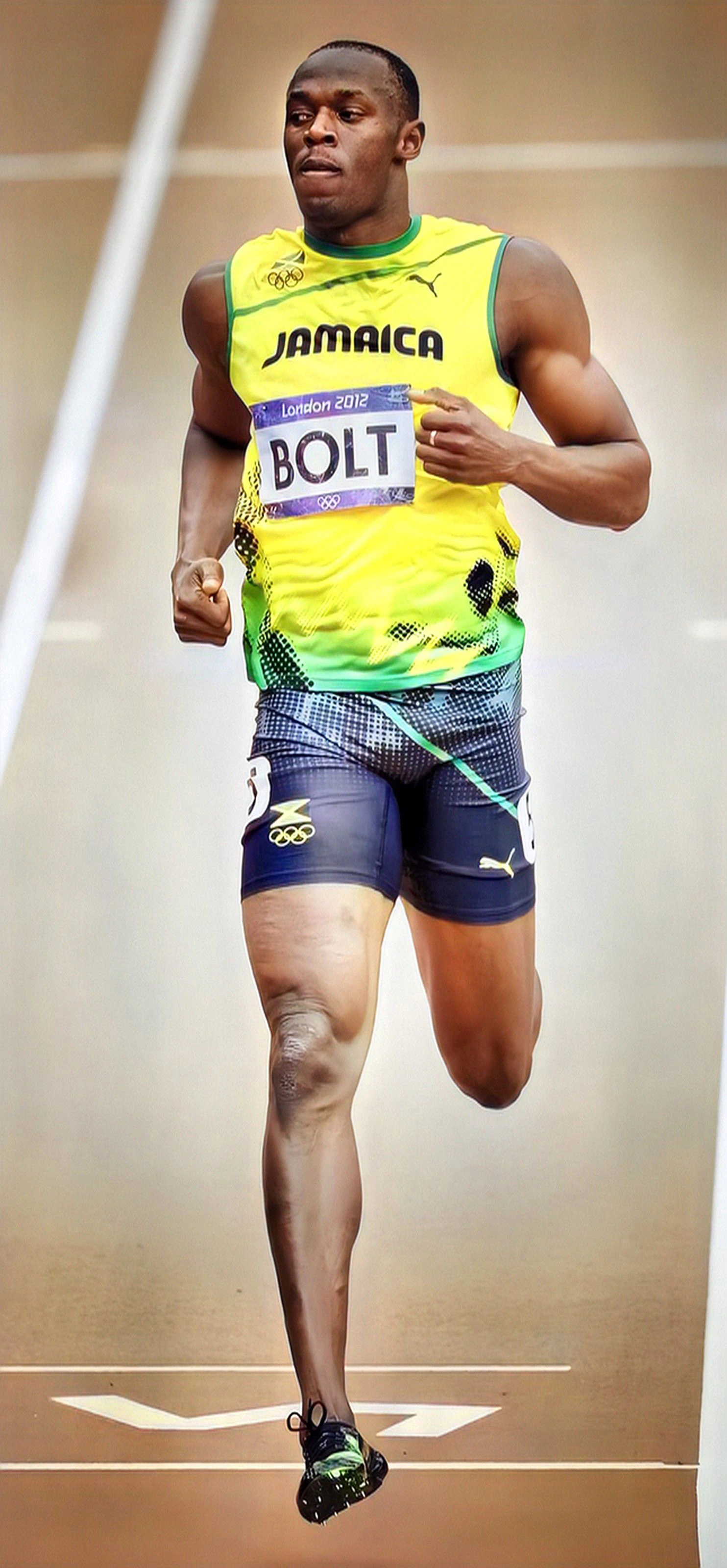
| 9 Quotes | |
| Born as | Usain St. Leo Bolt |
| Occup. | Athlete |
| From | Jamaica |
| Born | August 21, 1986 Trelawny, Jamaica |
| Age | 39 years |
| Cite | |
Citation Formats
APA Style (7th ed.)
Usain bolt biography, facts and quotes. (2026, February 11). FixQuotes. https://fixquotes.com/authors/usain-bolt/
Chicago Style
"Usain Bolt biography, facts and quotes." FixQuotes. February 11, 2026. https://fixquotes.com/authors/usain-bolt/.
MLA Style (9th ed.)
"Usain Bolt biography, facts and quotes." FixQuotes, 11 Feb. 2026, https://fixquotes.com/authors/usain-bolt/. Accessed 16 Feb. 2026.
Early Life and Background
Usain St. Leo Bolt was born on August 21, 1986, in Sherwood Content, a small community in Trelawny Parish on Jamaica's north coast. The rhythms of rural life - close kin networks, churchgoing norms, and the island's deep sprinting culture - formed his earliest sense of belonging. His parents, Wellesley and Jennifer Bolt, ran a local grocery shop, and Bolt grew up in a world where everyone knew everyone, and where reputation was built as much on courtesy as on achievement.As a boy he gravitated to play before discipline: soccer and cricket as much as running, and an appetite for competition that was social rather than solitary. Jamaica in the 1990s and early 2000s was already producing global track stars, and school sports were a national proving ground. Bolt's early talent arrived with a recognizable Jamaican pattern - a gifted child tested publicly, praised loudly, and then expected to convert promise into performance under intense communal gaze.
Education and Formative Influences
Bolt attended Waldensia Primary, then William Knibb Memorial High School, where sprinting was not merely extracurricular but civic theater, with Champs (the ISSA Boys and Girls Championships) functioning as a de facto national selection stage. Coaches identified an uncommon mix of height, loose-limbed stride, and raw speed; the task became translating playground acceleration into repeatable, technically sound races. His breakthrough came young: at 15, he won the 200 m at the 2002 World Junior Championships in Kingston, becoming the youngest ever world junior gold medalist - a local boy made global in front of home stands, and suddenly burdened with expectations that could either sharpen or break an adolescent.Career, Major Works, and Turning Points
Bolt's early senior years were shaped by brilliance and fragility - record-setting junior speed offset by injuries and inconsistent championship execution. The decisive turning point arrived under coach Glen Mills at Racers Track Club in Kingston, where training emphasized mechanics, strength, and race modeling that could hold up under Olympic pressure. At the 2008 Beijing Olympics, Bolt remade sprinting's public imagination with world records in the 100 m (9.69) and 200 m (19.30), then added 4x100 m gold; in 2009 Berlin he pushed the limits further with 9.58 and 19.19, times that became the sport's modern monuments. Across three Olympic cycles - Beijing 2008, London 2012, Rio 2016 - he turned dominance into narrative: repeated doubles, anchor-leg relays, and a showman's charisma that broadened track's audience. His final global chapter included injury and the inevitability of decline, ending his elite career after the 2017 World Championships, leaving behind an era defined by his height, his ease, and his habit of making the impossible look celebratory.Philosophy, Style, and Themes
Bolt's inner life, by his own account, was built around an unusual relationship to pressure: he treated the biggest stages as a place to simplify rather than to obsess. “I've learned over the years that if you start thinking about the race, it stresses you out a little bit. I just try to relax and think about video games, what I'm gonna do after the race, what I'm gonna do just to chill. Stuff like that to relax a little before the race”. Psychologically, that is not carelessness but strategy - a deliberate refusal to let anticipation hijack the body. He trained ferociously, yet protected the mind's quiet so that speed could surface without friction.His public confidence often sounded like mythmaking, but it functioned as a tool: “I don't think limits”. In a sport measured to the hundredth, the statement is less bravado than a commitment to possibility - a way to keep effort from being capped by inherited ideas of what a tall sprinter "should" be. Bolt also framed competition as an act of attention toward the finish, not the stumble-prone beginning: “Don't think about the start of the race, think about the ending”. That theme echoed in his running style itself: a start sometimes merely good, then a long, relentless rise where stride length and relaxation turned momentum into separation, as if he were psychologically built for the second half of life as much as the first.
Legacy and Influence
Bolt's legacy is not only the records - 9.58 and 19.19 still define the sport's outer boundary - but the way he expanded what sprinting could mean culturally: a Jamaican athlete who became a global symbol without surrendering accent, humor, or local identity. He helped cement Jamaica's sprint system as a model of school-based talent discovery and club-level refinement, while his showmanship changed how audiences consumed track, making winning look like joy rather than strain. For later sprinters, he left a technical and psychological template: relaxation under scrutiny, confidence as an instrument, and the audacity to treat history as something you chase down in the final meters.Our collection contains 9 quotes written by Usain, under the main topics: Motivational - Goal Setting - Confidence - Respect - Coaching.
Source / external links