
Val Guest Biography Quotes 14 Report mistakes
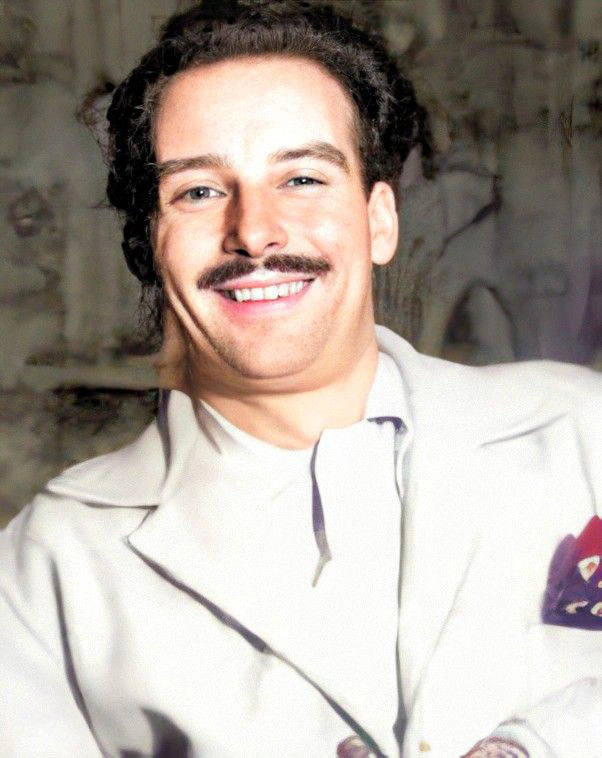
| 14 Quotes | |
| Born as | Valmond Maurice Grossmann |
| Occup. | Director |
| From | United Kingdom |
| Born | December 11, 1911 London, England |
| Died | May 10, 2006 Palm Springs, California |
| Aged | 94 years |
| Cite | |
Citation Formats
APA Style (7th ed.)
Val guest biography, facts and quotes. (2026, February 11). FixQuotes. https://fixquotes.com/authors/val-guest/
Chicago Style
"Val Guest biography, facts and quotes." FixQuotes. February 11, 2026. https://fixquotes.com/authors/val-guest/.
MLA Style (9th ed.)
"Val Guest biography, facts and quotes." FixQuotes, 11 Feb. 2026, https://fixquotes.com/authors/val-guest/. Accessed 25 Mar. 2026.
Early Life and Background
Val Guest was born Valmond Maurice Grossmann on December 11, 1911, in London, into a Britain still shaped by Edwardian habits and the coming shock of total war. Growing up between the fading certainties of empire and the new mass culture of cinema, he absorbed the citys contrasts - music halls and newspapers, street life and studios - that would later feed his knack for brisk, audience-aware storytelling.In the interwar years, when unemployment and political anxiety sat beside the bright surfaces of popular entertainment, Guest gravitated toward show business. He briefly pursued acting, but even early on he read the industry with a writers eye: who controlled the script, who set the pace, who could keep working when fashions changed. That pragmatic instinct - survival through craft - became a defining inner motor throughout his career.
Education and Formative Influences
Guest trained through practice more than institutions, learning narrative timing in the theatre world around Soho and by watching how British films were engineered under quota pressures and tight schedules. Comedy and revue culture honed his ear for dialogue and his sense of what an audience would tolerate or demand; at the same time, he grew up with the modernist anxiety of the 1930s and 1940s - air-raid realism, tabloid immediacy, political dread - influences that would later surface even in his genre work as a preference for credible detail and lived-in settings.Career, Major Works, and Turning Points
By the late 1930s Guest was writing professionally, turning from acting to scripts as the steadier path. He worked on comedies and popular vehicles, including Windmill Theatre-associated material and films such as Murder at the Windmill (1942), before expanding into more varied writing and then directing. The postwar period brought his decisive shift: he could deliver finished films quickly and cleanly, which made him valuable in Britains production economy. In the 1950s and 1960s he became a key director of intelligent genre pictures - most famously The Day the Earth Caught Fire (1961), a taut nuclear-era thriller with docu-style newsroom texture, and a run of Hammer science-fiction titles including The Quatermass Experiment (1955) and Quatermass 2 (1957), which married horror rhythms to contemporary fears of invasion, bureaucracy, and technological overreach. Later he moved fluidly through television and international co-productions, including involvement with the 1967 spoof Casino Royale, reflecting an industry increasingly shaped by global casting and brand properties.Philosophy, Style, and Themes
Guests creative psychology was rooted in workmanlike self-knowledge: he saw himself as a craftsman first, and that candor freed him from preciousness. “Well, yes, as I was a rather bad actor then and I wasn't making enough money, I thought, to make enough money to not make money as an actor, I'd better do some writing”. The sentence is more than anecdote - it reveals an artist who converted insecurity into discipline, choosing the position where he could control structure and rhythm. That same practicality also fueled his impatience with being typecast: “I had a terrible job letting me do anything that wasn't comedy”. Underneath the complaint is a clear self-concept - he knew his range, and he resented the industrys habit of mistaking competence for limitation.Stylistically, Guest favored speed, clarity, and a reporters sense of causality. His best films move like well-edited columns: urgent setups, clean reversals, and dialogue that sounds overheard rather than declaimed. Yet his themes were often grimly contemporary. “Well, The Day the Earth Caught Fire was a story... I don't if anybody knows what it is but it was about... in the early days of testing nuclear bombs, that Russia and America happened to test a nuclear bomb at the same moment at different ends of the earth”. The slightly groping phrasing suggests how the Cold War terror exceeded any neat logline; Guest translated that unease into cinema that treated catastrophe as an extension of ordinary institutions - newsrooms, ministries, commuters - rather than as distant fantasy. Even when he made crowd-pleasing thrills, he anchored them in procedural detail and social texture, as if realism were his antidote to panic.
Legacy and Influence
Guest died on May 10, 2006, leaving a body of work that helped define mid-century British popular cinema as something smarter and more responsive than its budgets implied. He demonstrated that genre could carry the eras headlines - radiation, secrecy, propaganda, mass anxiety - without losing entertainment value, and his Quatermass films in particular became templates for later British and international science-fiction horror. His legacy is that of a director-writer who treated filmmaking as both trade and testimony: efficient enough to keep moving, observant enough to make his moment visible on screen.Our collection contains 14 quotes written by Val, under the main topics: Witty One-Liners - Writing - Movie - Teamwork - Anniversary.
Other people related to Val: Peter Cushing (Actor)
Source / external links