
Valerie Solanas Biography Quotes 2 Report mistakes
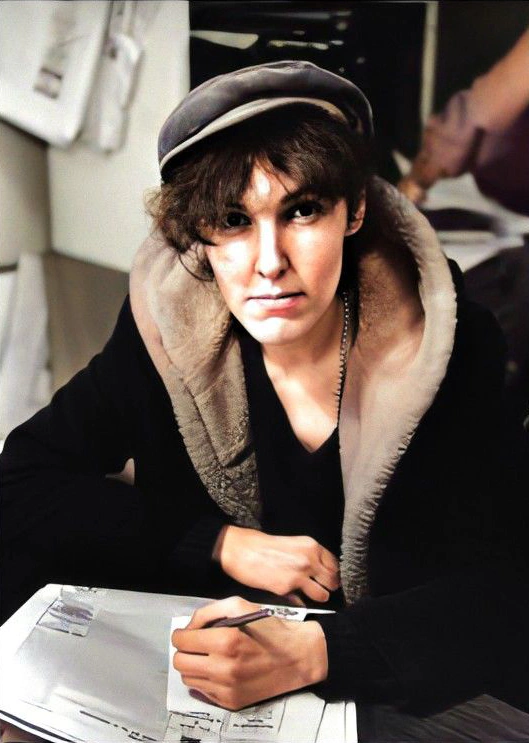
| 2 Quotes | |
| Born as | Valerie Jean Solanas |
| Occup. | Writer |
| From | USA |
| Born | April 9, 1936 Ventura, California, USA |
| Died | April 26, 1988 San Francisco, California, USA |
| Cause | Pneumonia and emphysema |
| Aged | 52 years |
| Cite | |
Citation Formats
APA Style (7th ed.)
Valerie solanas biography, facts and quotes. (2026, February 11). FixQuotes. https://fixquotes.com/authors/valerie-solanas/
Chicago Style
"Valerie Solanas biography, facts and quotes." FixQuotes. February 11, 2026. https://fixquotes.com/authors/valerie-solanas/.
MLA Style (9th ed.)
"Valerie Solanas biography, facts and quotes." FixQuotes, 11 Feb. 2026, https://fixquotes.com/authors/valerie-solanas/. Accessed 12 Feb. 2026.
Early Life and Education
Valerie Jean Solanas was born on April 9, 1936, in Ventnor City, New Jersey. She later described her childhood as unstable and abusive, experiences that would shape both her worldview and her writing. She left home while still young and showed academic aptitude despite precarious circumstances. Solanas studied psychology at the University of Maryland, earning a degree, and briefly pursued graduate work at the University of Minnesota. By her own account and those of acquaintances, she drifted between conventional academic ambitions and increasing estrangement from institutions she regarded as hostile or indifferent. She gravitated toward writing, satire, and polemic.Arrival in New York and Early Writing
By the early to mid-1960s Solanas was in New York City, supporting herself with odd jobs and sex work while writing plays and manifestos. She was determined to have her work recognized on her own terms. Among her early efforts was a play, Up Your Ass, a confrontational and bawdy satire she tried to place with the downtown art world. She brought a copy to Andy Warhol, hoping the celebrated artist and filmmaker would help stage or produce it. Warhol and his circle, including Paul Morrissey and the performer Viva, encountered her as one among many persistent strivers at the Factory. When Warhol misplaced the script and brushed her off, Solanas took the slight as a profound betrayal, fueling suspicions that her work was being stolen or suppressed.The SCUM Manifesto
In 1967 Solanas self-published the SCUM Manifesto (SCUM commonly glossed as Society for Cutting Up Men), selling mimeographed copies on the street. The text was a blast of radical feminist anger, part parody, part provocation, and part political program. It attacked male supremacy and the structures of capitalism and culture that, in her view, enabled it. The manifesto attracted intense attention and polarized responses. Some readers treated it as satire; others embraced its rage as political truth. The publisher Maurice Girodias of Olympia Press took an interest, entering into fraught negotiations with Solanas about publishing her work. She felt exploited by the terms and suspected Girodias, like Warhol, of conspiring to control her writing. The combination of notoriety, precarious income, and escalating paranoia increasingly defined her public presence.Conflict with Andy Warhol and the Shooting
On June 3, 1968, Solanas went to Warhols studio, the Factory, armed with a handgun. She shot and critically wounded Warhol and also wounded the art critic Mario Amaya; Warhols business associate Fred Hughes escaped injury and alerted authorities. The attack nearly killed Warhol, who survived after extensive surgery and long-term complications that changed his life and work. Solanas turned herself in shortly afterward, stating to police that Warhol had too much control over her life. The shooting instantly cemented her notoriety, overshadowing her writing and casting her as an emblem, whether of radical feminist militancy or of the dangers of untreated mental illness, depending on the observer.Arrest, Trial, and Psychiatric Confinement
Solanas was charged and underwent evaluations at Bellevue Hospital before being found incompetent for trial for a period. She was diagnosed with paranoid schizophrenia and spent time at Matteawan State Hospital for the Criminally Insane and other institutions. Eventually she pleaded guilty to reduced charges and served a sentence that blended incarceration with psychiatric treatment. The legal consequences were accompanied by relentless press attention. Within feminist circles, figures such as Ti-Grace Atkinson voiced sympathy for Solanas and criticized the social conditions that, they argued, produced both her rage and her marginalization. Others in the movement distanced themselves, wary of condoning violence.Later Years
After her release in the early 1970s, Solanas continued to write and to sell copies of the SCUM Manifesto, sometimes adding new, furious introductions that reiterated her belief that powerful men had sabotaged her career. She lived intermittently in New York and on the West Coast, cycling through brief bursts of productivity and periods of hospitalization or homelessness. Encounters with people from the art world and counterculture continued sporadically; some tried to help, others kept their distance. The Factory community, including Warhol, Paul Morrissey, Viva, and Fred Hughes, had long since moved on, but Solanas remained convinced that earlier slights and broken promises had set the course of her life. She died on April 25, 1988, in San Francisco, reportedly of pneumonia, largely estranged from the networks of support that might have stabilized her final years.Legacy and Cultural Impact
Solanas left a small body of writing and an outsized cultural imprint. The SCUM Manifesto endures as one of the most provocative documents of second-wave feminism, read alternately as satire, prophecy, and furious performance. Her play Up Your Ass, long thought lost after its disappearance at the Factory, resurfaced decades later and was finally staged, allowing audiences to see beyond the single incident that made her infamous. The shooting of Andy Warhol permanently altered his life and the mythology of the Factory, shaping how figures like Mario Amaya, Paul Morrissey, Viva, and Fred Hughes are remembered in connection with that day. Publishers and critics continue to debate the role of Maurice Girodias and the broader literary marketplace in her story, and scholars examine how mental illness, poverty, and misogyny intersected with avant-garde culture in the 1960s. Films, scholarship, and exhibitions have revisited her life, arguing over whether she should be seen primarily as a writer, a would-be revolutionary, a cautionary tale about neglect, or some combination of all three. Whatever the frame, Valerie Solanas remains one of the most disruptive voices to emerge from the era, her name forever entangled with the art, politics, and violence of her time.Our collection contains 2 quotes written by Valerie, under the main topics: Savage - Family.
Valerie Solanas Famous Works
- 1967 SCUM Manifesto (Book)
Source / external links