
Vasil Levski Biography Quotes 2 Report mistakes
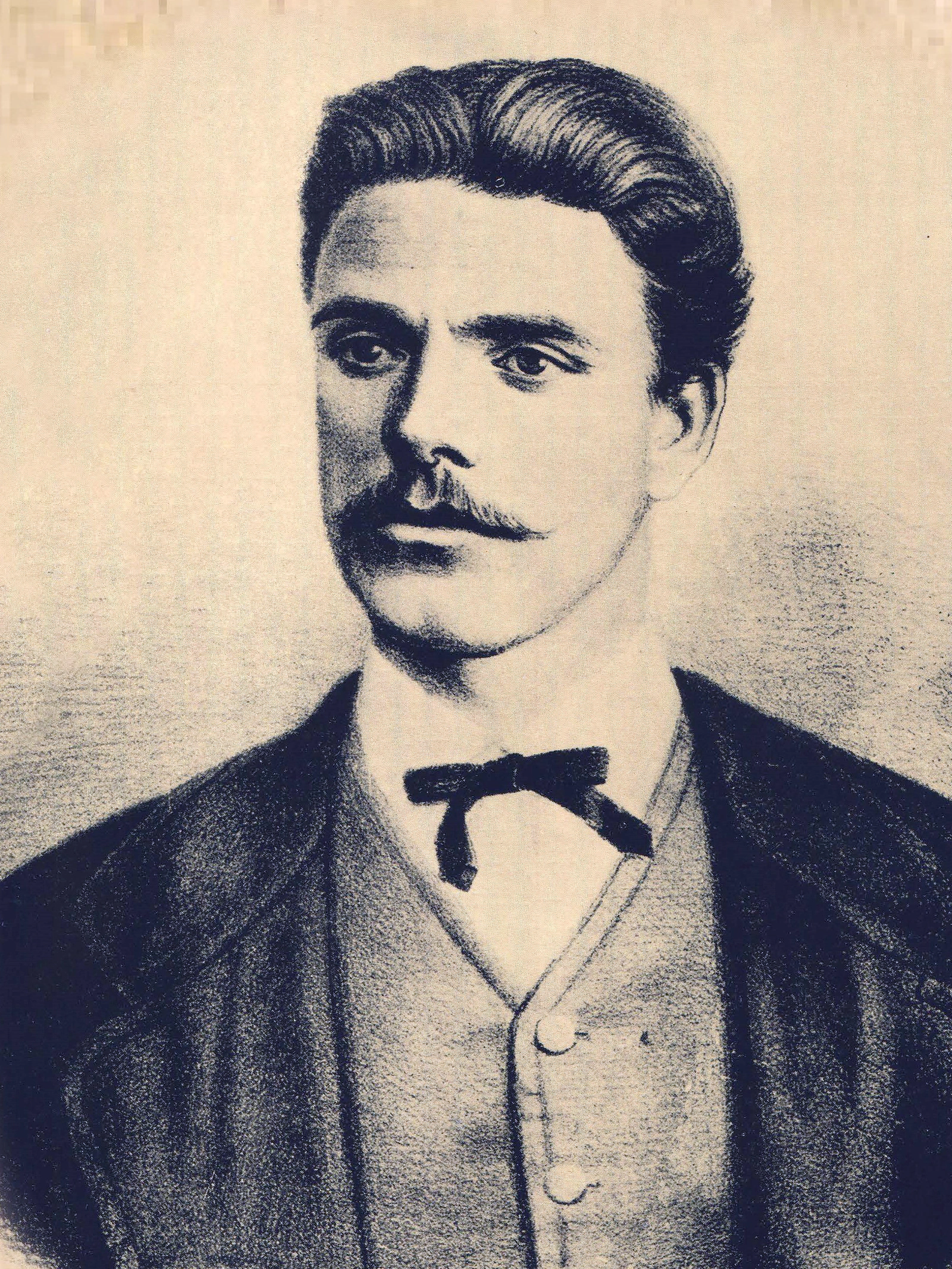
| 2 Quotes | |
| Born as | Vasil Ivanov Kunchev |
| Known as | The Apostle of Freedom, Deacon Ignatius |
| Native name | Васил Левски |
| Occup. | Revolutionary |
| From | Bulgaria |
| Born | July 18, 1837 Karlovo, Ottoman Empire (present-day Bulgaria) |
| Died | February 18, 1873 Sofia, Ottoman Empire (present-day Bulgaria) |
| Cause | Execution by hanging |
| Aged | 35 years |
| Cite | |
Citation Formats
APA Style (7th ed.)
Vasil levski biography, facts and quotes. (2026, March 14). FixQuotes. https://fixquotes.com/authors/vasil-levski/
Chicago Style
"Vasil Levski biography, facts and quotes." FixQuotes. March 14, 2026. https://fixquotes.com/authors/vasil-levski/.
MLA Style (9th ed.)
"Vasil Levski biography, facts and quotes." FixQuotes, 14 Mar. 2026, https://fixquotes.com/authors/vasil-levski/. Accessed 4 Apr. 2026.
Early Life and Background
Vasil Ivanov Kunchev, later immortalized as Vasil Levski, was born in Karlovo in 1837, a market town in the Sredna Gora region of Ottoman-ruled Bulgaria. He came of age in a society marked by double pressure: the heavy administrative and fiscal realities of empire, and the inward ferment of the Bulgarian National Revival, which was rebuilding language, schooling, church life, and historical memory. His father, Ivan Kunchev, died when Vasil was young, leaving the family in hardship; his mother, Gina, became the moral center of his childhood. The household was not aristocratic, military, or politically connected. Its importance lay in discipline, piety, and endurance - qualities that later fused in him into a rare combination of ascetic self-command and conspiratorial daring.His nickname "Levski", usually linked to a leonine leap performed during military training, suited both his physical courage and the myth that quickly formed around him. Yet the making of Levski cannot be reduced to legend. As a young Bulgarian under Ottoman sovereignty, he lived in a world where identity was no longer merely local or ecclesiastical. The struggle for an independent Bulgarian Exarchate, the spread of secular schools, and the circulation of revolutionary ideas from Serbia, Romania, and Russia gave ambitious young men new horizons. Levski absorbed this atmosphere not as a salon intellectual but as a man who learned early that national liberation required sacrifice, mobility, secrecy, and a remaking of ordinary people into political actors.
Education and Formative Influences
His formal education was limited but significant. He studied in Karlovo and Sopot and for a time entered the clerical path, becoming a deacon known as Ignatiy, which is why later memory called him the Deacon. The church gave him literacy, rhetorical poise, and a sense of moral mission, but it did not contain his energies. The examples of Georgi Rakovski and other emigre activists drew him toward organized struggle; service in the Bulgarian Legion in Belgrade in the early 1860s exposed him to drill, arms, and the practical weaknesses of relying on foreign governments. The failure of scattered raids and exile-centered schemes taught him his decisive lesson: liberation could not be imported. It had to be built patiently inside Bulgaria through local committees, trusted couriers, coded communication, and political education among artisans, teachers, merchants, and peasants.Career, Major Works, and Turning Points
Levski's great achievement was not a book or battlefield victory but the creation of an internal revolutionary network across Bulgarian lands between roughly 1869 and 1872. Traveling incessantly in disguise - monk, trader, servant, messenger - he established secret committees in towns and villages and linked them to the Bulgarian Revolutionary Central Committee. He insisted on discipline, accounting, and hierarchy, seeking not romantic uprising but a coordinated national organization. In this he differed from many contemporaries who imagined liberation as a swift insurrection sparked from abroad. His letters, statutes, and instructions reveal a practical strategist with a statesman's horizon: he envisioned a "pure and sacred republic" grounded in equality before the law for Bulgarians, Turks, Jews, and others alike. The robbery at Arabakonak in 1872, carried out by associates against his better judgment, exposed parts of the network and intensified Ottoman pursuit. He was captured near Kakrina at the end of 1872, taken to Sofia, tried, and hanged there in February 1873. His death at about thirty-five froze his image in youthful severity, but the system he built outlived him and prepared the moral and organizational terrain for the April Uprising of 1876.Philosophy, Style, and Themes
Levski's political psychology joined stoicism to accountability. He demanded personal renunciation not as theater but as method. “If I win, I win for all our people; if I lose, I lose only myself”. The sentence is not bravado. It reveals a man who deliberately narrowed the value of his private life in order to enlarge the moral claim of the collective. He did not seek martyrdom for its own sake; he accepted isolation, danger, and anonymity because he believed a revolutionary organizer must absorb risk that would otherwise destroy the timid and unprepared. This helps explain the unusual austerity of his conduct: little interest in comfort, fame, or factional vanity, and relentless insistence that promises, money, and operational secrecy be treated as sacred obligations.At the same time, his nationalism was disciplined by civic thought rather than ethnic revenge. “We have to arrange our domestic affairs first”. In that brief formulation lies his strategic revolution: before appeals to foreign powers, before fantasies of rescue, there must be internal order, political maturity, and institutional trust. His style was terse, lucid, and practical, stripped of ornament because he wrote to move men into action. Yet beneath the brevity was a moral imagination unusually modern for the Balkans of his day. The future state he imagined was not merely Bulgarian in language, but republican in principle - lawful, representative, and inclusive. That fusion of national liberation with civic equality is why he remains more than an insurgent hero; he appears, even in fragmentary correspondence, as a founder who thought about the character of freedom, not only its seizure.
Legacy and Influence
Levski became the central martyr-saint of the Bulgarian national canon because he united purity of motive with practical genius. Hristo Botev, Ivan Vazov, and later generations of writers, teachers, and politicians turned him into the benchmark of civic integrity, often contrasting his selflessness with the compromises of post-liberation public life. Streets, schools, and monuments across Bulgaria bear his name, but his deeper legacy is conceptual: he shifted the liberation movement from exile plots to internal organization and gave Bulgarian nationalism one of its strongest ethical cores. In modern memory he stands at once as revolutionary, republican, and conscience - a figure invoked not only in commemorations of 1873, but whenever Bulgarians ask whether political action serves the nation as a whole or merely those who claim to lead it.Our collection contains 2 quotes written by Vasil, under the main topics: Leadership.
Source / external links