
Vicente Aleixandre Biography Quotes 1 Report mistakes
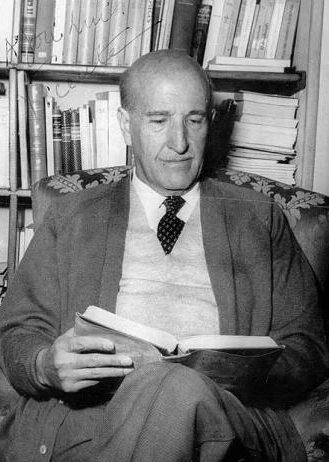
| 1 Quotes | |
| Born as | Vicente Pío Marcelino Cirilo Aleixandre y Merlo |
| Occup. | Poet |
| From | Spain |
| Born | April 26, 1898 Seville, Spain |
| Died | December 14, 1984 Madrid, Spain |
| Aged | 86 years |
| Cite | |
Citation Formats
APA Style (7th ed.)
Vicente aleixandre biography, facts and quotes. (2026, February 11). FixQuotes. https://fixquotes.com/authors/vicente-aleixandre/
Chicago Style
"Vicente Aleixandre biography, facts and quotes." FixQuotes. February 11, 2026. https://fixquotes.com/authors/vicente-aleixandre/.
MLA Style (9th ed.)
"Vicente Aleixandre biography, facts and quotes." FixQuotes, 11 Feb. 2026, https://fixquotes.com/authors/vicente-aleixandre/. Accessed 5 Mar. 2026.
Early Life and Background
Vicente Pio Marcelino Cirilo Aleixandre y Merlo was born on April 26, 1898, in Seville, in the uneasy calm of Restoration Spain, a country modernizing in fragments while still shadowed by the 1898 disaster and the loss of empire. His family belonged to the professional middle class, and his childhood moved between Andalusia and the Mediterranean coast, with formative years in Malaga. Those early geographies mattered: the heat, sea light, and open horizons later returned in his poetry as a physical cosmos where desire, nature, and destruction speak the same language.He grew up with a temperament inclined to inwardness and observation, but also to crisis - not only the national atmosphere (labor unrest, anticlerical tensions, and the long prelude to dictatorship) but an intimate one. Persistent ill health, later compounded by serious kidney disease, would narrow his social range while intensifying his imaginative one. The young Aleixandre learned early that the body can become both boundary and instrument: a source of vulnerability that forces the mind to build a larger world.
Education and Formative Influences
In Madrid he studied law and commerce, training for stability while the capital became the engine of a new literary generation. He worked as a professor of commercial law and in business, but in the 1920s he gravitated toward the poets who would be known as the Generation of 27 - Federico Garcia Lorca, Rafael Alberti, Luis Cernuda, Jorge Guillen, Pedro Salinas, and others - a circle shaped by avant-garde experiment, deep reading in Gongora, and a European horizon that included Freud and surrealism. A major illness in the late 1920s pulled him away from conventional life and into a more total dedication to poetry, as if convalescence gave him the time and necessity to listen to his own underground.Career, Major Works, and Turning Points
His first major book, Ambito (1928), still carries traces of a purified lyricism, but the decisive turn came with Pasión de la tierra (written in the late 1920s, published 1935), where surrealist technique and eruptive imagery let him dramatize instinct, violence, and the nonhuman world. La destrucción o el amor (1935) consolidated his stature, and after the Spanish Civil War (1936-1939) - which fractured the Generation of 27 through death, exile, and censorship - Aleixandre remained in Spain, living quietly in Madrid at his house on Velintonia, a discreet refuge where younger poets could visit. His postwar books (including Sombra del paraíso, 1944, and later Historia del corazón, 1954) broadened from cosmic and erotic cataclysm toward a more communal, human address. In 1977 he received the Nobel Prize in Literature, recognized as a poet who had carried Spanish lyric across a broken century.Philosophy, Style, and Themes
Aleixandre wrote as if the self were porous: not an isolated "I" but a junction where love, matter, and mortality meet. His style moves from the dense, dreamlike syntax of surrealism to a clearer, more public line, yet even in his more accessible phases the poems keep a metaphysical pressure - the sense that every embrace touches extinction and every landscape hides a pulse. Eros is not ornament but method: a way of knowing that dismantles social masks and returns the person to elemental belonging. Illness sharpened this vision; physical limitation did not diminish his sensual intensity but made it urgent, converting desire into a struggle against disappearance.His inner life can be read as a disciplined uncertainty, a mind that refuses final answers because the world will not hold still. “Poetry is a succession of questions which the poet constantly poses”. That maxim fits his recurring structures: interrogation by images, knowledge gained through collision, and a moral seriousness that distrusts slogans. In La destrucción o el amor, love is both salvation and wrecking force - the self must be broken to become part of the whole - and the poem becomes a laboratory where contradictions are not resolved but inhabited. This questioning temperament also shaped his discretion in public life: he avoided polemic and built authority through artistic integrity, turning the poem into the space where everything - body, history, dream - could be faced without simplification.
Legacy and Influence
Aleixandre became a central bridge between the prewar avant-garde and postwar Spanish poetry, not only through his books but through his presence in Madrid as a quiet mentor to later generations. His Nobel Prize fixed his international standing, yet his deeper influence is stylistic and ethical: a model of how Spanish lyric can be visionary without becoming escapist, intimate without shrinking from history, and erotically charged without losing metaphysical depth. In an era marked by dictatorship, exile, and cultural fracture, he showed that the poem could remain a total instrument - a place where the most private questions are also a way of keeping a damaged public language alive.Our collection contains 1 quotes written by Vicente, under the main topics: Poetry.
Vicente Aleixandre Famous Works
- 1974 Dialogues of Knowledge (Book)
- 1954 The History of the Heart (Book)
- 1944 The Shadow of Paradise (Book)
- 1935 Destruction or Love (Book)
- 1928 Ambito (Book)
Source / external links