
Victoria Secunda Biography Quotes 14 Report mistakes
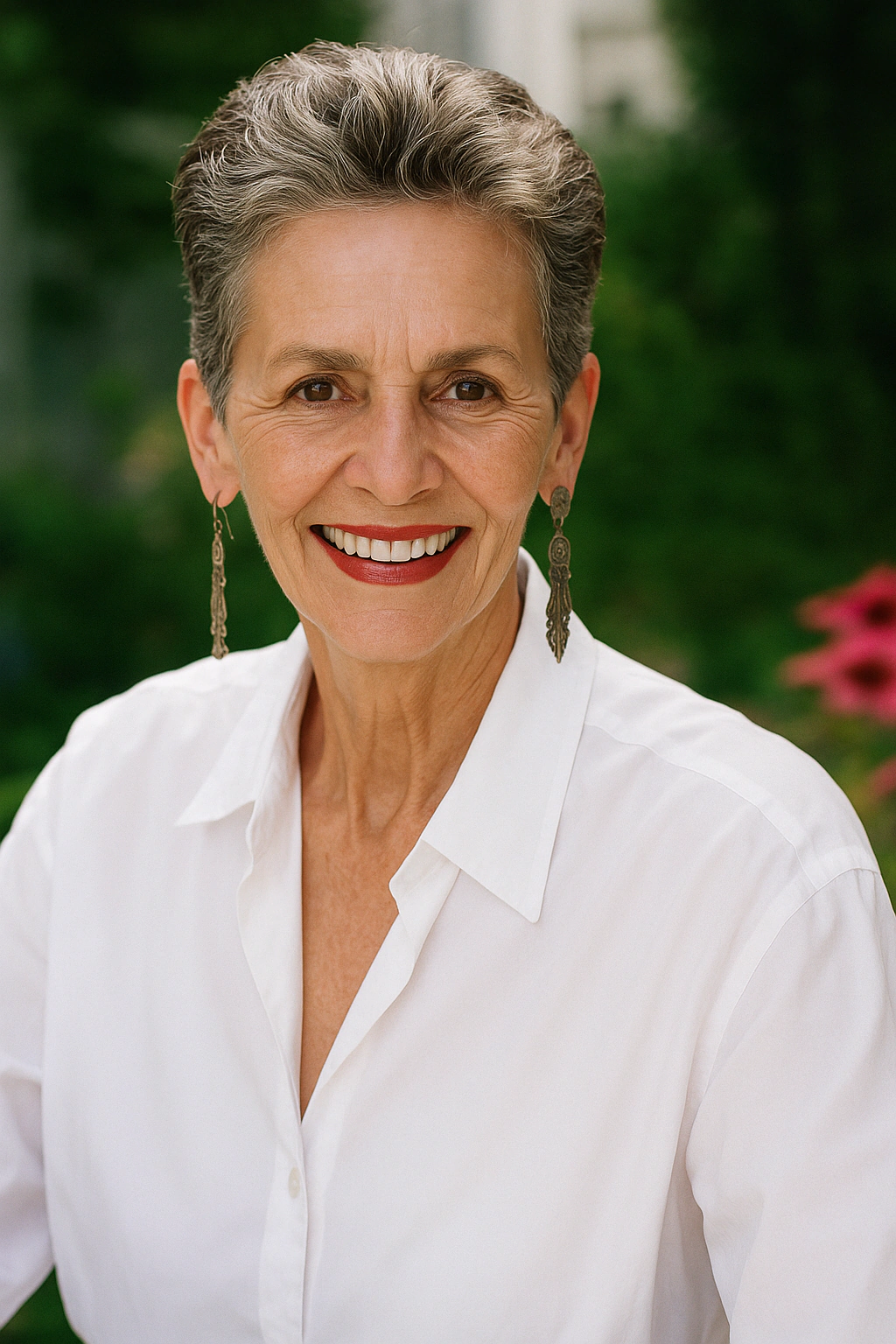
| 14 Quotes | |
| Born as | Victoria H. Secunda |
| Occup. | Author |
| From | USA |
| Born | April 17, 1939 |
| Died | June 17, 2019 |
| Aged | 80 years |
| Cite | |
Citation Formats
APA Style (7th ed.)
Victoria secunda biography, facts and quotes. (2026, February 11). FixQuotes. https://fixquotes.com/authors/victoria-secunda/
Chicago Style
"Victoria Secunda biography, facts and quotes." FixQuotes. February 11, 2026. https://fixquotes.com/authors/victoria-secunda/.
MLA Style (9th ed.)
"Victoria Secunda biography, facts and quotes." FixQuotes, 11 Feb. 2026, https://fixquotes.com/authors/victoria-secunda/. Accessed 25 Mar. 2026.
Overview
Victoria Secunda emerged as a clear, compassionate voice on family relationships, grief, and the lifelong echoes of early bonds. Best known as an author who bridged journalism, psychology, and storytelling, she explored how parents and children shape one another across decades. Public sources place her beginnings in the mid-20th century United States, and her career unfolded during a period when readers were seeking practical, humane narratives about intimacy, estrangement, and repair. Her books, including Women and Their Fathers, When You and Your Mother Can't Be Friends, and Losing Your Parents, Finding Yourself, became touchstones for people trying to understand private pain and quiet turning points in adult life.Early Life and Background
Details of Secunda's early life are not widely publicized. Accounts suggest she was born in the late 1930s, and she came of age when postwar social expectations around family were changing, yet the language to describe those changes was still emerging. Rather than foregrounding her own biography, she let the experiences of others carry her work. This reserve about her private life would become a hallmark of her public presence: she introduced readers to mothers and daughters, fathers and daughters, and adults confronting the loss of parents, but she rarely placed herself at the center.Path to Writing
Secunda's writing grew from careful observation, extensive interviewing, and a journalist's ear for the revealing detail. She cultivated trust with interviewees, often conducting multiple conversations over months to follow the arc of their relationships. Around her were the people who enabled this steady, rigorous work: readers who wrote to share their stories, interview participants whose candor shaped her narratives, and clinicians who offered professional perspective on patterns she observed. Editors at mainstream publishers championed her manuscripts and helped refine her accessible voice, while friends and colleagues in the broader community of nonfiction writers provided the peer scrutiny that kept her reporting grounded.Major Works and Themes
Women and Their Fathers examined how a daughter's first relationship with a man can imprint her expectations of intimacy, authority, safety, and trust. Secunda treated this not as a fixed destiny but as a system of beliefs that could be understood and revised. She wove together personal accounts, research summaries, and clinical insight to show both the tenderness and fragility of the father-daughter bond.When You and Your Mother Can't Be Friends confronted the complicated terrain of mother-daughter estrangement and ambivalence. Here, some of the most important people in Secunda's orbit were the mothers and daughters who agreed to be interviewed at their most vulnerable. Their willingness to relive conflicts and small reconciliations supplied the book's emotional backbone. Secunda focused on boundary setting, nuanced forgiveness, and the difference between reconciliation and capitulation.
Losing Your Parents, Finding Yourself explored what it means to become an "adult orphan". Secunda tracked how grief reshapes identity, responsibilities, and a person's sense of time. She highlighted siblings negotiating estates and memories, adult children discovering new independence alongside sorrow, and caregivers facing the quiet exhaustion of long-term illness in a parent. The professionals around her in this period included grief counselors and social workers who helped frame the trajectory from acute loss to integration.
Method and Voice
Secunda's method balanced empathy with clarity. She used composite portraits sparingly and labeled them clearly; more often she relied on distinct voices, protecting identities while preserving the individuality of experience. She adopted everyday language to restate complex psychological ideas, avoiding jargon and foregrounding lived experience. The people closest to her work were the hundreds of participants who trusted her with their stories. Many stayed in touch, offering updates that allowed her to describe growth over time rather than single, dramatic epiphanies. Her editors and fact-checkers reinforced that discipline, pushing for precision in description and for humility where evidence was mixed.Reception and Influence
Her books found a durable readership among lay audiences and professionals alike. Therapists recommended her titles in waiting rooms; book groups used her chapters as prompts for structured conversation; adult children, newly grieving, underlined passages that put language to disorienting feelings. Reviewers often praised her for making readers feel seen without reducing them to case studies. Over the years, the reach of her work extended beyond publication cycles: reprints, citations in counseling materials, and the steady hum of word-of-mouth kept her ideas in circulation.Professional Relationships and Community
Secunda worked closely with publishing teams who shaped the pacing and architecture of her books. Copy editors helped maintain her straightforward style, and publicists organized talks at libraries, community centers, and professional gatherings where she met counselors, nurses, and educators. Those interactions informed later editions and reinforced her commitment to practical guidance. She also benefited from informal peer networks: fellow writers who traded manuscripts, challenged assumptions, and shared the stamina required for long-form nonfiction. Above all, the most consequential people around her were the families who let her witness their conflicts and repairs, the daughters and fathers willing to revisit formative moments, and the adult children who spoke about loss with an honesty that anchored her pages.Later Years and Ongoing Relevance
In her later years, Secunda remained a careful listener, responding to letters and queries from readers seeking next steps after finishing a book. She reiterated that repair is sometimes possible and sometimes not, that boundaries are not failures of love, and that grief, while permanent, can become a companion rather than an antagonist. Accounts suggest she died in the late 2010s, and while details were not broadly publicized, the continuity of her readership underscores how her work outlived the news of her passing.Legacy
Victoria Secunda's legacy rests on how she gave ordinary people a vocabulary for relationships that felt too tangled to name. She left behind a body of work that dignified ambivalence, made space for partial reconciliations, and validated the quiet heroism of caregiving and the ordinary courage of setting limits. Her influence endures wherever a therapist recommends one of her books to a patient newly aware of old patterns, wherever a daughter reconsiders how her past is shaping her present, and wherever a son or daughter, bereaved, feels less alone because a sentence on a page reflects them back to themselves.Our collection contains 14 quotes written by Victoria, under the main topics: Friendship - Parenting - Father - Mother - Husband & Wife.
Source / external links