
Vigdís Finnbogadóttir Biography Quotes 15 Report mistakes
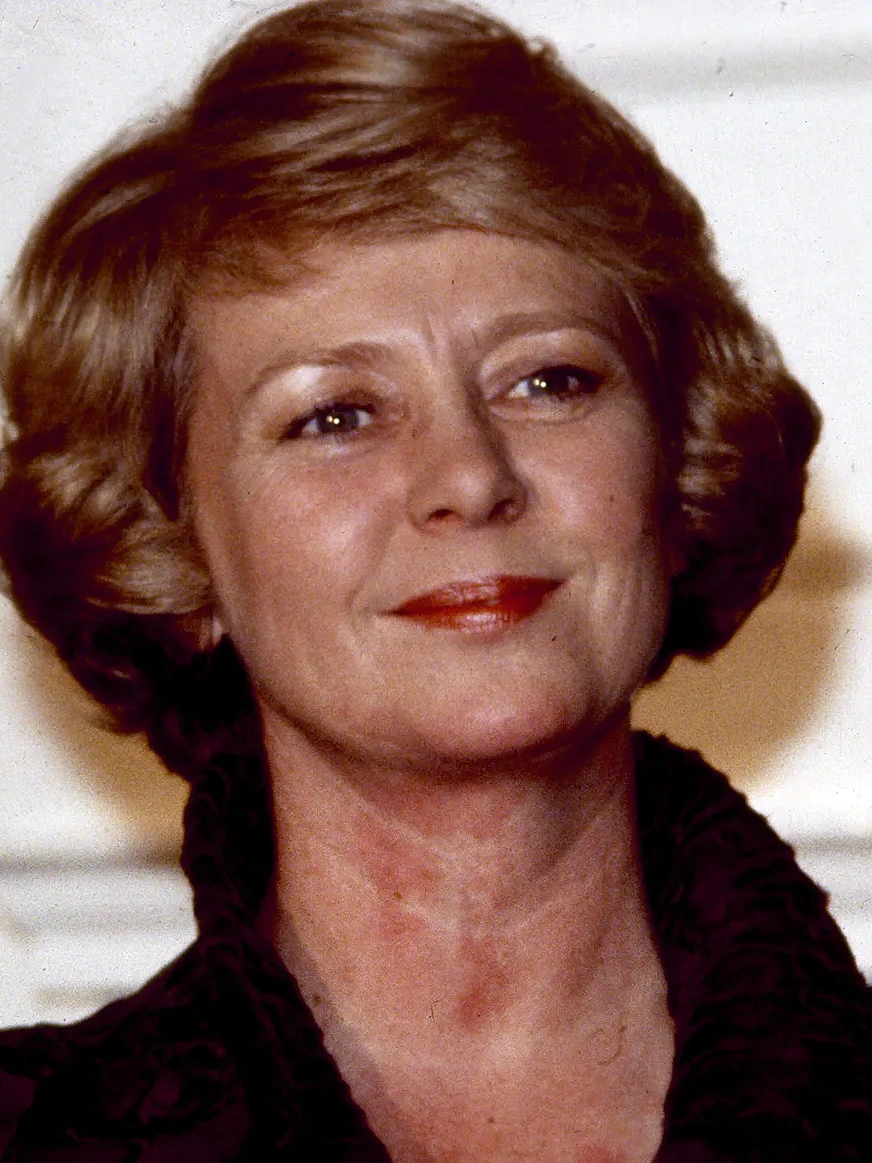
Attr: Britannica
| 15 Quotes | |
| Occup. | President |
| From | Iceland |
| Born | April 15, 1930 Reykjavík, Iceland |
| Age | 95 years |
| Cite | |
Citation Formats
APA Style (7th ed.)
Vigdís finnbogadóttir biography, facts and quotes. (2026, February 15). FixQuotes. https://fixquotes.com/authors/vigdis-finnbogadottir/
Chicago Style
"Vigdís Finnbogadóttir biography, facts and quotes." FixQuotes. February 15, 2026. https://fixquotes.com/authors/vigdis-finnbogadottir/.
MLA Style (9th ed.)
"Vigdís Finnbogadóttir biography, facts and quotes." FixQuotes, 15 Feb. 2026, https://fixquotes.com/authors/vigdis-finnbogadottir/. Accessed 1 Apr. 2026.
Early Life and Background
Vigdis Finnbogadottir was born on April 15, 1930, in Reykjavik, in a young republic still defining itself after centuries under foreign crowns. Her father, Finnbogi Rutur Finnbogason, was an engineer and later director at Reykjavik Harbor; her mother, Sigridur Einarsdottir, was a nurse. The household joined practicality to public-mindedness: work done carefully, and work done for the common good. In a small capital where everyone knew someone, she learned early how reputation and responsibility could travel faster than any official decree.Her private life unfolded with a candor unusual for public figures of her era. In the 1950s she married and later divorced, and she became a single mother to her daughter Astridur, adopted in 1972. In a society often idealized as uniform, her story quietly tested what Icelanders were willing to accept in a leader: not just competence, but a life that did not conform to the standard family script. That tension, rather than weakening her, sharpened her sense that dignity should never depend on background or social approval.
Education and Formative Influences
She studied at Menntaskolinn i Reykjavik and pursued languages and literature abroad, including in France, where she attended the University of Grenoble, and later at the Sorbonne in Paris, also studying theater and cultural history. This mix of philology and performance proved decisive: she came to see language not as ornament but as infrastructure for memory, and she learned how public speech can be both art and civic tool. Returning to Iceland, she carried an outward-facing European confidence into an island culture that prized tradition but needed modern cultural institutions to hold it.Career, Major Works, and Turning Points
Before politics, Finnbogadottir built a public identity through culture: she taught French, translated, and became a visible advocate for theater and broadcasting. She served as director of the Reykjavik Theater Company (Leikfelag Reykjavikur) in the 1970s, professionalizing standards and widening audiences, and later worked with Icelandic State Television (RUV), where her on-air poise made her a familiar, trusted presence. Her turning point came amid a global second-wave feminist moment and Icelandic upheavals over equal rights, soon after the landmark 1975 Women’s Day Off, when women across the country stopped work to demonstrate their economic and social importance. In 1980, running as an independent, she won the presidency and became the world’s first woman elected head of state in a national election. Reelected in 1984, 1988, and 1992, she served until 1996, using a largely ceremonial office with strategic precision - convening, legitimizing, and symbolizing a broader definition of who could represent a nation.Philosophy, Style, and Themes
Finnbogadottir’s inner politics were ethical before they were partisan: a disciplined egalitarianism rooted in ordinary decency, sharpened by years of navigating cultural gatekeeping as a woman in leadership. Her style was calm and insistently inclusive, often turning potentially divisive topics - gender, identity, international alignment - into questions of shared human worth. She framed equality not as abstraction but as a daily obligation of tone and conduct: “Disdain for people is one thing I cannot accept, because I think we are all of equal value”. That sentence reveals a psychological core of moral impatience with contempt - a refusal to let status, education, or nationality become an excuse for cruelty.A second, intertwined theme was language as the home of a people’s continuity. Unlike nationalists who wield language as a weapon, she treated it as stewardship, a responsibility that begins at home and radiates outward. “I am not the only one shouting in the wilderness. Us Icelanders are all a bit worried about our language, the treasure of our identity”. The anxiety was not parochial; it was historical, shaped by Iceland’s long experience of being spoken for. In her view, safeguarding Icelandic was an act of democratic self-respect, not cultural isolation: “Icelandic is us and while we talk this precious language we have our very special identity”. That insistence on linguistic care dovetailed with her internationalism - a belief that small nations could be globally present without dissolving their own voice.
Legacy and Influence
Finnbogadottir left office as an institution in herself: proof that symbolic leadership can have material consequences, especially for women’s political horizons. Her presidency normalized female authority for a generation in Iceland and beyond, helping shift the imaginable well before quotas or party reforms could do the same work. After 1996 she continued as a cultural diplomat, including as UNESCO Goodwill Ambassador for Languages, aligning her lifelong themes with a global framework for protecting linguistic diversity. Her enduring influence lies in the model she offered: a leader whose power came from trust, whose nationalism was expressed as care, and whose modernity did not require forgetting what a small nation is made of - memory, language, and the stubborn conviction that dignity is not earned by birth or rank.Our collection contains 15 quotes written by Vigdís, under the main topics: Motivational - Deep - Hope - Knowledge - Equality.
Source / external links