
Vincent Van Gogh Biography Quotes 34 Report mistakes
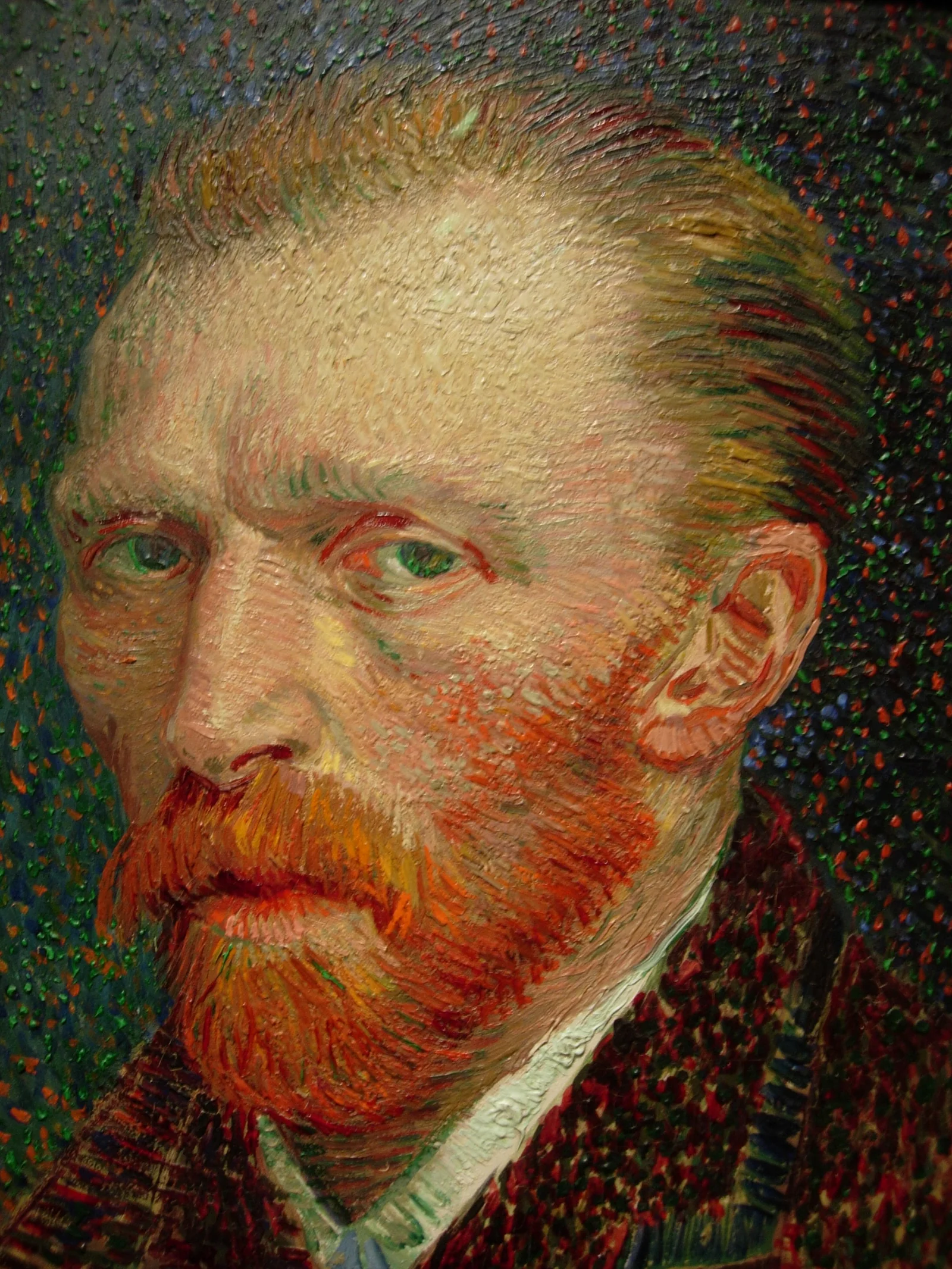
| 34 Quotes | |
| Born as | Vincent Willem van Gogh |
| Occup. | Artist |
| From | Netherland |
| Born | March 30, 1853 Zundert, Netherlands |
| Died | July 29, 1890 Auvers-sur-Oise, France |
| Aged | 37 years |
| Cite | |
Citation Formats
APA Style (7th ed.)
Vincent van gogh biography, facts and quotes. (2026, February 2). FixQuotes. https://fixquotes.com/authors/vincent-van-gogh/
Chicago Style
"Vincent Van Gogh biography, facts and quotes." FixQuotes. February 2, 2026. https://fixquotes.com/authors/vincent-van-gogh/.
MLA Style (9th ed.)
"Vincent Van Gogh biography, facts and quotes." FixQuotes, 2 Feb. 2026, https://fixquotes.com/authors/vincent-van-gogh/. Accessed 5 Mar. 2026.
Early Life and Background
Vincent Willem van Gogh was born on March 30, 1853, in Groot-Zundert in the southern Netherlands, the son of Theodorus van Gogh, a Dutch Reformed pastor, and Anna Cornelia Carbentus, an amateur artist with a keen eye for nature. The household was orderly, pious, and linguistically precise, yet emotionally charged - Vincent grew up with the quiet pressure of representing moral seriousness, and with the unspoken shadow of an earlier brother, also named Vincent, who had been stillborn a year before and whose grave lay in the churchyard.As a young man he was intense, changeable, and hungry for belonging. The Netherlands he inherited was modernizing, but its Protestant middle-class codes still prized duty over display. Van Gogh absorbed that ethic deeply, then struggled against it: he wanted both spiritual certainty and a life that felt earned through suffering. His closest lifelong bond was with his brother Theo, the steady correspondent who became confidant, critic, and lifeline, anchoring Vincent through repeated reversals of work, faith, love, and health.
Education and Formative Influences
Van Gogh had no conventional artistic training in youth; instead he moved through jobs and ideas that hardened his purpose. He worked for the art dealers Goupil in The Hague, London, and Paris (1869-1876), learning the market and the old masters by proximity rather than school. After a religious crisis he tried teaching and pursued evangelical work, culminating in his ardent, self-sacrificing ministry among miners in the Borinage, Belgium (1878-1879), where his rejection by church authorities sharpened his sense that moral truth might be lived more convincingly through images than sermons. By the early 1880s he turned decisively to drawing and painting, studying anatomy, perspective, and peasant life with stubborn discipline, feeding on Dutch realism, Millet, and the graphic force of prints.Career, Major Works, and Turning Points
His mature career lasted barely a decade yet moved with startling speed across places and styles: The Hague and Nuenen (1881-1885) produced somber studies of labor and the breakthrough canvas The Potato Eaters (1885); Antwerp (1885-1886) opened him to color and Japanese prints; Paris (1886-1888), living with Theo, put him in direct contact with Impressionists and Neo-Impressionists, loosening his palette and brushwork; Arles (1888-1889) became his great experiment in a "Studio of the South", yielding Sunflowers, The Yellow House, The Bedroom, and the night scenes that fuse observation with exaltation. The collapse after his quarrel with Paul Gauguin and the mutilation of his ear in December 1888 marked a medical turning point; he entered the asylum at Saint-Remy in 1889 and painted with fierce concentration (including The Starry Night), then moved to Auvers-sur-Oise under Dr. Paul Gachet in 1890, producing a torrent of late works before shooting himself and dying on July 29, 1890.Philosophy, Style, and Themes
Van Gogh treated art as an ethical vocation, not ornament - a way to rescue human dignity where institutions had failed him. He believed that looking hard was a moral act, and that beauty should serve compassion rather than prestige: “A good picture is equivalent to a good deed”. That conviction explains his recurring devotion to the poor, the worn, and the ordinary - peasants at table, workers in fields, a chair, a pair of boots - subjects chosen as tests of sincerity. Even when his color turned incandescent, he kept the old pastoral seriousness, as if painting could substitute for the pastoral care he could not sustain.His style grew from deliberate labor into a signature rhetoric of paint: rhythmic strokes, emphatic outlines, and color deployed as emotion and structure. The urgency was not merely aesthetic; it was psychological self-management, a way to keep coherence when his mind threatened to fragment. “I put my heart and my soul into my work, and have lost my mind in the process”. Yet he also clung to the idea of recovery through making, returning to the page and canvas after despair: “In spite of everything I shall rise again: I will take up my pencil, which I have forsaken in my great discouragement, and I will go on with my drawing”. Landscapes in Arles and Saint-Remy become inner weather - cypresses like flames, wheatfields as vast breathing surfaces - where nature is both refuge and stimulus, the external world providing a scaffold for feeling.
Legacy and Influence
During his lifetime he sold almost nothing and was often dismissed as an eccentric, yet his posthumous rise reshaped modern art. Through Theo and, after Theo's death, Johanna van Gogh-Bonger, his letters and paintings entered public view, turning his life into one of the defining artist-myths of the modern era: the solitary seeker, misunderstood, paying for vision with suffering. Formally, his intensity of color and brushwork helped clear the path for Expressionism and Fauvism, while his letters became a template for thinking about art as conscience, labor, and lived experience. Van Gogh endures because the paintings do not merely depict the world - they argue, insist, and console, carrying the record of a man trying to make truth visible.Our collection contains 34 quotes written by Vincent, under the main topics: Motivational - Ethics & Morality - Art - Love - Deep.
Source / external links