
Virgil Biography Quotes 65 Report mistakes
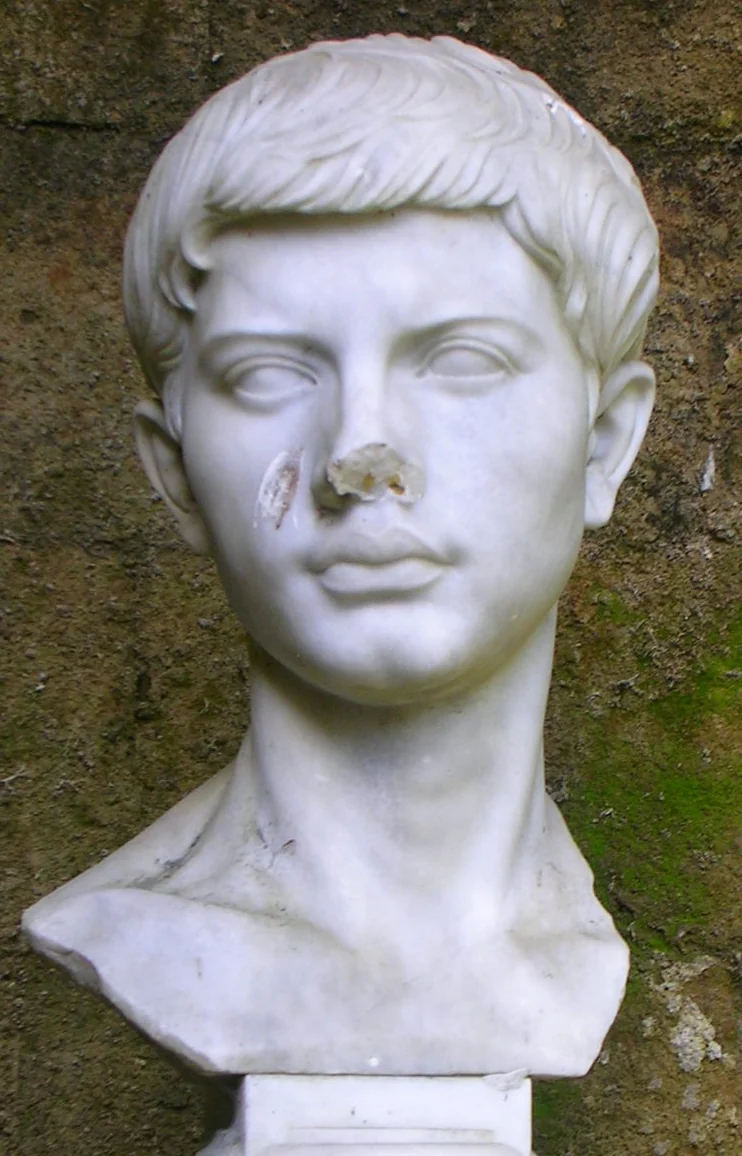
| 65 Quotes | |
| Occup. | Writer |
| From | Rome |
| Born | 70 BC |
| Died | 19 BC |
| Cite | |
Citation Formats
APA Style (7th ed.)
Virgil biography, facts and quotes. (2026, February 2). FixQuotes. https://fixquotes.com/authors/virgil/
Chicago Style
"Virgil biography, facts and quotes." FixQuotes. February 2, 2026. https://fixquotes.com/authors/virgil/.
MLA Style (9th ed.)
"Virgil biography, facts and quotes." FixQuotes, 2 Feb. 2026, https://fixquotes.com/authors/virgil/. Accessed 26 Mar. 2026.
Early Life and Background
Publius Vergilius Maro was born on October 15, 70 BCE, near Mantua in Cisalpine Gaul, a borderland where Italian, Celtic, and Roman currents met. Later legend made his origins humbler or more picturesque than they can be proved, but ancient testimony consistently places him in a provincial milieu rather than among Rome's old nobility. That distance from the capital mattered: his poetry would repeatedly translate rural labor, local pieties, and the texture of the Italian countryside into a language fit for empire.Virgil came of age as the Roman Republic tore itself apart. The years of his youth were marked by proscriptions, confiscations, and the brutal arithmetic of civil war - first between Caesar and Pompey, then among the heirs of Caesar. After Philippi in 42 BCE, land in northern Italy was seized to settle veterans; Virgil's family holdings were threatened and, by several accounts, at least partially lost. The resulting insecurity gave his pastoral imagination an edge: the country is not only a refuge but also a contested space where power can evict the innocent.
Education and Formative Influences
He studied first at Cremona and Milan, then in Rome, and finally at Naples, where he absorbed Greek poetry and philosophy in a city still steeped in Epicurean teaching; the atmosphere of Siro's circle and the wider Campanian intellectual world left him wary of raw political ambition even as he learned to write about it. His early reading fused Theocritus' bucolic art with Roman traditions of land and law, and he trained in rhetoric without becoming a courtroom performer, preferring the long meditation to the quick contest. These years also forged friendships that would prove decisive: the critic and poet Varius Rufus, the learned Gallus, and above all Maecenas, Augustus' cultural minister and Virgil's patron.Career, Major Works, and Turning Points
Virgil's first major publication, the Eclogues (c. 42-39 BCE), reinvented pastoral by letting shepherd song carry the anxieties of dispossession and the hope of renewal; one poem famously imagines a salvific birth in a climate hungry for signs. Around 37 BCE Maecenas drew him into the Augustan orbit, and Virgil turned from idyll to national reconstruction in the Georgics (completed c. 29 BCE), a four-book poem on farming that is also a diagnosis of civic trauma and a manual for disciplined peace. His final decade was devoted to the Aeneid (begun c. 29 BCE, left unfinished at his death in 19 BCE), an epic that binds Homeric scale to Roman destiny: Aeneas carries the defeated Troy into Italy, fights a new war, and founds the line that culminates in Augustus. Virgil died at Brundisium while returning from Greece; tradition says he wished the unfinished poem burned, but Augustus ordered its preservation, and Varius and Tucca edited it with minimal alteration - a turning point not only for his reputation but for Latin literature itself.Philosophy, Style, and Themes
Virgil wrote from within power yet rarely sounded intoxicated by it. His poems are built from a tension between private feeling and public necessity: the lyric voice that mourns lost farms and fragile loves also helps author a narrative of order after chaos. Again and again he tests whether history is redeemed by memory, whether suffering can be made meaningful without being excused. “Perhaps even these things, one day, will be pleasing to remember”. In Virgil this is not cheap consolation; it is an effort to grant the shattered self a future tense, to make endurance a moral and aesthetic act rather than mere survival.His style is controlled, allusive, and saturated with pity - a poet of pauses, parenthetical griefs, and images that carry double weight. Even at his most programmatic he leaves room for the inner wound: “Each of us bears his own Hell”. The line captures a psychology that refuses to externalize pain entirely onto enemies or fate; it is why his Aeneas can be both instrument and victim, both chosen and burdened. Yet Virgil is not a poet of resignation. Love, duty, and labor contend, and he stages their collisions without flattening them into slogans. “Love conquers all”. In context, love can be creative or ruinous, binding communities or destroying individuals like Dido, but its force is never denied; it is one of the energies history must reckon with, not a weakness to be erased by policy.
Legacy and Influence
Virgil became Rome's school text and moral quarry, the poet whose lines could be mined for grammar, prophecy, and political legitimacy; late antiquity treated him as a near-oracular figure, and medieval readers made him Dante's guide through the afterlife, a symbol of reason and humane eloquence at the edge of Christian revelation. The Aeneid set the template for imperial epic, shaping writers from Lucan to Milton, while the Eclogues and Georgics seeded European pastoral and georgic traditions from Spenser to the modern poets of landscape and labor. More enduring still is the Virgilian mood: a seriousness that can praise nation-building while remembering its costs, and a compassion that keeps the defeated visible even inside the victors' story.Our collection contains 65 quotes written by Virgil, under the main topics: Motivational - Ethics & Morality - Truth - Wisdom - Love.
Other people related to Virgil: William Shakespeare (Dramatist), Alexander Pope (Poet), Saint Jerome (Saint), John Dryden (Poet), Joseph Addison (Writer), John Milton (Poet), Petrarch (Poet), Silius Italicus (Poet), Jacques Delille (Poet), Roger B. Chaffee (Astronaut)
Virgil Famous Works
Source / external links