
Virginia Woolf Biography Quotes 74 Report mistakes
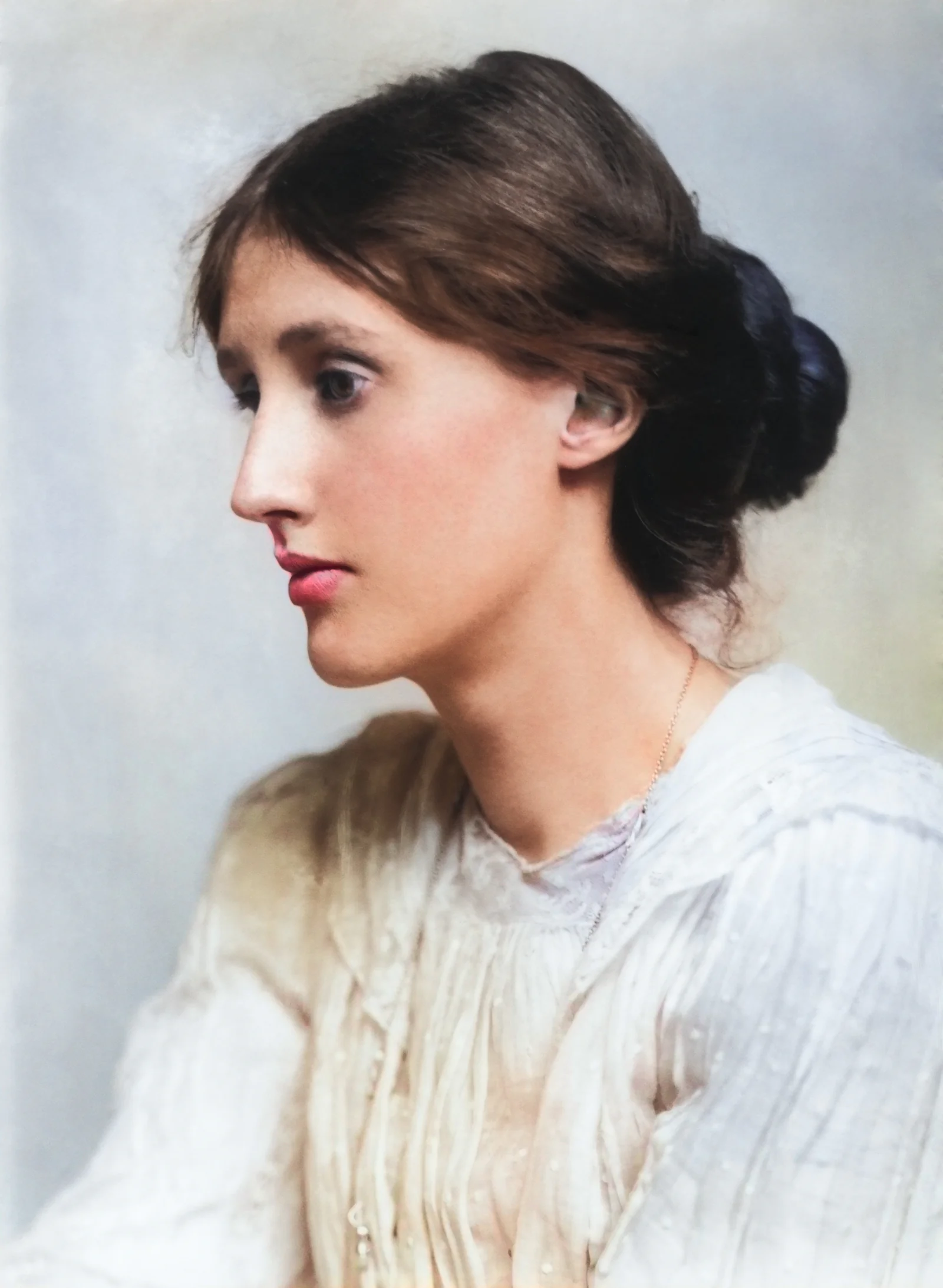
| 74 Quotes | |
| Born as | Adeline Virginia Woolf |
| Occup. | Author |
| From | United Kingdom |
| Born | January 25, 1882 |
| Died | March 28, 1941 |
| Aged | 59 years |
| Cite | |
Citation Formats
APA Style (7th ed.)
Virginia woolf biography, facts and quotes. (2026, February 7). FixQuotes. https://fixquotes.com/authors/virginia-woolf/
Chicago Style
"Virginia Woolf biography, facts and quotes." FixQuotes. February 7, 2026. https://fixquotes.com/authors/virginia-woolf/.
MLA Style (9th ed.)
"Virginia Woolf biography, facts and quotes." FixQuotes, 7 Feb. 2026, https://fixquotes.com/authors/virginia-woolf/. Accessed 24 Mar. 2026.
Early Life and Background
Adeline Virginia Stephen, later Virginia Woolf, was born on 1882-01-25 at 22 Hyde Park Gate, Kensington, London, into a late-Victorian household where letters and hierarchy lived side by side. Her father, Sir Leslie Stephen, was a critic and editor; her mother, Julia Duckworth Stephen, moved through philanthropic work and the rituals of upper-middle-class respectability. Summers in St Ives, Cornwall, gave her a luminous counterworld of sea, light, and childhood freedom that would return as memory and structure in To the Lighthouse. The home was crowded with half-siblings, books, visitors, and unspoken rules, a setting that trained her ear for social nuance and her skepticism toward the authority that spoke most confidently.Behind the cultivated surface, grief and violation shaped her inner weather. Her mother died in 1895, her half-sister Stella in 1897, and her father in 1904; each loss precipitated breakdowns that Woolf later understood as both illness and a brutal education in impermanence. She also endured sexual abuse by her half-brothers, George and Gerald Duckworth, an experience that sharpened her sense of how power inhabits domestic spaces and how silence is enforced. When Leslie Stephen died, Virginia and her siblings left Kensington for Bloomsbury, turning bereavement into a deliberate experiment in living differently.
Education and Formative Influences
Woolf was denied the formal university path open to her brothers, but she educated herself in her father's library, through voracious reading in history, philosophy, and the English novel, and by writing early reviews. In Bloomsbury, Thursday evening discussions with friends who became the Bloomsbury Group - including Lytton Strachey, Clive Bell, and later the economist John Maynard Keynes - formed her into a modernist who distrusted inherited certainties, prized candor, and tested ethics through art. The period also trained her as a critic: she learned to anatomize style, to see institutions as narratives, and to treat consciousness itself as the most modern subject.Career, Major Works, and Turning Points
She married Leonard Woolf in 1912, a partnership of fierce tenderness and practical vigilance that helped her survive recurring manic-depressive episodes; her first novel, The Voyage Out, appeared in 1915 after a severe breakdown. With Leonard she founded the Hogarth Press in 1917, printing her work and that of T.S. Eliot, Katherine Mansfield, and Freud, giving her independence from commercial publishing and a workshop for form. Woolf's major novels - Mrs Dalloway (1925), To the Lighthouse (1927), Orlando (1928), The Waves (1931), and Between the Acts (1941) - remade narrative time by threading private perception through public history, from postwar London to the long shadow of empire and gender. Her long essays, especially A Room of One's Own (1929) and Three Guineas (1938), turned the tools of criticism against patriarchy, militarism, and the education system that had excluded her. As Europe moved toward war again, her fear of another breakdown, the Blitz, and the threat to Leonard as a Jew tightened into despair; on 1941-03-28 she drowned herself in the River Ouse near Rodmell.Philosophy, Style, and Themes
Woolf's method was psychological realism pushed past the merely personal: she sought the mind in motion, the moment when sensation becomes meaning. She distrusted the carceral power of social judgment - “The eyes of others our prisons; their thoughts our cages”. - and her fiction repeatedly stages the self under surveillance, from Clarissa Dalloway's perfect hosting to Septimus Smith's shattered nerves. Yet she also refused escapism, insisting that attention is an ethical act, and that the self is made in relationship, not in isolation.Her feminism was not a slogan but an analysis of how history is archived and who gets to be "author". “For most of history, Anonymous was a woman”. condenses her argument that talent without material support becomes silence, and that the canon is partly an economic record. She linked gender to nation and empire, imagining identity beyond borders - “As a woman I have no country. As a woman my country is the whole world”. - while also showing how that ideal is bruised by class, war, and custom. Formally, she replaced plot-driven certainty with patterns of recurrence: waves, bells, meals, parties, lighthouse beams. Memory in her work is not nostalgia but delayed recognition, the past swelling into significance after the fact, making art a second life where experience can finally be felt.
Legacy and Influence
Woolf became a central architect of literary modernism and a foundational voice in feminist criticism, influencing writers as different as James Joyce's successors, Toni Morrison, Margaret Atwood, Michael Cunningham, and Ali Smith, as well as theorists of gender, trauma, and consciousness. Her diaries, letters, and essays reveal an artist who treated language as both microscope and refuge, and whose life demonstrates the costs of brilliance under stigma and the pressure of history. Nearly a century after her death, her work remains a toolkit for describing inner life with precision, for exposing the politics hidden in manners, and for imagining freedom as a practice requiring rooms, time, and the courage to look directly at what society asks to be left unspoken.Our collection contains 74 quotes written by Virginia, under the main topics: Witty One-Liners - Ethics & Morality - Truth - Wisdom - Art.
Other people related to Virginia: Vita Sackville-West (Novelist), Arnold Bennett (Novelist), Leonard Woolf (Author), Ahmed Ali (Writer), Coventry Patmore (Poet), George Segal (Actor)
Virginia Woolf Famous Works
- 1941 Between the Acts (Novel)
- 1931 The Waves (Novel)
- 1929 A Room of One's Own (Essay)
- 1928 Orlando: A Biography (Novel)
- 1927 To the Lighthouse (Novel)
- 1925 Mrs. Dalloway (Novel)
Source / external links