
Vladimir Lenin Biography Quotes 37 Report mistakes
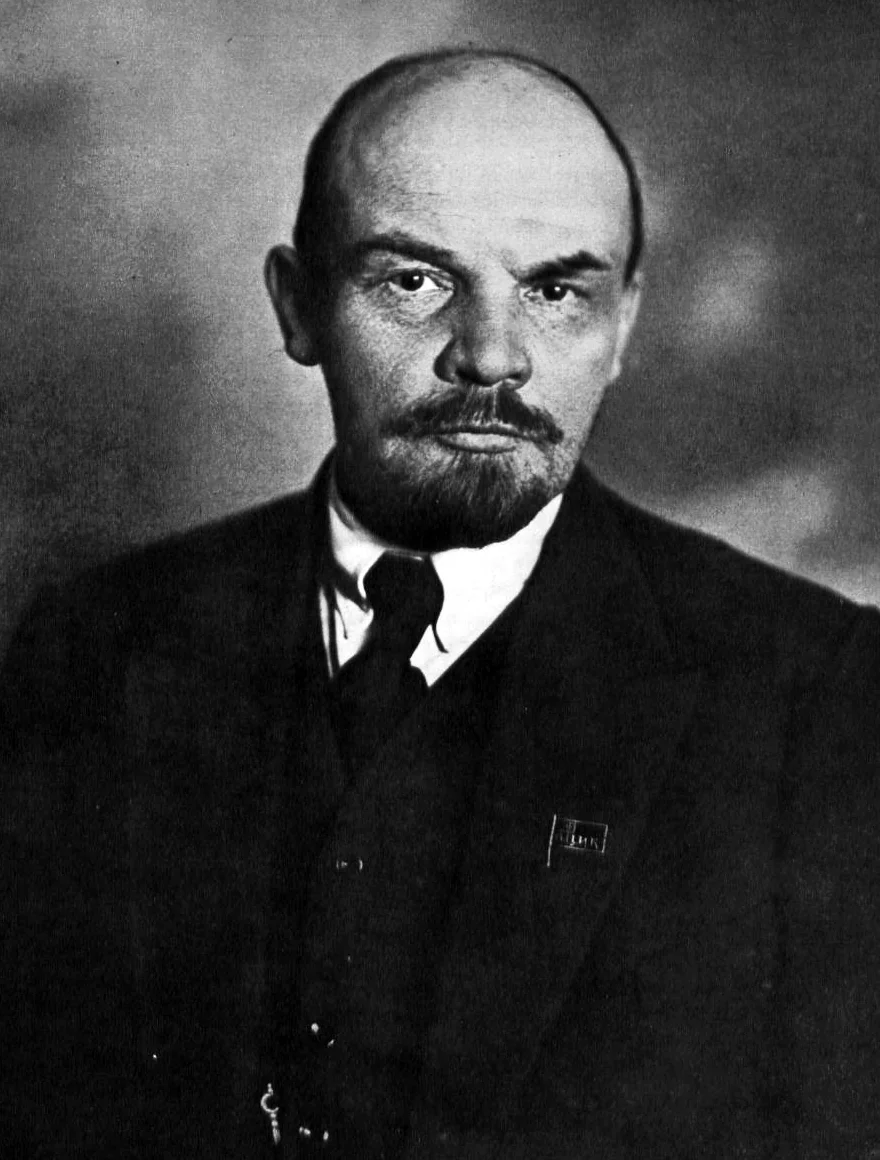
| 37 Quotes | |
| Born as | Vladimir Ilyich Ulyanov |
| Occup. | Leader |
| From | Russia |
| Spouse | Nadezhda Krupskaya |
| Born | April 22, 1870 Simbirsk, Russian Empire |
| Died | January 21, 1924 Gorki, Russian SFSR, Soviet Union |
| Cause | Stroke |
| Aged | 53 years |
| Cite | |
Citation Formats
APA Style (7th ed.)
Vladimir lenin biography, facts and quotes. (2026, February 2). FixQuotes. https://fixquotes.com/authors/vladimir-lenin/
Chicago Style
"Vladimir Lenin biography, facts and quotes." FixQuotes. February 2, 2026. https://fixquotes.com/authors/vladimir-lenin/.
MLA Style (9th ed.)
"Vladimir Lenin biography, facts and quotes." FixQuotes, 2 Feb. 2026, https://fixquotes.com/authors/vladimir-lenin/. Accessed 25 Mar. 2026.
Early Life and Background
Vladimir Ilyich Ulyanov, later known as Vladimir Lenin, was born on April 22, 1870, in Simbirsk on the Volga, a provincial town of the Russian Empire whose calm surface hid the tensions of modernization and autocracy. His father, Ilya Nikolayevich Ulyanov, rose within the imperial school system, and the family lived in the contradictory space between state service and liberal aspiration - loyal to education as a ladder, yet increasingly aware of the empire's political immobility. Lenin grew up amid the literate routines of a bureaucratic household, surrounded by books, examinations, and the moral seriousness of upward mobility.The decisive shock of his youth came not as poverty but as political violence and its reprisals. In 1887 his older brother Aleksandr was executed for participating in a plot against Tsar Alexander III. The hanging stamped the Ulyanov name with suspicion and forced Lenin into an inner reckoning: if the state could kill an educated idealist to preserve itself, then sentiment and individual heroism were insufficient. From this point, his temperament hardened into an ethic of discipline, secrecy, and calculated force - less romantic than the populists, more convinced that history belonged to organization.
Education and Formative Influences
Lenin briefly studied law at Kazan University, was expelled for student unrest, and completed his degree externally at St. Petersburg University in 1891. The law curriculum trained him in argument and procedure, but his real education was underground: Marx and Engels, Russian radical journalism, and the practical craft of conspiratorial circles. In the early 1890s he moved through the capital's worker study groups, translating theory into agitation, and by 1895 helped form the St. Petersburg "Union of Struggle for the Emancipation of the Working Class". Arrest followed, then internal exile in Shushenskoye in Siberia (1897-1900), where he wrote, built networks, and married Nadezhda Krupskaya, a comrade whose life became entwined with the mechanics of party work.Career, Major Works, and Turning Points
After exile Lenin became a professional revolutionary in the emigre world of Munich, London, Geneva, and Paris, shaping the newspaper Iskra and pushing for a tightly organized party of cadres. The split with the Mensheviks at the Russian Social Democratic Labor Party congress in 1903 crystallized his Bolshevik identity and his conviction that leadership must be centralized to survive repression. Key works - "What Is to Be Done?" (1902), "Imperialism, the Highest Stage of Capitalism" (1916), and "State and Revolution" (1917) - fused analysis with instruction manuals for power. In April 1917 he returned to Petrograd via sealed train, issued the April Theses, and steered the Bolsheviks from opposition into seizure of the state in October. Civil war, War Communism, the creation of the Cheka, and the banning of rival parties hardened the revolution into a one-party system; the 1921 New Economic Policy admitted economic retreat without political pluralism. Illness after 1922 curtailed his command, and he died on January 21, 1924, leaving a succession struggle that Joseph Stalin would win.Philosophy, Style, and Themes
Lenin's inner life was defined by urgency - a sense that politics was not a salon debate but a contest of coercive institutions. He treated mass upheaval as raw energy requiring direction, insisting that “Politics begin where the masses are, not where there are thousands, but where there are millions, that is where serious politics begin”. In this psychology, the party became both instrument and conscience: it did not merely represent workers but organized them into a historical actor. His writings show a prosecutorial style - polemical, categorical, obsessed with splitting allies from enemies - reflecting a man who believed hesitation was itself a form of collaboration with the old order.The theoretical promise was emancipatory, yet it was coupled to an austere view of the state and a willingness to use it ruthlessly. Lenin could write, “While the State exists there can be no freedom; when there is freedom there will be no State”. , but he also built the very coercive apparatus he claimed would wither away, convinced that counterrevolution made terror a temporary necessity. His moral imagination centered on ends and pathways rather than sanctity of means; hence the candor of “Sometimes - history needs a push”. The tension between future liberation and present compulsion was not accidental - it was the hinge of his political character, and it shaped the Soviet state from its first days.
Legacy and Influence
Lenin's enduring influence lies in his model of revolution as organization: disciplined cadres, propaganda as pedagogy, and the seizure of state power as the gateway to social transformation. He helped topple Romanov autocracy, redefined Marxism for an era of imperial war and peasant-majority societies, and left institutions - party, secret police, planned economy, ideological schooling - that outlived him and traveled globally. Yet the same architecture that enabled rapid mobilization also normalized political monopoly and violence, providing successors with tools for repression on a scale Lenin did not fully control. For admirers he remains the strategist who turned theory into statecraft; for critics, the founder of a system where utopian ends repeatedly excused unfree means.Our collection contains 37 quotes written by Vladimir, under the main topics: Ethics & Morality - Truth - Wisdom - Justice - Leadership.
Other people related to Vladimir: Armand Hammer (Businessman), Alan Brien (Novelist), Bela Kun (Politician), Sylvia Pankhurst (Activist), Rudolf Hilferding (Economist), George Jackson (Activist)
Vladimir Lenin Famous Works
- 1917 The April Theses (Book)
- 1917 The State and Revolution (Book)
- 1917 Imperialism, the Highest Stage of Capitalism (Book)
- 1904 One Step Forward, Two Steps Back (Book)
- 1902 What Is to Be Done? (Book)
- 1899 The Development of Capitalism in Russia (Book)
Source / external links