
Vladimir Nabokov Biography Quotes 39 Report mistakes
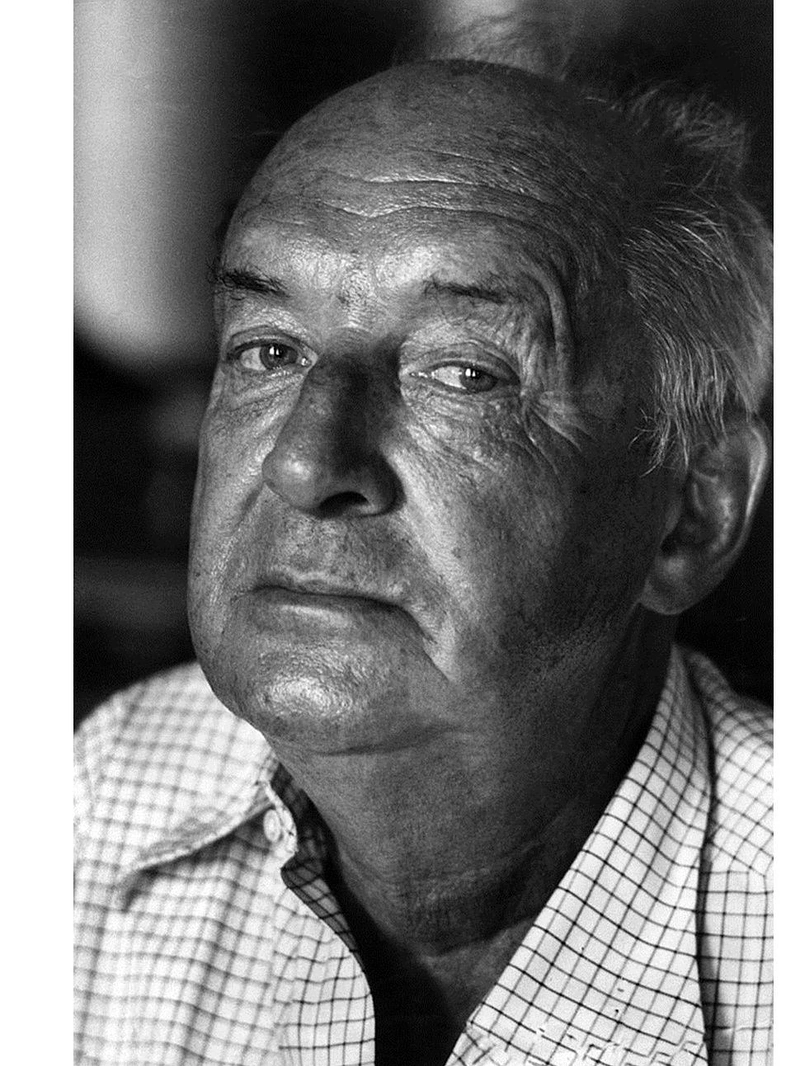
Attr: The Poetry Foundation
| 39 Quotes | |
| Born as | Vladimir Vladimirovich Nabokov |
| Known as | Vladimir Sirin |
| Occup. | Novelist |
| From | USA |
| Born | April 22, 1899 Saint Petersburg, Russia |
| Died | July 2, 1977 Montreux, Switzerland |
| Aged | 78 years |
| Cite | |
Citation Formats
APA Style (7th ed.)
Vladimir nabokov biography, facts and quotes. (2026, February 11). FixQuotes. https://fixquotes.com/authors/vladimir-nabokov/
Chicago Style
"Vladimir Nabokov biography, facts and quotes." FixQuotes. February 11, 2026. https://fixquotes.com/authors/vladimir-nabokov/.
MLA Style (9th ed.)
"Vladimir Nabokov biography, facts and quotes." FixQuotes, 11 Feb. 2026, https://fixquotes.com/authors/vladimir-nabokov/. Accessed 25 Mar. 2026.
Early Life and Background
Vladimir Vladimirovich Nabokov was born on April 22, 1899, in St. Petersburg, into a wealthy, anglophile, liberal aristocratic family whose security rested on a fragile Russian constitutional dream. His father, Vladimir Dmitrievich Nabokov, was a prominent jurist and Kadet politician; his mother, Elena Rukavishnikova, brought money, languages, and a cultivated household. Nabokov grew up amid books, servants, and the citys winter brilliance, with summers on country estates and an early passion for butterflies that trained his eye toward minute differences and shimmering detail.Revolution ended that world. After 1917 the Nabokovs fled through Crimea into exile, carrying memory like contraband. The familys displacement was not merely geographic but moral: the young writer watched ideologies swallow nuance, and he never forgave coercion dressed as progress. In Berlin in 1922, his father was assassinated while shielding a colleague from Russian monarchist gunmen, a private catastrophe that hardened Nabokovs disgust for political violence and made the past feel simultaneously irrecoverable and obsessively present.
Education and Formative Influences
Educated in Russian, English, and French, Nabokov absorbed Dickens, Flaubert, Pushkin, and the precision of European verse before he learned the compromises of adulthood. From 1919 to 1922 he studied at Trinity College, Cambridge, reading modern and medieval languages and moving with ease among literary traditions while remaining emotionally tethered to a vanished Russia. In these years he began publishing Russian poems and stories, sharpening a sensibility that prized exact perception over social program and that treated language as both instrument and enchanted object.Career, Major Works, and Turning Points
In 1920s Berlin, where Russian emigre culture burned brightly and precariously, he wrote under the pen name V. Sirin, producing novels such as Mary (1926), The Defense (1930), Despair (1934), and Invitation to a Beheading (written 1934-1936), works that fused exile melancholy with formal play and moral dread. Rising antisemitism and war pushed him to Paris and then, in 1940, to the United States, where he reinvented himself in English while supporting his family through teaching and lepidopterology at the American Museum of Natural History. Lolita (1955) - composed in America, published first in Paris, then worldwide - made him infamous and financially free, followed by Pnin (1957), Pale Fire (1962), and the monumental memoir Speak, Memory (final form 1966). In 1961 he moved to Montreux, Switzerland, continuing to write, translate, and refine his chess-problem-like fictions until his death on July 2, 1977.Philosophy, Style, and Themes
Nabokovs inner life was governed by an almost religious devotion to consciousness: the mind as a theater where sensation, recollection, and invention compete to become real. For him, memory was not a warehouse but an aesthetic force, and he framed its intensity as an act of devotion: “I think it is all a matter of love: the more you love a memory, the stronger and stranger it is”. That conviction animates his exilic art: lost St. Petersburg, murdered father, and severed childhood are not simply lamented but re-created with tactile exactitude, as if the right sentence could briefly defeat historical erasure.His style joined baroque surface to hidden architecture - acrostics, mirrors, false authors, and traps for inattentive readers - while insisting that play had ethical edges. “Satire is a lesson, parody is a game”. The distinction mattered to him: he distrusted collective abstractions and preferred individual culpability, so his parodies are often joyful puzzles while his satire - of tyranny, vulgarity, and coercion - carries real heat. Underneath the glitter lay metaphysical unease, a sense that life is luminous but brief and bracketed by nothingness: “The cradle rocks above an abyss, and common sense tells us that our existence is but a brief crack of light between two eternities of darkness”. Against that abyss he set art, not as therapy or manifesto, but as a precise counterspell of pattern, humor, and pity.
Legacy and Influence
Nabokov reshaped the modern novel by proving that high lyricism, intricate design, and narrative mischief could coexist with emotional gravity; Pale Fire became a touchstone for postmodern form, while Lolita forced generations to separate subject matter from authorial stance and to read with ethical alertness. As a teacher, translator, and stylist, he influenced writers as different as John Updike, Don DeLillo, Salman Rushdie, and W. G. Sebald, and he helped elevate close reading as an art of attention. His enduring power lies in the fusion of tenderness and cruelty, comedy and dread - a singular exiles attempt to salvage, through language, the exact shimmer of a world that history destroyed.Our collection contains 39 quotes written by Vladimir, under the main topics: Witty One-Liners - Truth - Wisdom - Art - Sarcastic.
Other people related to Vladimir: Thomas Pynchon (Writer), Gene Wolfe (Writer), Richard Corliss (Writer)
Vladimir Nabokov Famous Works
- 2009 The Original of Laura (Novel)
- 1972 Transparent Things (Novel)
- 1969 Ada or Ardor: A Family Chronicle (Novel)
- 1962 Pale Fire (Novel)
- 1957 Pnin (Novella)
- 1955 Lolita (Novel)
- 1951 Speak, Memory (Autobiography)
- 1951 The Vane Sisters (Short Story)
- 1947 Bend Sinister (Novel)
- 1941 The Real Life of Sebastian Knight (Novel)
- 1938 The Gift (Novel)
- 1936 Invitation to a Beheading (Novel)
- 1934 Despair (Novel)
- 1930 The Defense (Novel)
- 1928 King, Queen, Knave (Novel)
- 1926 Mary (Mashen'ka) (Novel)