
Vladimir Putin Biography Quotes 18 Report mistakes
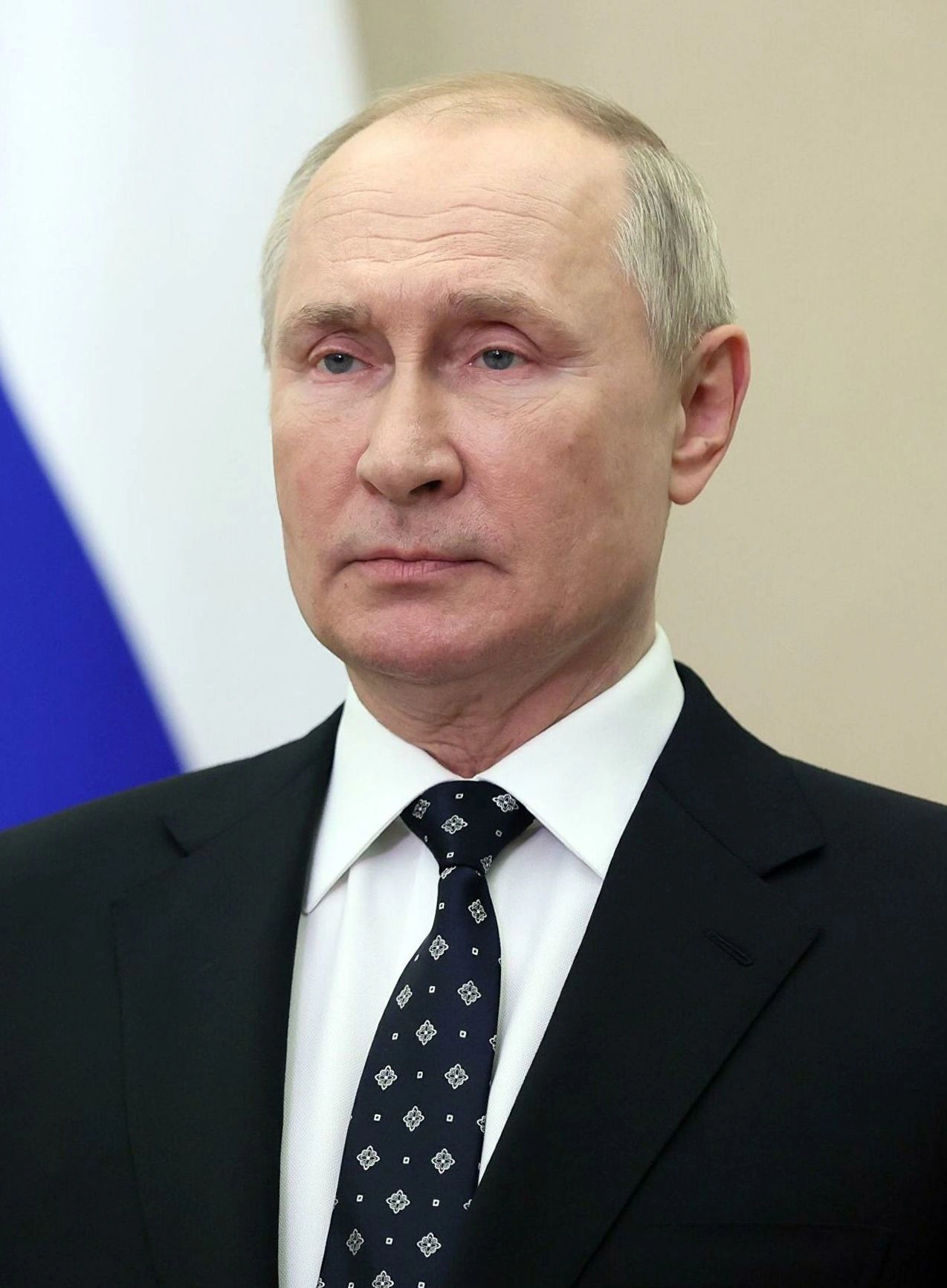
| 18 Quotes | |
| Occup. | President |
| From | Russia |
| Born | October 7, 1952 Leningrad, Russia |
| Age | 73 years |
| Cite | |
Citation Formats
APA Style (7th ed.)
Vladimir putin biography, facts and quotes. (2026, February 11). FixQuotes. https://fixquotes.com/authors/vladimir-putin/
Chicago Style
"Vladimir Putin biography, facts and quotes." FixQuotes. February 11, 2026. https://fixquotes.com/authors/vladimir-putin/.
MLA Style (9th ed.)
"Vladimir Putin biography, facts and quotes." FixQuotes, 11 Feb. 2026, https://fixquotes.com/authors/vladimir-putin/. Accessed 24 Mar. 2026.
Early Life and Background
Vladimir Vladimirovich Putin was born on October 7, 1952, in Leningrad (now St. Petersburg), in the long shadow of World War II and the Siege of Leningrad - a trauma that shaped the citys memory and the Soviet cult of endurance. His parents were working-class; his father, a naval serviceman and factory worker, and his mother, a factory laborer, raised him in cramped communal housing typical of the late Stalin and post-Stalin years. The setting mattered: Leningrad combined imperial grandeur with postwar scarcity, and its street culture prized toughness, loyalty, and quick reading of threat.Putins early self-presentation has often leaned on discipline learned in courtyards and sports clubs, a personal mythology of ascent from anonymity to command. The psychology of that ascent - a suspicion of humiliation, a drive to control the room, a preference for tested bonds over abstract ideals - is inseparable from the Soviet era that formed him: a state that promised order and status while also breeding cynicism toward official language. By the time he came of age, the USSR was stable but stagnant, and ambition increasingly required navigating institutions rather than inspiring crowds.
Education and Formative Influences
Putin studied law at Leningrad State University, graduating in 1975, and entered the Komitet Gosudarstvennoy Bezopasnosti (KGB) soon after, committing himself to the Soviet security worldview in which politics is a contest of leverage, secrecy, and information. He was posted to Dresden in the German Democratic Republic in the 1980s, a period that sharpened his understanding of both European proximity and Soviet vulnerability; the collapse of Communist regimes in 1989-1991 and the disintegration of the USSR became, for him, not just a geopolitical earthquake but a lesson about what happens when a state loses coercive capacity and narrative authority.Career, Major Works, and Turning Points
Returning to Leningrad in 1990, Putin moved into municipal politics under Anatoly Sobchak, rising from adviser to deputy mayor and building a network in the citys reform-era business and security circles. In 1996 he relocated to Moscow, advanced through the Kremlin bureaucracy, led the Federal Security Service (FSB) in 1998, and became prime minister in August 1999 amid war in the North Caucasus and a succession crisis around President Boris Yeltsin. After Yeltsins resignation on December 31, 1999, Putin became acting president and then won election in 2000, later serving as president (2000-2008), prime minister (2008-2012), and president again from 2012 onward. Key turning points included the second Chechen war, the consolidation of federal power and media influence, the 2008 war with Georgia, the 2014 annexation of Crimea and support for separatists in eastern Ukraine, intervention in Syria from 2015, and the full-scale invasion of Ukraine in 2022 - events that recast his rule from post-Soviet stabilization to open-ended confrontation with the West.Philosophy, Style, and Themes
Putins governing philosophy is built around state capacity, sovereignty, and managed pluralism - the conviction that Russias survival requires vertical authority more than competitive politics. He has framed this as a misread necessity: “The strengthening of our statehood is, at times, deliberately interpreted as authoritarianism”. The line is revealing as self-defense and accusation at once: he seeks legitimacy not through ideological innovation but through insisting that criticism is either naive about chaos or strategically hostile. His rhetoric repeatedly contrasts the fragility of the 1990s with the promise of restored coherence, turning personal rule into a narrative of national rescue.His themes also expose a conflicted relationship with the Soviet past and with Western models. He has offered a famously ambivalent epitaph for the USSR: “Anyone who doesn't regret the passing of the Soviet Union has no heart. Anyone who wants it restored has no brains”. Psychologically, this is a bid to own both grief and pragmatism - to claim emotional continuity with Soviet achievement while disclaiming nostalgia as a program. At the same time, he relativizes liberal templates as culturally shallow imports: “Russia will not soon become, if it ever becomes, a second copy of the United States or England - where liberal values have deep historic roots”. The governing style that follows is tactical, legalistic, and security-minded: rule through calibrated pressure, selective co-optation, and narratives of encirclement, with elections and institutions kept functional but subordinated to stability and geopolitical agency.
Legacy and Influence
Putins legacy is among the most consequential and polarizing of the early 21st century: he restored the states commanding role after the Yeltsin-era unraveling, raised Russias global profile, and rebuilt a patriotic consensus for many years around order, pensions, and sovereignty. Yet he also presided over tightened political competition, high-profile repression, and a foreign policy that culminated in a devastating war in Ukraine, transforming Russias economy, demography, and international isolation while reshaping European security. Whatever the ultimate outcome of his long reign, Putin has already redefined post-Soviet governance as a durable model of centralized power under electoral forms - and forced the world to reckon again with how personal rule, historical grievance, and security logic can bend an entire era.Our collection contains 18 quotes written by Vladimir, under the main topics: Justice - Freedom - Hope - War - Peace.
Other people related to Vladimir: Oliver Stone (Director), Dmitry Medvedev (President), Garry Kasparov (Celebrity), Mikhail Khodorkovsky (Businessman), Aslan Maskhadov (Politician), Larry King (Entertainer), Viktor Yanukovych (Statesman), Robert Kocharian (Statesman), Igor Ivanov (Statesman), Mikhail Saakashvili (Statesman)
Vladimir Putin Famous Works
- 2004 Judo: History, Theory, Practice (Book)
- 2000 First Person: An Astonishingly Frank Self-Portrait by Russia's President (Autobiography)