
W. E. B. Du Bois Biography Quotes 15 Report mistakes
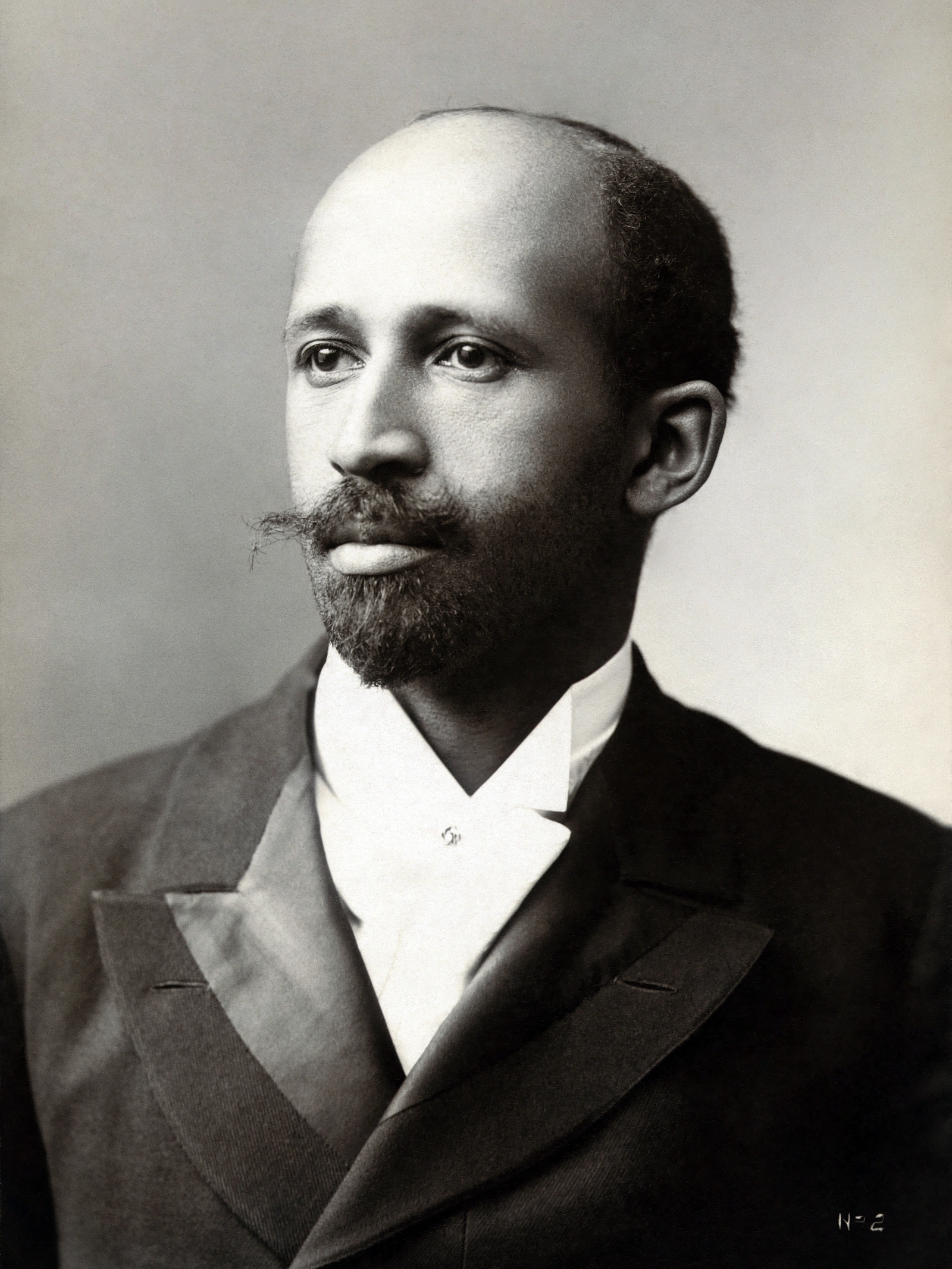
| 15 Quotes | |
| Born as | William Edward Burghardt Du Bois |
| Occup. | Writer |
| From | USA |
| Born | February 23, 1868 Great Barrington, Massachusetts |
| Died | August 27, 1963 Accra, Ghana |
| Aged | 95 years |
| Cite | |
Citation Formats
APA Style (7th ed.)
W. e. b. du bois biography, facts and quotes. (2026, February 11). FixQuotes. https://fixquotes.com/authors/w-e-b-du-bois/
Chicago Style
"W. E. B. Du Bois biography, facts and quotes." FixQuotes. February 11, 2026. https://fixquotes.com/authors/w-e-b-du-bois/.
MLA Style (9th ed.)
"W. E. B. Du Bois biography, facts and quotes." FixQuotes, 11 Feb. 2026, https://fixquotes.com/authors/w-e-b-du-bois/. Accessed 26 Mar. 2026.
Early Life and Background
William Edward Burghardt Du Bois was born on February 23, 1868, in Great Barrington, Massachusetts, a small New England town where Black residents were few and the aftershocks of the Civil War still shaped national life. His family background braided together northern free Black history and the legacies of bondage farther south: his mother, Mary Silvina Burghardt, descended from a long-established Black family in the Berkshires; his father, Alfred Du Bois, had roots in the Caribbean and drifted away early, leaving Du Bois to be raised in straitened circumstances by his mother and a wider community that alternated between encouragement and constraint.Great Barrington offered Du Bois an early glimpse of both possibility and boundary. He excelled in school and wrote for local papers, learning how public language could confer dignity or strip it away. Yet even in a comparatively tolerant setting, racial difference was never merely personal - it was social weather, shaping aspiration, work, and the terms on which one could belong. That tension between individual striving and structural limitation would become the motor of his life: the desire to be recognized as fully American while diagnosing the republics failure to recognize its own promises.
Education and Formative Influences
Du Bois left Massachusetts for Fisk University in Nashville in the mid-1880s, where the daily realities of Jim Crow and the cultural wealth of Black Southern life deepened his sense of mission; he then studied at Harvard (BA 1890, PhD 1895) and pursued graduate work in Berlin, absorbing German historical economics and a faith in rigorous social science. He moved between worlds - the academy, Black institutions, and international intellectual circles - and learned to treat race not as a biological fate but as a historical creation enforced by law, labor, and custom, and therefore open to analysis and struggle.Career, Major Works, and Turning Points
After early teaching and research, Du Bois produced The Philadelphia Negro (1899), a landmark empirical study that refused both racist myth and romantic uplift by tracing how housing, employment, policing, and prejudice shaped Black urban life; he soon rose to national prominence with The Souls of Black Folk (1903). Breaking with Booker T. Washingtons accommodationism, Du Bois helped found the Niagara Movement (1905) and became a central architect of the NAACP (1909), editing The Crisis and turning journalism into a weapon of mass political education. Across decades he wrote not only essays but historical syntheses and polemics - including Black Reconstruction in America (1935) - insisting that emancipation and its overthrow were central to understanding US democracy. Disillusionment with Cold War repression and colonial violence pushed him toward socialism, Pan-African organizing, and finally expatriation to Ghana in 1961; he died in Accra on August 27, 1963, on the eve of the March on Washington, his absence haunting the very movement he had helped make thinkable.Philosophy, Style, and Themes
Du Bois wrote as a scholar who could not accept the safety of scholarship. His central insight was psychological and political at once: modern Black life was marked by a split awareness produced by domination, “a peculiar sensation, this double-consciousness, this sense of always looking at one's self through the eyes of others, of measuring one's soul by the tape of a world that looks on in amused contempt and pity”. That formulation was not a confession of weakness but a diagnosis of a society that forced perception to become self-surveillance, and it explains his alternating tones - lyric, statistical, prophetic - as attempts to restore interior wholeness while documenting exterior force.He also treated democracy as something defended, not assumed, and his prose repeatedly returned to the hard mechanics of power. “The power of the ballot we need in sheer defense, else what shall save us from a second slavery?” Behind the urgency was a fear shaped by Reconstruction's collapse: rights without enforcement curdle into theater. Even his most famous sentence, “The problem of the twentieth century is the problem of the color line”. , was less slogan than framework, a way to connect lynching, labor exploitation, colonialism, and war into a single historical map. The enduring Du Bois style is thus a double commitment - to beauty as a form of truth and to evidence as a form of conscience.
Legacy and Influence
Du Bois endures as a foundational writer of modern African American thought and a major architect of twentieth-century sociology, civil-rights strategy, and Pan-African politics. His concepts - double-consciousness, the color line, the critique of racial capitalism, the insistence that Black labor and Black intellect sit at the center of US history - shaped generations from the Harlem Renaissance through the civil-rights era and into contemporary scholarship. If some later readers dispute his tactical shifts, his deeper legacy is methodological: he modeled how to join data to moral imagination, and how to write from inside a wound without making the wound the whole identity of a people.Our collection contains 15 quotes written by E. B. Du Bois, under the main topics: Freedom - Learning - Knowledge - Work Ethic - Book.
Other people related to E. B. Du Bois: Lorraine Hansberry (Playwright), Carl Van Vechten (Writer), D. W. Griffith (Director), Charles W. Chesnutt (Novelist)
W. E. B. Du Bois Famous Works
- 1947 The World and Africa: An Inquiry into the Part Which Africa Has Played in World History (Book)
- 1945 Color and Democracy: Colonies and Peace (Book)
- 1940 Dusk of Dawn: An Essay Toward an Autobiography of a Race Concept (Autobiography)
- 1935 Black Reconstruction in America (Book)
- 1924 The Gift of Black Folk: The Negroes in the Making of America (Book)
- 1920 Darkwater: Voices From Within the Veil (Collection)
- 1915 The Negro (Non-fiction)
- 1911 The Quest of the Silver Fleece (Novel)
- 1903 The Souls of Black Folk (Collection)
- 1899 The Philadelphia Negro: A Social Study (Book)
- 1896 The Suppression of the African Slave-trade to the United States of America, 1638–1870 (Non-fiction)