
W. Edwards Deming Biography Quotes 22 Report mistakes
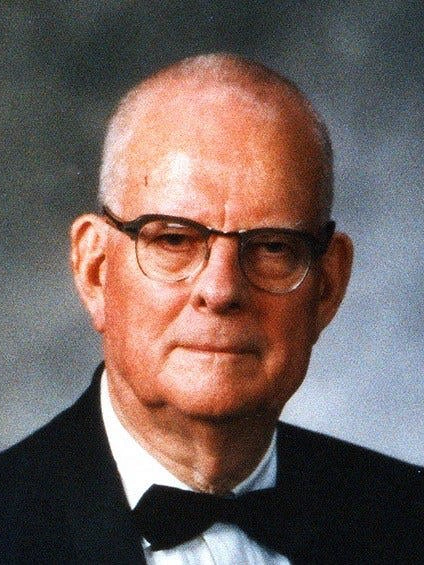
Attr: Christopher R Chapman
| 22 Quotes | |
| Born as | William Edwards Deming |
| Occup. | Scientist |
| From | USA |
| Born | October 14, 1900 Sioux City, Iowa, United States |
| Died | December 20, 1993 Washington, D.C., United States |
| Aged | 93 years |
| Cite | |
Citation Formats
APA Style (7th ed.)
W. edwards deming biography, facts and quotes. (2026, February 11). FixQuotes. https://fixquotes.com/authors/w-edwards-deming/
Chicago Style
"W. Edwards Deming biography, facts and quotes." FixQuotes. February 11, 2026. https://fixquotes.com/authors/w-edwards-deming/.
MLA Style (9th ed.)
"W. Edwards Deming biography, facts and quotes." FixQuotes, 11 Feb. 2026, https://fixquotes.com/authors/w-edwards-deming/. Accessed 5 Mar. 2026.
Early Life and Background
William Edwards Deming was born on October 14, 1900, in Sioux City, Iowa, and spent much of his boyhood in the small town of Powell, Wyoming, where his father sought opportunity in the West. The family lived with financial strain, and Deming grew up in a culture that prized practical competence, thrift, and self-reliance. Those early conditions mattered: he developed an instinctive respect for systems that work, not slogans that comfort, and for evidence that survives hard circumstances.Deming came of age as the United States shifted from frontier expansion to industrial scale, with railroads, electrification, and mass production reshaping daily life. The era promised abundance but also revealed the hazards of haste - accidents, waste, and boom-and-bust management. Long before he became a famous counselor to executives, he was already a person drawn to order beneath complexity, the kind of temperament that sees variation as something to understand rather than blame.
Education and Formative Influences
He studied engineering at the University of Wyoming (BS, 1921), earned an MS in mathematics and physics at the University of Colorado (1925), and completed a PhD in mathematical physics at Yale University (1928). The blend was decisive: engineering trained him to think in processes and constraints, while mathematical physics trained him to separate signal from noise. In Washington, D.C., he moved into the world of measurement and public administration, absorbing statistical thinking through the work of Walter A. Shewhart at Bell Laboratories and the practical demands of the U.S. Department of Agriculture and the Census Bureau - places where the cost of poor methods was counted in national decisions, not just factory scrap.Career, Major Works, and Turning Points
Deming became a leading figure in statistical quality control and large-scale data methodology, teaching sampling and process control techniques that were vital during World War II. A turning point came after the war, when he lectured in Japan (beginning in 1950) to engineers and executives, helping catalyze a shift from inspection-based quality to process-based quality and managerial responsibility; his influence became associated with the Deming Prize and the rise of Japanese industrial competitiveness. In the United States, he remained comparatively underappreciated until the late 1970s and early 1980s, when industrial decline renewed interest in his methods; a wider audience followed through his books Out of the Crisis (1982) and The New Economics (1993), where he fused statistics, systems thinking, and psychology into a single critique of short-term, target-driven management.Philosophy, Style, and Themes
Deming argued that quality is not a department but a way of governing - a moral and epistemic stance toward work. He insisted that managers must see the organization as an interdependent system, understand variation, and design processes that make good work the default. His style was blunt, often impatient with managerial theater, because he believed confusion was costly and that ignorance disguised as confidence was the most expensive defect a firm could carry. Behind the severity was a distinctive compassion: he aimed not to browbeat workers, but to remove the conditions that forced them to fail.His aphorisms reveal a psychology shaped by measurement and by a deep distrust of blame as a substitute for understanding. “If you can't describe what you are doing as a process, you don't know what you're doing”. The sentence is not merely technical - it is an ethical demand for clarity, implying that leaders who cannot map the work have no right to judge the people doing it. He framed improvement as a choice with existential stakes: “Learning is not compulsory... neither is survival”. He also treated cooperation as an economic law rather than a sentimental ideal, insisting that stable partnerships compound capability: “The result of long-term relationships is better and better quality, and lower and lower costs”. Taken together, these themes show his inner orientation: he sought security not in control but in knowledge, not in punishment but in redesign, and not in quarterly wins but in cumulative learning.
Legacy and Influence
Deming died on December 20, 1993, in Washington, D.C., having lived to see his ideas migrate from factories into hospitals, schools, and government agencies. His legacy is the normalization of process thinking, the disciplined use of statistics to distinguish common from special causes, and the insistence that leadership is accountable for the system, not merely the output. Modern quality movements - from continuous improvement and lean practice to contemporary discussions of safety culture and data-driven management - carry his imprint, sometimes without citation: skepticism of arbitrary targets, preference for capability over exhortation, and faith that better questions and better processes create both better work and better lives.Our collection contains 22 quotes written by Edwards Deming, under the main topics: Learning - Work Ethic - Reason & Logic - Change - Knowledge.
Other people related to Edwards Deming: Donald Berwick (Public Servant)
W. Edwards Deming Famous Works
- 1993 The New Economics: For Industry, Government, Education (Book)
- 1982 Out of the Crisis (Book)
- 1943 Statistical Adjustment of Data (Non-fiction)