
W. Mark Felt Biography Quotes 5 Report mistakes
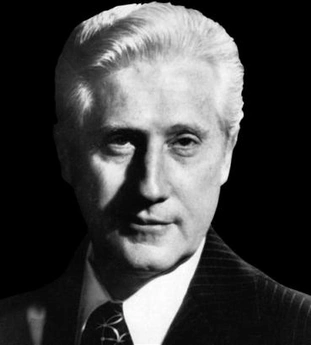
| 5 Quotes | |
| Born as | William Mark Felt, Sr. |
| Known as | Deep Throat |
| Occup. | Public Servant |
| From | USA |
| Born | August 17, 1913 Twin Falls, Idaho |
| Died | December 18, 2008 Santa Rosa, California |
| Aged | 95 years |
| Cite | |
Citation Formats
APA Style (7th ed.)
W. mark felt biography, facts and quotes. (2026, February 11). FixQuotes. https://fixquotes.com/authors/w-mark-felt/
Chicago Style
"W. Mark Felt biography, facts and quotes." FixQuotes. February 11, 2026. https://fixquotes.com/authors/w-mark-felt/.
MLA Style (9th ed.)
"W. Mark Felt biography, facts and quotes." FixQuotes, 11 Feb. 2026, https://fixquotes.com/authors/w-mark-felt/. Accessed 5 Apr. 2026.
Early Life and Background
William Mark Felt, Sr. was born on August 17, 1913, in Twin Falls, Idaho, a small but fast-growing town shaped by irrigation projects, rail lines, and the practical optimism of the intermountain West. His early world prized steadiness, discretion, and advancement through institutions - church, local business, and the law - values that would later dovetail with the FBI's culture of hierarchy and secrecy. Felt carried the stamp of that environment: outwardly reserved, inwardly ambitious, and drawn to systems that promised order in a century repeatedly shaken by depression, war, and political upheaval.His private life was marked by loyalty and strain. He married Audrey Robinson in 1938 and built a conventional family identity that contrasted with the clandestine reputation he would acquire late in life. By temperament, he seemed to prefer roles where duty could be framed as moral clarity. Yet the arc of his life suggests a persistent tension between obedience to the chain of command and a self-appointed obligation to protect the institution he served, even when that meant acting alone.
Education and Formative Influences
Felt studied at the University of Idaho and earned a law degree from George Washington University in Washington, D.C., in 1940, entering the capital as federal power expanded under the New Deal and then mobilized for World War II. He briefly worked for the Federal Trade Commission before joining the FBI in 1942, absorbing a Hoover-era worldview that treated communism, organized crime, and internal dissent as threats requiring disciplined counterforce. The early Cold War reinforced the Bureau's conviction that stability depended on secrecy, tight control of information, and a near-sacral idea of institutional loyalty - a formative atmosphere for a young agent intent on rising.Career, Major Works, and Turning Points
Over three decades Felt rose through field and headquarters posts to become a senior official and, in 1971, Associate Director - effectively the Bureau's second-in-command under J. Edgar Hoover. Hoover's death in May 1972, followed by the Nixon administration's maneuvering to install political loyalists, intensified Felt's institutional alarm; he reportedly saw the White House pressing the FBI toward partisan ends while simultaneously curtailing its independence. In that same period, the Watergate burglary and its cover-up unfolded, and Felt became the most consequential anonymous source in modern American politics, later identified as "Deep Throat", whose guidance helped reporters Bob Woodward and Carl Bernstein continue digging. His later years were defined by a different controversy: in 1980 he was convicted (then pardoned by President Ronald Reagan in 1981) for authorizing warrantless "black bag" break-ins against suspected Weather Underground associates, a coda that exposed how the Bureau's internal ethic of necessity could collide with constitutional limits. He died on December 18, 2008.Philosophy, Style, and Themes
Felt's inner life reads as a case study in institutional devotion shading into personal certainty. He was not a public philosopher, but his choices suggest a creed: the Bureau must remain autonomous, and when leadership fails, a true insider may act as custodian. This is the psychology behind a man who could present himself as a guardian of procedure while practicing secrecy as a tool of governance. Even his public denials and later admissions reveal a mind attuned to control - of narrative, of exposure, of timing - as if truth itself needed staging to preserve the institution and the self.His language, when it emerged, was terse and self-justifying, often reflecting a struggle between concealment and confession. The belated acknowledgment, “I'm the guy they used to call Deep Throat”. , was less a celebration than an attempt to define his role on his own terms after decades of speculation. Equally revealing is the impulse to frame authority as clean and bounded - “The Bureau doesn't have any secret files”. - a claim that, whether strategic or sincerely believed, illustrates how he defended the FBI's legitimacy by insisting on an idealized version of it. And beneath both sits the individualist's refrain, “I have to do this my way”. , a statement that captures the paradox of Felt: a bureaucrat who, at crucial moments, acted like a lone moral agent, convinced that personal judgment could stand in for formal accountability.
Legacy and Influence
Felt's legacy is inseparable from Watergate and from the post-Hoover reckoning with federal surveillance: he became a symbol of the insider as whistleblower, and also of the dangers of unreviewed power exercised in secrecy. For journalists, "Deep Throat" reshaped the mythology and practice of source-driven investigative reporting; for historians of governance, Felt embodies the Cold War security state wrestling with democratic oversight. His life endures as a cautionary biography: a man who believed he was protecting an institution and the rule of law, yet whose methods - leaking selectively while authorizing illegal entries - revealed how easily institutional loyalty can become a private mandate.Our collection contains 5 quotes written by Mark Felt, under the main topics: Truth - Justice - Honesty & Integrity - Decision-Making.
Other people related to Mark Felt: Carl Bernstein (Journalist)
Source / external links