
Walt Whitman Biography Quotes 66 Report mistakes
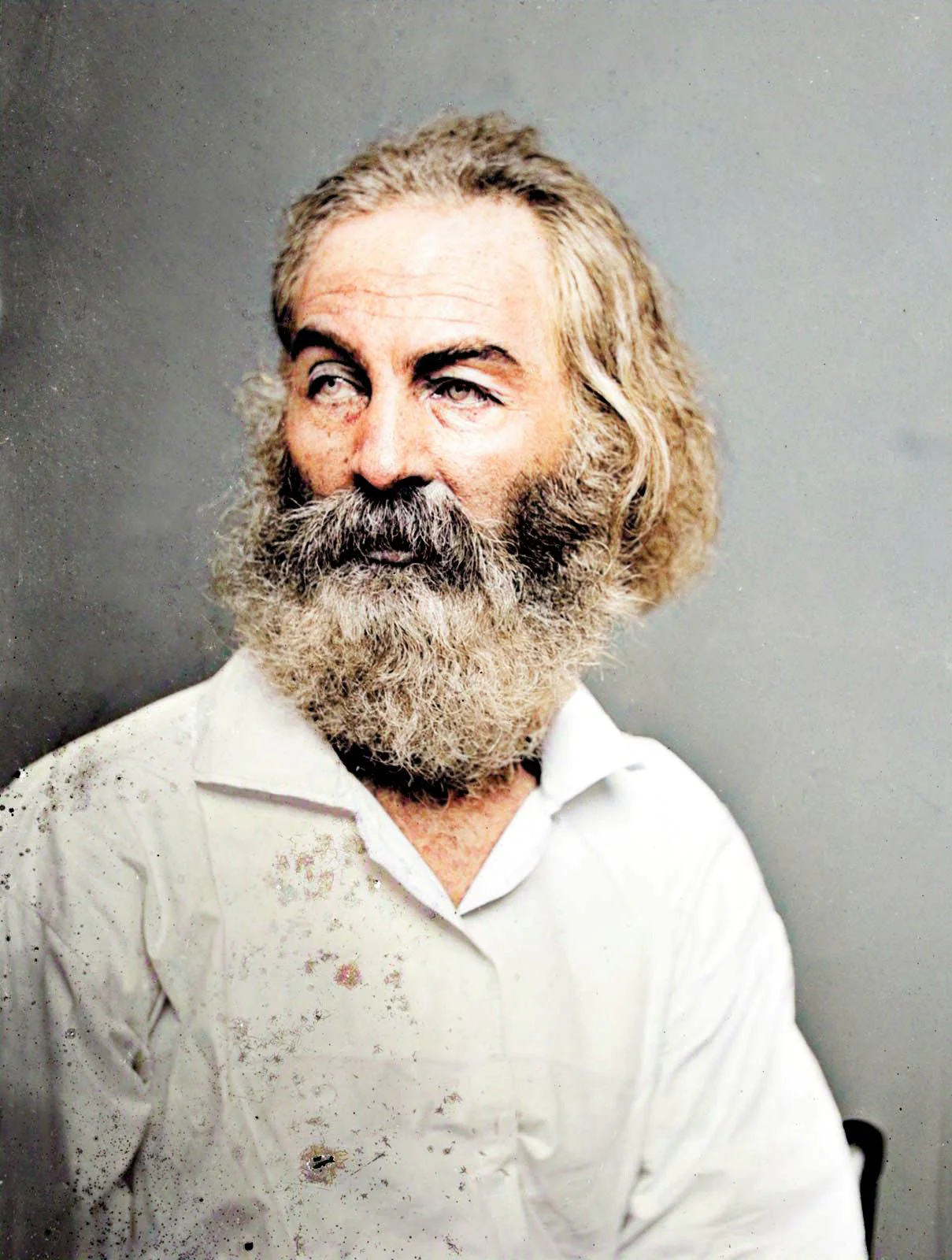
| 66 Quotes | |
| Born as | Walter Whitman Jr. |
| Occup. | Poet |
| From | USA |
| Born | May 31, 1819 West Hills, New York, U.S. |
| Died | March 26, 1892 Camden, New Jersey, U.S. |
| Aged | 72 years |
| Cite | |
Citation Formats
APA Style (7th ed.)
Walt whitman biography, facts and quotes. (2026, February 7). FixQuotes. https://fixquotes.com/authors/walt-whitman/
Chicago Style
"Walt Whitman biography, facts and quotes." FixQuotes. February 7, 2026. https://fixquotes.com/authors/walt-whitman/.
MLA Style (9th ed.)
"Walt Whitman biography, facts and quotes." FixQuotes, 7 Feb. 2026, https://fixquotes.com/authors/walt-whitman/. Accessed 22 Mar. 2026.
Early Life and Background
Walter Whitman Jr. was born on May 31, 1819, on Long Island, New York, into a large, working family that moved between rural edge and city pressure. His father, Walter Whitman Sr., was a carpenter and speculative builder; his mother, Louisa Van Velsor Whitman, gave him a domestic intimacy he later transmuted into a democratic tenderness for ordinary bodies and chores. The Whitmans lived close to the hard rhythms of wage work, debt, and improvised respectability - conditions that made the young poet alert to how easily a life could be reduced to mere survival.In the 1820s the family relocated to Brooklyn, a booming port city where class, immigration, and politics crowded the streets. Whitman grew up amid the clatter of print shops, ferries, and expanding neighborhoods, absorbing the era's faith in improvement and its cruelties: slavery, economic panics, and partisan rancor. Early responsibility - and the sight of his own family's strains, including brothers whose fortunes rose and fell - trained him to seek a larger, compensating unity, one that could hold contradiction without flinching.
Education and Formative Influences
Whitman left formal schooling young and educated himself by apprenticeship and appetite: as a printer's devil and compositor he learned how language becomes public, and as a voracious reader he took in the King James Bible, Shakespeare, opera, phrenology, and the oratory of democracy. He taught school on Long Island, edited and wrote for New York newspapers, and watched Jacksonian politics turn citizenship into spectacle. The print world gave him a sense of voice as a physical thing - type set by hand, carried by trains, argued over in saloons - and it also showed him the limits of respectable literature, nudging him toward a new form equal to the American street.Career, Major Works, and Turning Points
After years of journalism and political writing - including periods sympathetic to Free Soil antislavery and hostile to certain immigrant factions typical of the time - Whitman pivoted into the work that made him singular. In 1855 he self-published the first edition of "Leaves of Grass", a slim, radical book with an anonymous author portrait and long-lined poems that fused prophecy, sensuality, and civic chant; he kept revising it across his life, issuing expanded editions in 1856, 1860, 1867, 1871-72, 1881, and the so-called "deathbed edition" of 1891-92. The Civil War remade him: after his brother George was wounded, Whitman went to Washington and spent years visiting hospitals, writing letters for soldiers, and serving as a clerk, experiences distilled into "Drum-Taps" (1865) and the Lincoln elegies, including "When Lilacs Last in the Dooryard Bloom'd" and "O Captain! My Captain!" A stroke in 1873 left him partially paralyzed; he moved to Camden, New Jersey, where he lived with a widening circle of admirers, wrote "Specimen Days" (1882), and died on March 26, 1892.Philosophy, Style, and Themes
Whitman's inner life fused hunger for comradeship with a near-mystical confidence that the self could expand to include multitudes. He insisted that the nation was not an abstraction but an aggregation of intimate lives: “The genius of the United States is not best or most in its executives or legislatures... but always most in the common people”. That conviction was not sentimental; it was a deliberate revaluation of dignity, locating the sacred in laborers, lovers, the sick, the enslaved, and the uncelebrated dead he held by the hand in wartime wards. The psychological gamble of his work is that empathy can be muscular rather than dissolving - a way to stand inside the crowd without losing the contours of a single voice.His free verse - catalogues, anaphora, sweeping address, and abrupt intimacy - was built to mimic city noise and the mind's leaps, turning autobiography into a democratic instrument. In his best poems the self is both specimen and symbol, an erotic and moral experiment testing whether the body can be sung without shame and whether the republic can survive its own fractures. He was drawn to resilience as a form of truth, arguing against the moral accounting of success: “Have you heard that it was good to gain the day? I also say it is good to fall, battles are lost in the same spirit in which they are won”. And he treated death not as negation but as transformation, a position intensified by the war's mass graves and by his own aging: “To die is different from what any one supposed, and luckier”. The through-line is a refusal to be ruled by fear - of the body, of failure, of extinction - and a determination to make poetry a lived stance.
Legacy and Influence
Whitman became a foundational poet of modern American selfhood, influencing figures as different as Ezra Pound, T.S. Eliot (in resistance as much as admiration), Hart Crane, Langston Hughes, Allen Ginsberg, and countless writers of queer, immigrant, and working-class experience who found in him permission to speak in a large, inclusive "I". His candid celebration of male-male affection, his union of spirituality with the senses, and his belief that poetry could function as civic speech continue to provoke and replenish debates about democracy, sexuality, and national identity. By turning the materials of ordinary life - streets, sweat, grief, desire, and the terrible tenderness of care - into an expansive song, he helped set the terms by which American literature measures freedom.Our collection contains 66 quotes written by Walt, under the main topics: Motivational - Truth - Wisdom - Art - Justice.
Other people related to Walt: John Burroughs (Author), Galway Kinnell (Poet), Ned Rorem (Composer), Edward Carpenter (Activist), Henry Seidel Canby (Critic), Van Wyck Brooks (Critic), Edmund C. Stedman (Poet)
Walt Whitman Famous Works
- 1882 Specimen Days (Book)
- 1871 Democratic Vistas (Book)
- 1865 Drum-Taps (Book)
- 1855 Song of Myself (Poem)
- 1855 Leaves of Grass (Book)
Source / external links