
Walter Benjamin Biography Quotes 30 Report mistakes
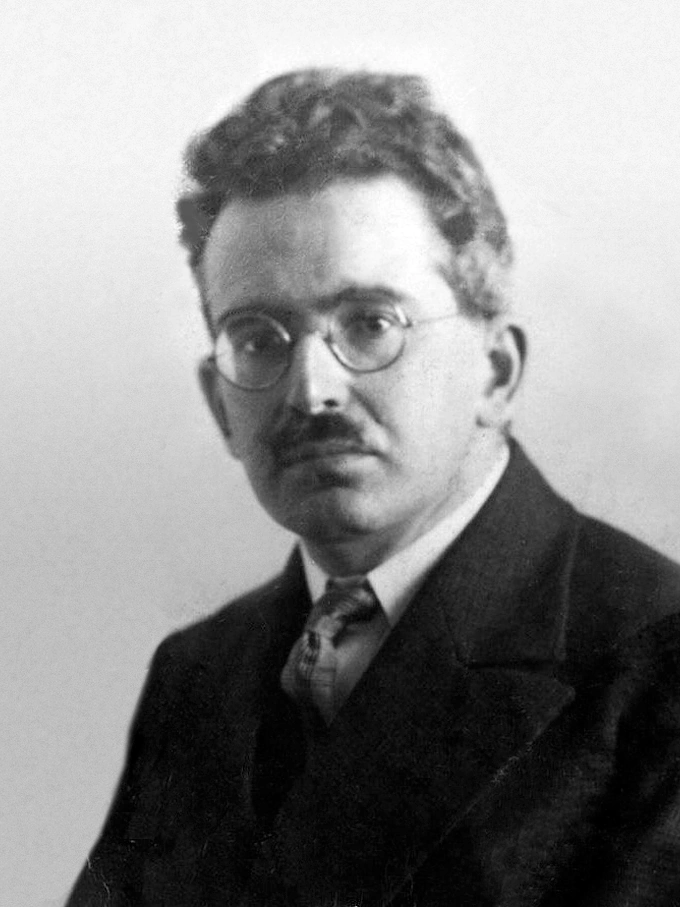
| 30 Quotes | |
| Born as | Walter Bendix Schonflies Benjamin |
| Occup. | Critic |
| From | Germany |
| Born | July 15, 1892 Berlin, Germany |
| Died | September 27, 1940 Portbou, Spain |
| Cause | suicide |
| Aged | 48 years |
| Cite | |
Citation Formats
APA Style (7th ed.)
Walter benjamin biography, facts and quotes. (2026, February 11). FixQuotes. https://fixquotes.com/authors/walter-benjamin/
Chicago Style
"Walter Benjamin biography, facts and quotes." FixQuotes. February 11, 2026. https://fixquotes.com/authors/walter-benjamin/.
MLA Style (9th ed.)
"Walter Benjamin biography, facts and quotes." FixQuotes, 11 Feb. 2026, https://fixquotes.com/authors/walter-benjamin/. Accessed 26 Mar. 2026.
Early Life and Background
Walter Bendix Schonflies Benjamin was born on July 15, 1892, in Berlin, into a well-to-do, assimilated Jewish family whose security was inseparable from the Kaiserreich's urban confidence and whose fragility would be exposed by the century's political catastrophes. His father, Emil Benjamin, was a banker and antiques dealer; his mother, Pauline Schoenflies, came from a cultured milieu that valued literature and music. Berlin at the turn of the century offered Benjamin the spectacle that would never leave him - the commodity world of arcades and shopwindows, the new crowd-psychology of the metropolis, and the tension between bourgeois comfort and modern disquiet.Childhood illnesses and periods away from home sharpened his inwardness and his attachment to the textures of memory. The private world of rooms, objects, and collections became for him a kind of early archive - not nostalgia, but an apprenticeship in how lived experience survives as fragments. That sensibility later returned as method, most famously in his autobiographical sketches of Berlin and in his lifelong fascination with the debris of everyday life as the true record of an era.
Education and Formative Influences
Benjamin studied philosophy, German literature, and art history in Freiburg, Berlin, Munich, and Bern, moving through the intellectual aftershocks of World War I and the crisis of liberal European culture. He was drawn early to the German Youth Movement and then to the more austere demands of philosophical critique, absorbing Kant and German Romanticism while cultivating friendships that became decisive: Gershom Scholem, who pressed him toward Jewish theology and messianism; and later Theodor W. Adorno and Max Horkheimer of the Frankfurt School, whose Marxist social theory both aided and constrained him. In 1919 he earned a doctorate at Bern with a study of Romantic criticism, and in the early 1920s he attempted an academic career that would collapse under institutional suspicion of his unclassifiable style and politics.Career, Major Works, and Turning Points
Blocked from a stable university post after his dense, ambitious Habilitationsschrift on German baroque drama (published as The Origin of German Tragic Drama, 1928), Benjamin lived by criticism, translation, and radio work during the Weimar years, writing on Goethe, Kafka, Surrealism, and the metropolis with a precision that made journalism into philosophy. His translations of Baudelaire and Proust trained his ear for modern experience, while his essays on collecting, toys, and childhood rebuilt cultural history from the smallest evidence. After Hitler's rise in 1933 he fled Germany, living precariously in Paris, depending on the Institute for Social Research, and devoting himself to the vast, unfinished Arcades Project - a montage of notes and citations meant to decode nineteenth-century capitalism through Parisian arcades, fashion, and spectacle. In 1940, with France collapsing and his escape route narrowing, he attempted to cross from Vichy France into Spain; detained at Portbou, he died on September 27, 1940, by suicide, a final act shaped by statelessness, fear of extradition, and the closing of Europe's borders.Philosophy, Style, and Themes
Benjamin's work is a theory of modernity written from within its shocks. He refused the comforts of system-building, preferring constellations: ideas placed side by side until they spark. Against smooth narratives of progress, he sought the moment when history exposes its violence - in ruins, in commodities, in forgotten lives. His best-known essay, "The Work of Art in the Age of Mechanical Reproduction" (1935-1936), reads new media not as mere technology but as a transformation of perception, politics, and attention; his "Theses on the Philosophy of History" (1940) turns historical materialism toward a messianic ethics of rescue, insisting that the past is not concluded and that the present is responsible to its defeated.His psychology as a critic was built on an almost devotional attentiveness to fragments, coupled with mistrust of opinion and a faith in judgment as an ethical act. He could describe his own method with a thief's glee: “Quotations in my work are like wayside robbers who leap out armed and relieve the stroller of his conviction”. The line is not merely witty; it reveals a self who used citation to interrupt complacency, to force the reader into uncertainty where thought begins. Likewise his insistence that “All human knowledge takes the form of interpretation”. frames criticism as a struggle over meaning, never neutral, never final - a stance sharpened by exile, censorship, and the sense that truth appears only indirectly. Even his accounts of remembering are stagecraft rather than confession: “Memory is not an instrument for exploring the past but its theatre. It is the medium of past experience, as the ground is the medium in which dead cities lie interred”. That image captures the inner Benjamin - a man excavating himself and his century at once, convinced that the buried can still speak if approached with the right patience.
Legacy and Influence
Benjamin's posthumous life has been unusually fertile: his essays, letters, and the fragments of the Arcades Project helped redefine cultural criticism, media theory, and intellectual history, offering tools for reading advertising, photography, film, urban space, and political myth with equal rigor. For Marxists he provided a language of commodity-fetish and shock; for theologians a modern messianism; for writers and artists a model of montage and the power of the aphoristic fragment. His influence runs through Adorno and later critical theory, through film and visual culture studies, through contemporary debates on archives, memory, and the ethics of witnessing - and, more quietly, through the enduring sense that the critic's task is not to decorate the present with ideas, but to awaken it.Our collection contains 30 quotes written by Walter, under the main topics: Witty One-Liners - Truth - Wisdom - Art - Justice.
Other people related to Walter: Theodor Adorno (Philosopher), Brian Ferneyhough (Composer), Leo Strauss (Philosopher)