
Walter Chrysler Biography Quotes 3 Report mistakes
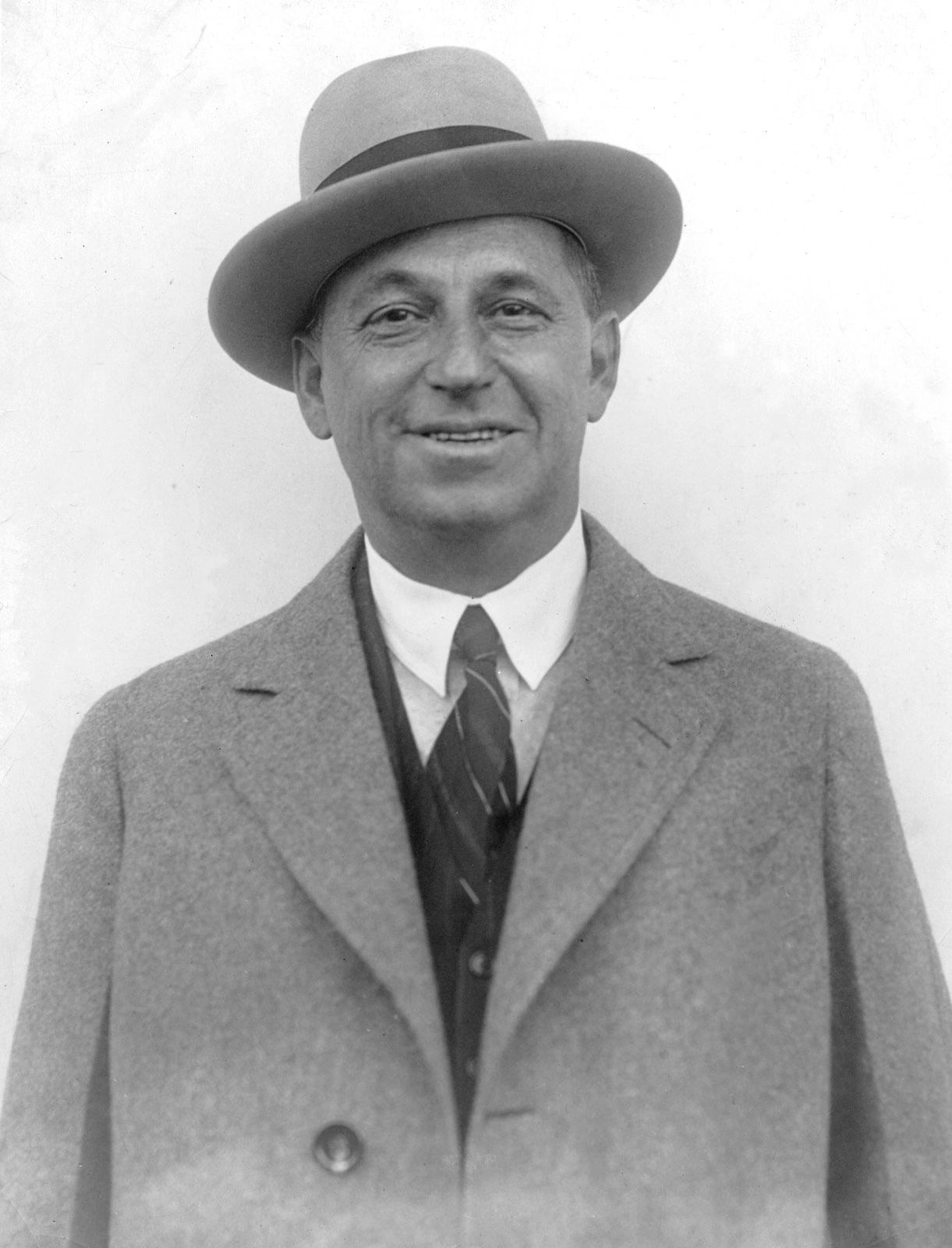
| 3 Quotes | |
| Born as | Walter Percy Chrysler |
| Occup. | Inventor |
| From | USA |
| Born | April 2, 1875 Wamego, Kansas |
| Died | August 18, 1940 |
| Aged | 65 years |
| Cite | |
Citation Formats
APA Style (7th ed.)
Walter chrysler biography, facts and quotes. (2026, February 11). FixQuotes. https://fixquotes.com/authors/walter-chrysler/
Chicago Style
"Walter Chrysler biography, facts and quotes." FixQuotes. February 11, 2026. https://fixquotes.com/authors/walter-chrysler/.
MLA Style (9th ed.)
"Walter Chrysler biography, facts and quotes." FixQuotes, 11 Feb. 2026, https://fixquotes.com/authors/walter-chrysler/. Accessed 12 Feb. 2026.
Early Life and Background
Walter Percy Chrysler was born on April 2, 1875, in Wamego, Kansas, into a family shaped by the practical intelligence of the railroads. His father worked for the Kansas Pacific Railway, and the boy grew up around the clang and logic of tools, schedules, and machinery - an environment that rewarded alertness more than pedigree. In a country rapidly knitting itself together by steel track, the railroad was both employer and metaphor: motion, standardization, and the promise that a capable worker could travel far beyond his birthplace.That early world also trained his inner temperament. Chrysler was not raised to revere abstraction; he learned to trust what could be measured, repaired, and improved. His biography repeatedly returns to a particular kind of pride: not the pride of social standing, but the pride of mastery - the satisfaction of understanding how systems fail and how they can be rebuilt better. This habit of mind, formed before automobiles were common, later let him treat the car not as a luxury object but as an engineering problem with a mass public waiting on the other side of the solution.
Education and Formative Influences
Chrysler had limited formal schooling and instead pursued technical instruction and apprenticeship-style learning that fit a self-directed mechanic. He read manuals, studied parts, and absorbed the culture of continuous improvement that dominated late-19th-century American industry. Railroad shops taught him precision, accountability, and the economics of downtime - lessons as formative as any university course - while the emerging management philosophy of the era impressed on him that leadership could be earned by competence. The result was a maker-executive: a man who spoke the language of foremen and financiers, and who preferred the hard clarity of mechanisms to the soft ambiguity of mere aspiration.Career, Major Works, and Turning Points
Chrysler rose through railroad maintenance and management before pivoting into automobiles, a transition that defined his public life. He gained national attention as a turnaround specialist at Buick in the 1910s, where operational discipline and cost control brought results but also sharpened conflict with William C. Durant. After leaving, he took on the rescue of Willys-Overland and then Maxwell Motor, using reorganization as a platform for a new company identity. In 1924 he introduced the Chrysler Six (often associated with the B-70), emphasizing high compression, hydraulic brakes, and strong value - an engineering-led bid to compete with larger players. By 1925 he had formed the Chrysler Corporation; in 1928 he launched both Plymouth, aimed at the low-price market, and DeSoto, positioned between Dodge and Chrysler. The same year he acquired Dodge Brothers, giving his enterprise scale, dealer networks, and manufacturing muscle. His name also became fused with the 1930 Chrysler Building in New York, commissioned as a statement of modernity and ambition - a corporate cathedral erected at the height of the skyscraper race and just after the stock market crash, when optimism and anxiety coexisted in the national psyche.Philosophy, Style, and Themes
Chrysler styled himself less as a patrician industrialist than as a mechanic who learned to command institutions. The psychological engine of that style was zeal: work as a moral and emotional arena where character is revealed under pressure. He insisted that motivation was not a decorative virtue but a productive force, arguing that "The real secret of success is enthusiasm". In his world, enthusiasm was not mere cheerfulness; it was sustained attention - the willingness to stay with complexity until it yields. That outlook explains his comfort in crises: reorganizations, labor issues, and competitive threats were simply intricate machines that could be understood, re-timed, and made to run.A second theme is his intolerance for disengagement. Chrysler was famously blunt about the inner cost of half-hearted labor, and he framed vocation as a test of vitality: "I feel sorry for the person who can't get genuinely excited about his work. Not only will he never be satisfied, but he will never achieve anything worthwhile". The statement reads like self-portrait as much as advice - a defense of his own intensity, and a warning against the psychological drift that turns competence into mediocrity. Even his taste for monumentality, visible in the Chrysler Building's stainless-steel crown, reflects this creed: industry should look forward, dare visibly, and reward those who build with conviction.
Legacy and Influence
Chrysler died on August 18, 1940, in the United States he had helped motorize, leaving behind a corporation that would become one of Detroit's "Big Three" and a brand identity rooted in engineering value and bold design. His enduring influence lies in the model of leadership he embodied: the technician as strategist, the fixer who could translate shop-floor realities into boardroom decisions. He helped normalize the idea that innovation in mass manufacturing is not only invention of parts, but invention of organizations - supply chains, dealer systems, product ladders, and corporate culture. In American biography he stands as a figure of the industrial middle class made powerful: not an heir, but a builder whose faith in mechanics, measurement, and motivated work became a lasting template for modern management.Our collection contains 3 quotes written by Walter, under the main topics: Live in the Moment - Work Ethic - Success.
Source / external links