
Walter Elliot Biography Quotes 2 Report mistakes
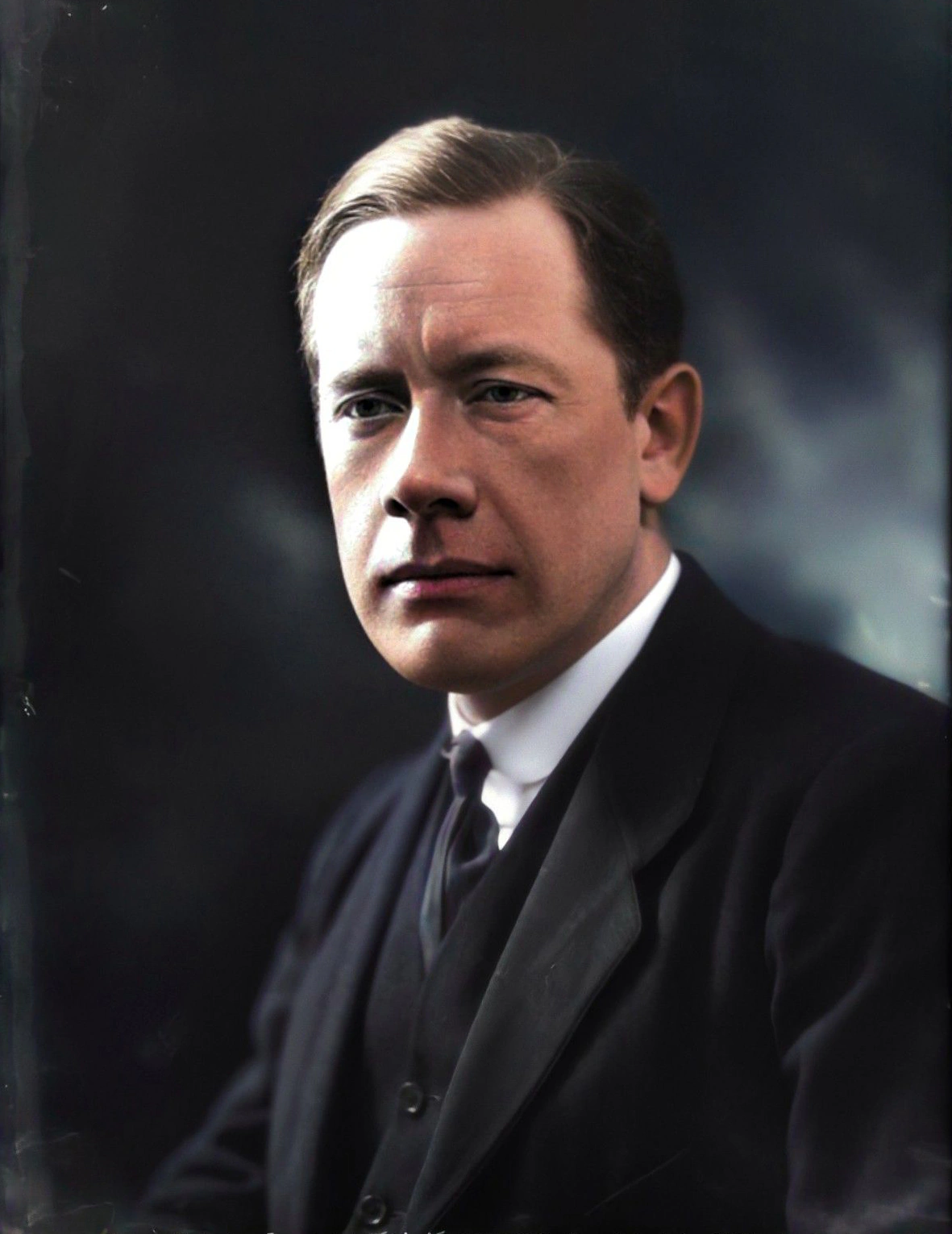
Attr: Bassano Ltd, Public domain
| 2 Quotes | |
| Occup. | Politician |
| From | Scotland |
| Born | September 19, 1888 Lanark, Lanarkshire, Scotland |
| Died | January 8, 1958 Bonchester Bridge, Roxburghshire, Scotland |
| Aged | 69 years |
| Cite | |
Citation Formats
APA Style (7th ed.)
Walter elliot biography, facts and quotes. (2026, February 11). FixQuotes. https://fixquotes.com/authors/walter-elliot/
Chicago Style
"Walter Elliot biography, facts and quotes." FixQuotes. February 11, 2026. https://fixquotes.com/authors/walter-elliot/.
MLA Style (9th ed.)
"Walter Elliot biography, facts and quotes." FixQuotes, 11 Feb. 2026, https://fixquotes.com/authors/walter-elliot/. Accessed 13 Feb. 2026.
Early Life and Background
Walter Elliot was born on 19 September 1888 in Lanarkshire, Scotland, into a society being refashioned by late-Victorian industry and the expanding responsibilities of the British state. He grew up with the practical consciousness of the central belt - towns tied to coal, steel, and the uneasy politics of work and welfare - and with the older Scottish habit of arguing principles as if they were matters of daily bread. That combination, at once hard-headed and moralizing, would later make him a persuasive public spokesman in an era hungry for administrative competence.His youth coincided with the long shadow of the Boer War and the approach of the First World War, years in which imperial confidence mixed with domestic anxiety about health, housing, and national efficiency. The Scottish Liberal tradition that had once dominated public life was fracturing; Labour was rising; Conservatism was adapting. Elliot absorbed this atmosphere early, forming a temperament that was less romantic than dutiful: he looked for levers that could move institutions, and for language that could reconcile individual effort with collective obligation.
Education and Formative Influences
Elliot trained as a medical doctor, studying at the University of Glasgow, where clinical rigor and the social reality of poverty met at the bedside. The experience mattered: medicine gave him a habit of diagnosing systems, not merely condemning them, and it placed him amid the new public-health thinking that linked nutrition, housing, and employment to national strength. Glasgow also sharpened his rhetorical style - brisk, evidential, and oriented toward remedies - and it made him comfortable moving between professional expertise and popular argument.Career, Major Works, and Turning Points
After wartime service as a doctor, Elliot entered parliamentary politics as a Conservative-Unionist, representing a Scottish constituency in the interwar House of Commons and quickly becoming known as one of the party's most able Scottish voices. He served in a series of government posts, including senior ministerial office as Secretary of State for Scotland, where the core challenges were economic recovery, agriculture and fisheries, and the administrative modernization of Scottish governance during and after the Second World War. The turning point in his public identity was his ability to speak Scotland into a Westminster frame without losing the local grain of Scottish life: a blend of Unionist loyalty, managerial reform, and a clear-eyed acceptance that the state was now permanently involved in health, work, and welfare.Philosophy, Style, and Themes
Elliot's inner life, as glimpsed through his public language, was animated by a disciplined, almost clinical optimism: problems were to be broken down, treated, and revisited. His most quoted maxim - "Perseverance is not a long race; it is many short races one after the other". - reads like a psychological self-instruction. It implies a mind wary of grandiose promises and more comfortable with incremental wins, the daily grind of committees, budgets, and persuasion. In the interwar years, when mass unemployment and political extremism tempted many toward either fatalism or utopia, Elliot's temperament favored stamina over spectacle.His style also depended on social intuition - a belief that politics is, at root, a human art of listening as much as commanding. "The desert has its holiness of silence, the crowd its holiness of conversation". In that sentence lies a characteristic balancing act: the solitary, ethical self-reflection of the professional man and the noisy, democratic bargaining of Parliament and constituency halls. Elliot was not primarily an ideologue; he was a mediator between worlds - doctor and politician, Scotland and Westminster, individual effort and public provision - and his speeches often carried the subtext that stability is built as much by conversation as by law.
Legacy and Influence
Walter Elliot died on 8 January 1958, having become a model of the mid-20th-century British minister: expert-minded, institutionally loyal, and rhetorically capable without theatricality. His legacy sits less in a single dramatic reform than in the example of a Scottish Conservative who took seriously the administrative realities of modern government and helped normalize the idea that public policy could be both moral and technical. For later Scottish Unionist and Conservative figures, he offered a template - grounded in professional authority and patient persuasion - for speaking to social need without surrendering to either cynicism or easy slogans.Our collection contains 2 quotes written by Walter, under the main topics: Wisdom - Perseverance.
Source / external links