
Walter Gropius Biography Quotes 5 Report mistakes
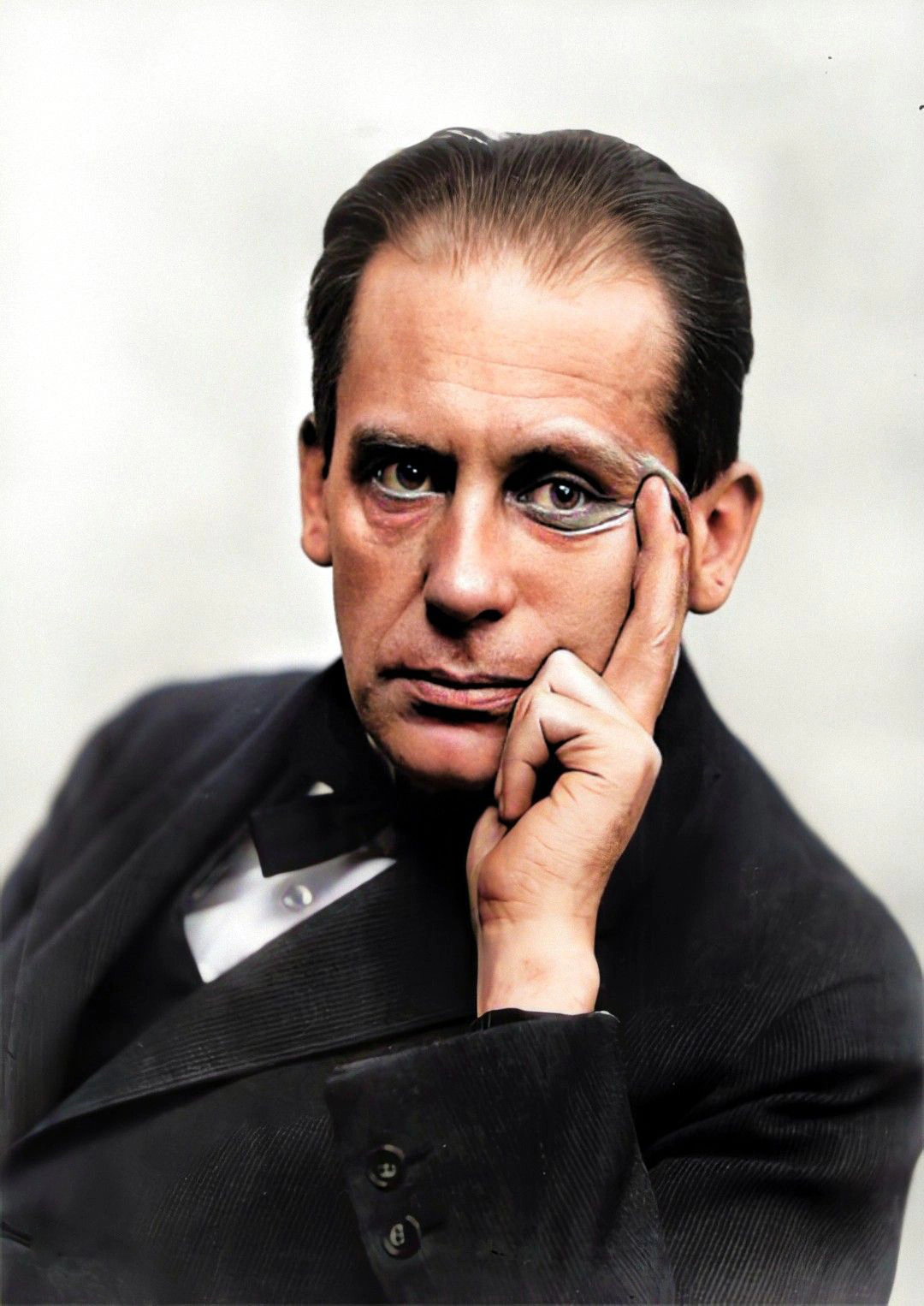
Attr: Louis Held
| 5 Quotes | |
| Born as | Walter Adolph Gropius |
| Occup. | Architect |
| From | Germany |
| Born | May 18, 1883 Berlin, Germany |
| Died | July 5, 1969 Boston, Massachusetts, USA |
| Cause | Cancer |
| Aged | 86 years |
| Cite | |
Citation Formats
APA Style (7th ed.)
Walter gropius biography, facts and quotes. (2026, February 11). FixQuotes. https://fixquotes.com/authors/walter-gropius/
Chicago Style
"Walter Gropius biography, facts and quotes." FixQuotes. February 11, 2026. https://fixquotes.com/authors/walter-gropius/.
MLA Style (9th ed.)
"Walter Gropius biography, facts and quotes." FixQuotes, 11 Feb. 2026, https://fixquotes.com/authors/walter-gropius/. Accessed 26 Mar. 2026.
Early Life and Background
Walter Adolph Gropius was born on May 18, 1883, in Berlin, into a Prussian milieu where the state, the professions, and the building trades were tightly interwoven. His father, Walter Gropius Sr., worked as a building counselor in the public service, and the younger Gropius absorbed early the idea that architecture was not only art but administration, logistics, and responsibility. Berlin at the turn of the century was a laboratory of rapid urban growth and industrial confidence, and its new infrastructure sharpened his sense that modern life demanded modern forms.He came of age as Germany debated national identity in architecture: historicist facades still dominated, yet new materials and factories were transforming the city from behind the scenes. Gropius was not a child prodigy draftsman so much as a temperament: ambitious, organizational, socially alert. Those traits later made him less a solitary genius than a catalytic leader - someone who could gather talent, argue for reform, and translate an aesthetic into institutions.
Education and Formative Influences
Gropius studied architecture in Munich and then at the Technical University of Berlin-Charlottenburg, but he left without taking a final diploma, learning more from offices than lecture halls. In 1907 he joined Peter Behrens in Berlin, where the modern alliance of industry and design was being forged for AEG alongside colleagues such as Ludwig Mies van der Rohe and Le Corbusier. Behrenss studio taught him how corporate identity, mass production, and architectural form could reinforce one another - and also convinced him that the architect of the new century would be part engineer, part artist, part manager of complex collaborations.Career, Major Works, and Turning Points
After early work and a growing interest in industrial building, Gropius entered partnership with Adolf Meyer and produced the Fagus Factory in Alfeld (1911-1913), a landmark of transparent corners and curtain-wall lightness that signaled an ethical break from heavy masonry tradition. World War I interrupted his trajectory; he served, was wounded, and returned to a Germany in upheaval where questions of housing, labor, and culture felt urgent rather than theoretical. In 1919 he became director of the new Bauhaus in Weimar, later moving it to Dessau (1925) and shaping it into a disciplined experiment in craft, technology, and social purpose, embodied by the Bauhaus Building (1925-1926) and the Masters Houses. Political pressure forced the schools closure in 1933, and after a period in Britain he emigrated to the United States in 1937 to teach at Harvard Graduate School of Design, where he helped retool American architectural education around modern methods. His later practice, The Architects Collaborative (TAC), pursued team-based design in projects such as the Harvard Graduate Center (1949-1950), expressing his conviction that modern architecture was a collective enterprise.Philosophy, Style, and Themes
Gropiuss inner life was marked by a tension between ascetic discipline and utopian warmth. He insisted that modern design had to sink roots into everyday existence rather than hover as elite taste: “Our guiding principle was that design is neither an intellectual nor a material affair, but simply an integral part of the stuff of life, necessary for everyone in a civilized society”. Psychologically, this is less a slogan than a self-command: it reveals an anxiety about irrelevance and a desire to dissolve the gap between studio ideals and lived reality, especially in a postwar society battered by scarcity.His style followed from that ethic. He favored clarity of structure, legible planning, industrial materials used with restraint, and facades that admitted light as a social good. Yet he also defended a boundary between calculation and art, arguing, “Architecture begins where engineering ends”. That line exposes his effort to keep the spiritual and cultural stakes of building from being swallowed by mere efficiency, even as he embraced standardization. At the same time, his leadership model distrusted narrow expertise, a reaction to the fragmented modern world: “Specialists are people who always repeat the same mistakes”. Behind it sits his belief that only cross-pollination - artist with craftsman, designer with machinist, teacher with student - could prevent modernity from turning into a bureaucratic routine.
Legacy and Influence
Gropius died on July 5, 1969, after decades in which his ideas traveled farther than any single building: through the Bauhaus curriculum, the diaspora of its faculty and students, and the American university system he helped reshape. His most enduring influence lies in institutional imagination - the workshop as laboratory, the school as engine of cultural change, the office as team rather than atelier. Modern architecture has since argued with him as much as it has borrowed from him, but the argument itself confirms his place: he made design a public question, inseparable from industry, education, and the moral texture of daily life.Our collection contains 5 quotes written by Walter, under the main topics: Witty One-Liners - Art - Work Ethic - Legacy & Remembrance.
Other people related to Walter: Josef Albers (Artist)
Source / external links