
Walter Lippmann Biography Quotes 38 Report mistakes
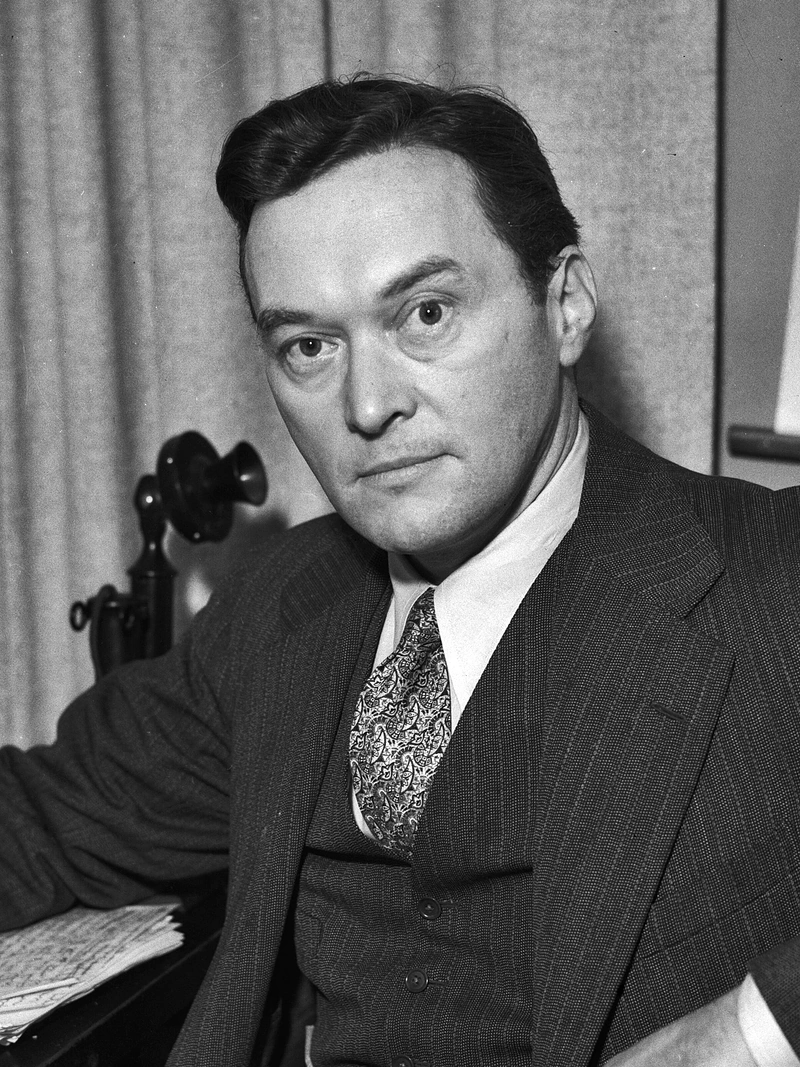
| 38 Quotes | |
| Occup. | Journalist |
| From | USA |
| Born | September 23, 1889 New York City, New York, United States |
| Died | December 14, 1974 New York City, New York, United States |
| Aged | 85 years |
| Cite | |
Citation Formats
APA Style (7th ed.)
Walter lippmann biography, facts and quotes. (2026, February 11). FixQuotes. https://fixquotes.com/authors/walter-lippmann/
Chicago Style
"Walter Lippmann biography, facts and quotes." FixQuotes. February 11, 2026. https://fixquotes.com/authors/walter-lippmann/.
MLA Style (9th ed.)
"Walter Lippmann biography, facts and quotes." FixQuotes, 11 Feb. 2026, https://fixquotes.com/authors/walter-lippmann/. Accessed 5 Mar. 2026.
Early Life and Background
Walter Lippmann was born on September 23, 1889, in New York City, the child of Jacob and Daisy Baum Lippmann, prosperous German-Jewish parents whose comfortable, assimilated milieu prized learning, order, and upward civic respectability. He grew up at a moment when mass immigration, industrial consolidation, and the rise of the big-city press were remaking American public life, and he absorbed early the sense that modernity was too fast, too vast, and too organized to be grasped by instinct alone.That tension between the individual mind and the new machinery of society became his lifelong subject. Lippmann was never a bohemian polemicist; he was a diagnostician, watching how slogans, party loyalties, and newsroom routines could replace observation. His later preoccupation with how people imagine the world, rather than see it, was rooted in this early experience of a metropolis where politics, business, and media formed an interlocking system.
Education and Formative Influences
Educated at Harvard University (B.A., 1910), Lippmann studied with William James, George Santayana, and Graham Wallas, and moved through the Progressive era's faith in expertise and reform. He flirted briefly with socialism, helped found the New Republic in 1914, and learned the intoxicating power of ideas when paired with a national platform - and the danger when ideas are simplified into doctrine for mass consumption.Career, Major Works, and Turning Points
During World War I he served in government as an adviser and helped draft President Woodrow Wilson's Fourteen Points, then watched the postwar settlement and the propaganda apparatus with disillusioned clarity. His major books - Liberty and the News (1920), Public Opinion (1922), and The Phantom Public (1925) - argued that modern citizens live amid "pictures in our heads", while institutions and media filter reality into manageable narratives. From 1931 he wrote the influential column "Today and Tomorrow", became a central interpreter of the New Deal and the crises of the 1930s and 1940s, coined "Cold War" in The Cold War (1947), and later criticized aspects of containment in The U.S. Foreign Policy: Shield of the Republic (1943) and later commentary. Across decades he moved from Progressive hope to a chastened liberal realism: a belief in constitutional limits, professional diplomacy, and the necessity - yet imperfection - of public consent.Philosophy, Style, and Themes
Lippmann's core philosophy was epistemological before it was partisan: politics fails when it mistakes opinion for knowledge. His prose, polished and judicial, aimed to model the very habits he thought democracy lacked - skepticism, proportion, and the ability to revise a view. He distrusted the romantic idea of an all-competent public, not out of contempt but out of fear that demagogues and advertisers would exploit civic innocence. In that spirit he warned, “When all men think alike, no one thinks very much”. The line is less a celebration of contrarianism than a psychological observation: conformity feels safe, and safety tempts the mind to stop working.He was equally wary of intellectuals who wanted to govern by theory alone. “When philosophers try to be politicians they generally cease to be philosophers”. That skepticism reflected his own experience near power, from Wilsonian idealism to the bureaucratic realities of war, where noble abstractions could harden into self-justifying programs. Yet he did not abandon moral standards; he tried to anchor politics in character and restraint, insisting that integrity is tested when it costs something: “He has honor if he holds himself to an ideal of conduct though it is inconvenient, unprofitable, or dangerous to do so”. Underneath his cool tone was an anxiety about modern life's fragility - that without disciplined judgment, free societies would surrender either to manipulation or to the false comfort of absolute certainty.
Legacy and Influence
Lippmann died on December 14, 1974, having become a template for the American public intellectual: a journalist whose authority came from analysis rather than access, even as he candidly admitted how access can distort. His ideas about stereotypes, agenda-setting, and the manufacture of consent shaped political science, media studies, and later critiques of propaganda; his warnings echo in debates about disinformation and technocracy. Admired and contested in equal measure, he left a durable framework for understanding the gap between the world and the stories societies tell about it - and why that gap, if ignored, can become a political destiny.Our collection contains 38 quotes written by Walter, under the main topics: Ethics & Morality - Wisdom - Truth - Justice - Sarcastic.
Other people related to Walter: Randolph Bourne (Writer), Ronald Steel (Writer)
Walter Lippmann Famous Works
- 1955 The Public Philosophy (Book)
- 1943 U.S. Foreign Policy: Shield of the Republic (Book)
- 1937 The Good Society (Book)
- 1925 The Phantom Public (Book)
- 1922 Public Opinion (Book)
- 1914 Drift and Mastery (Book)
- 1913 A Preface to Politics (Book)