
Walter Savage Landor Biography Quotes 33 Report mistakes
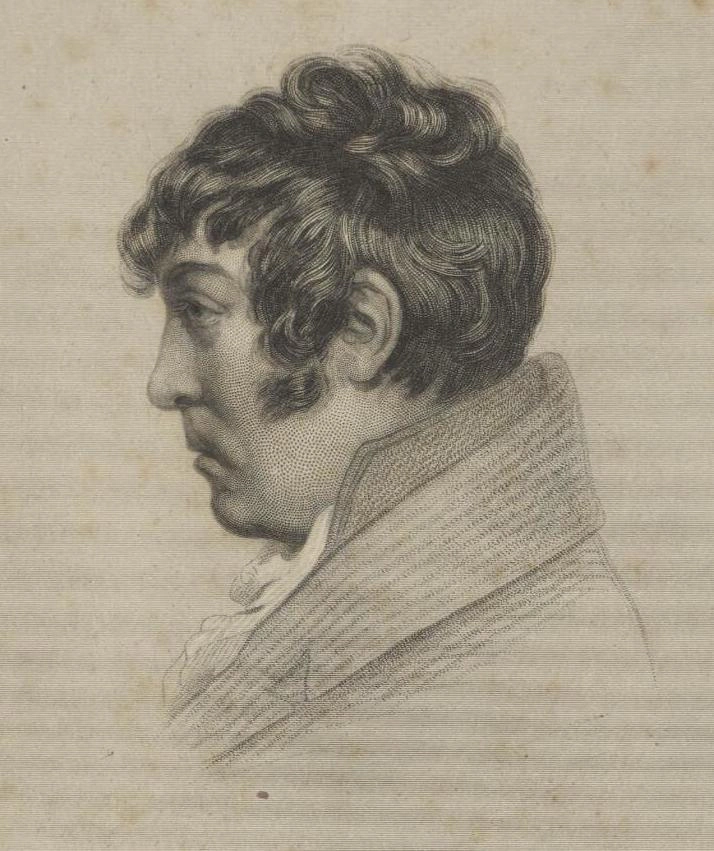
Attr: J. Brown
| 33 Quotes | |
| Occup. | Poet |
| From | England |
| Born | January 30, 1775 England |
| Died | September 17, 1864 Rome, Italy |
| Cause | Natural Causes |
| Aged | 89 years |
| Cite | |
Citation Formats
APA Style (7th ed.)
Walter savage landor biography, facts and quotes. (2026, February 11). FixQuotes. https://fixquotes.com/authors/walter-savage-landor/
Chicago Style
"Walter Savage Landor biography, facts and quotes." FixQuotes. February 11, 2026. https://fixquotes.com/authors/walter-savage-landor/.
MLA Style (9th ed.)
"Walter Savage Landor biography, facts and quotes." FixQuotes, 11 Feb. 2026, https://fixquotes.com/authors/walter-savage-landor/. Accessed 25 Mar. 2026.
Early Life and Background
Walter Savage Landor was born on January 30, 1775, into a prosperous Whig family at Ipsley Court near Alcester, Warwickshire, a countryside of old estates, tamed rivers, and inherited opinions. His father, Walter Landor, expected a conventional gentleman; his mother, Elizabeth Savage, brought the name that would become his signature. From the start he carried the double inheritance that shaped his temperament: privilege that insulated him and a combative independence that made him allergic to being managed. He grew up during the long afterglow of the Enlightenment and the first tremors of the French Revolution, when arguments about liberty, property, and the rights of man could be heard from Parliament to provincial drawing rooms.That early security did not make him placid. Family anecdotes and later self-portraiture converge on a boy quick to admiration and quicker to disdain, capable of warmth but practiced in estrangement whenever authority pressed him. He learned to treat solitude as both sanctuary and weapon, training his mind to be sufficient company, and he carried into adulthood a patrician sense of justice that could ignite into legalistic fury. The social order that fed him also gave him his lifelong subject: the moral cost of power, and the way public institutions can betray private conscience.
Education and Formative Influences
Landor was educated at Rugby School and then entered Trinity College, Oxford, where his classical gifts were undeniable but his discipline was not; he was rusticated in 1794 after repeated clashes with university authority. The rupture mattered less as a credential than as a formative drama: he absorbed Greek and Roman models while rejecting the machinery that dispensed them. He became a poet of antique forms with a modern, revolutionary irritability - an Englishman steeped in Virgil and Cicero, yet stirred by the age of Paine and Napoleon. This mixture, along with an inheritance that later funded independence, set him on a path where he could write as he pleased, and quarrel as he pleased, without having to ask permission.Career, Major Works, and Turning Points
His early poem "Gebir" (1798) announced a rare ambition: a mythic narrative in an austere, sculpted English that sounded as if it had been translated from an imagined Latin original. The political Landor soon followed - he supported liberal causes, spent time on the Continent, and in 1808 attempted to aid Spanish resistance to Napoleon, a gesture both idealistic and impulsive. His mature reputation rests above all on "Imaginary Conversations" (begun 1824), a vast sequence of dialogues in which historical and invented figures argue about art, governance, character, and the uses of fame. He lived for long periods in Italy - notably at Fiesole near Florence - where beauty steadied his style even as his temper continued to upend his domestic life. Lawsuits, feuds with neighbors, and public scandals punctuated the later years; by the 1850s he was effectively exiled from his Italian home, and his last decade was spent largely in England, honored by some younger writers yet still capable of detonating friendships.Philosophy, Style, and Themes
Landor distrusted the marketplace of reputation, and he wrote as if to outlast it rather than to win it. His verse and prose return obsessively to the mismatch between desire and contentment, between the dream of a better self and the stubbornness of human nature. “We are no longer happy so soon as we wish to be happier”. That sentence captures his psychology: a moralist who suspected that the chase for improvement, once it becomes appetite, corrodes the very peace it seeks. It also helps explain his recurrent volatility - the moment satisfaction arrived, he tested it, provoked it, or fled it, as if tranquillity were a kind of surrender.His style is chiselled, epigrammatic, and dialogic: even in lyric passages you can hear an imagined opponent. The "Imaginary Conversations" let him split his mind into voices - statesmen, poets, courtesans, saints - so that argument becomes a method of self-knowledge. “My thoughts are my company; I can bring them together, select them, detain them, dismiss them”. The line is not merely a maxim; it is a portrait of his inner life, a man who preferred the sovereignty of arranged thought to the unpredictability of society. Yet he was not a cold aesthete. He believed art carried a sacred remainder, especially music, whose purity he held up against political corruption and human pettiness: “Music is God's gift to man, the only art of Heaven given to earth, the only art of earth we take to Heaven”. In Landor, the classical ideal of proportion meets a Romantic hunger for the absolute - and the result is a literature that alternates between serenity and indictment.
Legacy and Influence
Landor died on September 17, 1864, having lived long enough to see Victorian England canonize forms of respectability he never fully accepted. His influence was less institutional than catalytic: a writer admired intensely by writers - for the hard polish of his sentences, the moral torque of his aphorisms, and the freedom of his historical imagination. The dialogues pioneered a flexible way of thinking on the page, anticipating later essayistic and dramatic hybrids, while his best lyrics and epigrams offered a model of concentrated emotion without sentimentality. Landor remains a poet of cultivated fire: a classicist with revolutionary nerves, whose work keeps asking what it costs to be free, and whether any fame is worth the character it consumes.Our collection contains 33 quotes written by Walter, under the main topics: Ethics & Morality - Truth - Wisdom - Justice - Music.
Other people related to Walter: Countess of Blessington (Novelist)
Walter Savage Landor Famous Works
- 1863 Heroic Idyls (Poetry)
- 1847 Hellenics (Poetry)
- 1836 Pericles and Aspasia (Fiction)
- 1824 Imaginary Conversations (Prose)
- 1798 Gebir (Poetry)
Source / external links