
Walter Scott Biography Quotes 32 Report mistakes
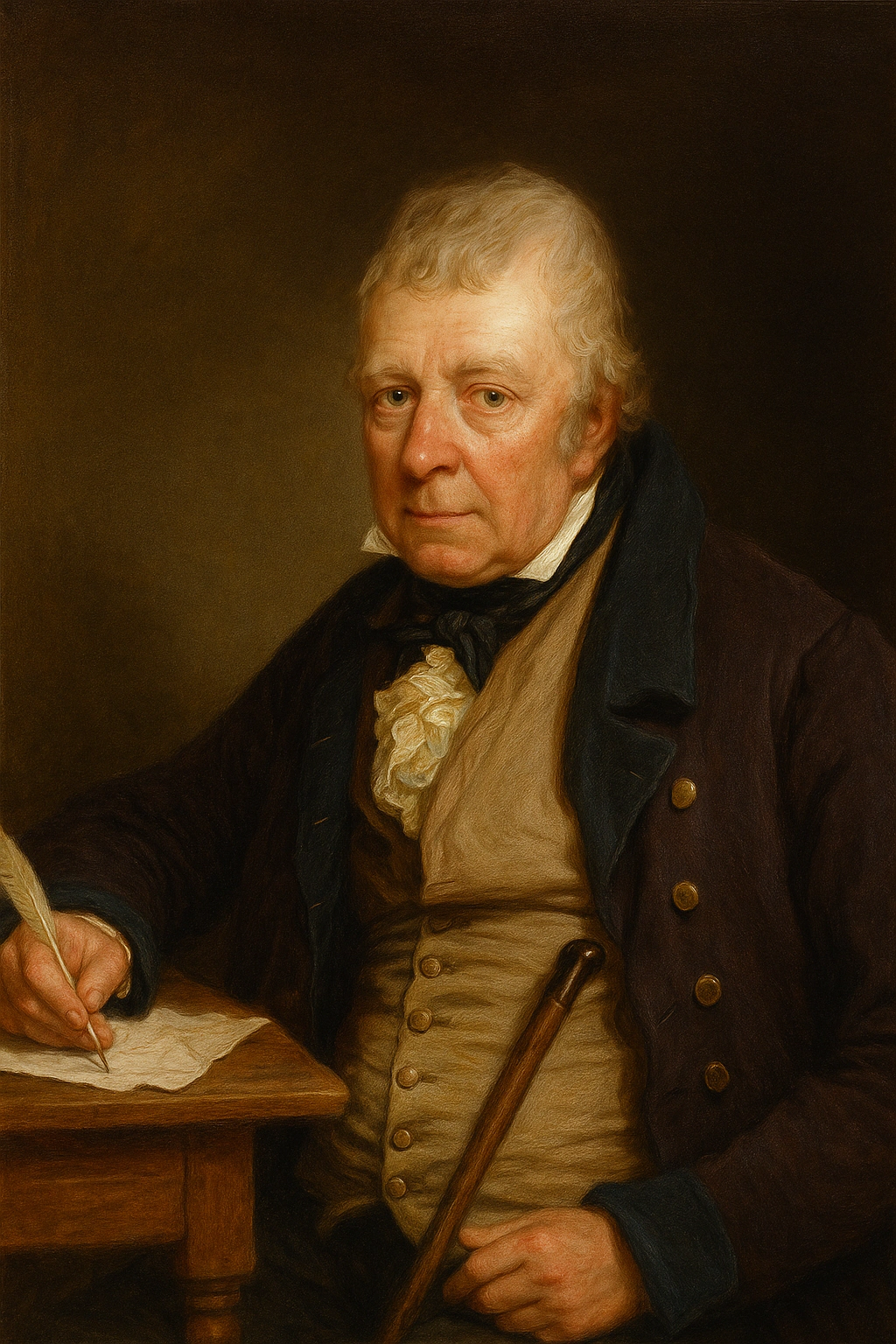
| 32 Quotes | |
| Known as | Sir Walter Scott |
| Occup. | Novelist |
| From | Scotland |
| Born | August 14, 1771 Edinburgh, Scotland |
| Died | September 21, 1832 Abbotsford, Scotland |
| Aged | 61 years |
| Cite | |
Citation Formats
APA Style (7th ed.)
Walter scott biography, facts and quotes. (2026, February 11). FixQuotes. https://fixquotes.com/authors/walter-scott/
Chicago Style
"Walter Scott biography, facts and quotes." FixQuotes. February 11, 2026. https://fixquotes.com/authors/walter-scott/.
MLA Style (9th ed.)
"Walter Scott biography, facts and quotes." FixQuotes, 11 Feb. 2026, https://fixquotes.com/authors/walter-scott/. Accessed 31 Mar. 2026.
Early Life and Background
Walter Scott was born on 14 August 1771 in Edinburgh, the ninth child of Walter Scott, a Writer to the Signet, and Anne Rutherford, daughter of a professor of medicine. In infancy he suffered polio that left him permanently lame, an impairment that sharpened the inward life while sending him outward in search of compensations - speed on horseback, long walks when possible, and a lifelong hunger for stories that could make the body secondary to imagination.To recover, he was sent for long periods to relatives in the Scottish Borders, especially around Sandyknowe near Smailholm Tower, where ballads, local feuds, and the relics of reiving culture lay close to the surface of daily speech. The Border landscape gave him a double vision: affection for vanished communal codes and awareness that modern law and commerce were remaking Scotland after the 1707 Union. That tension - between a living present and an emotionally charged past - became his native element.
Education and Formative Influences
Scott attended the High School of Edinburgh and studied at the University of Edinburgh, moving toward law while absorbing history, antiquarianism, and the new Romantic taste for folk culture; he also listened to the citys leading minds in a capital that was both Enlightenment workshop and museum of its own traditions. Apprenticed to his father and admitted advocate in 1792, he read widely in English, Scots, and continental literature, translated German ballads, and learned to treat oral tradition as evidence. The French Revolution and Napoleonic Wars shaped his generation, teaching him to value continuity and civil order even as he loved the energy of change.Career, Major Works, and Turning Points
He built a stable public career as Sheriff-Depute of Selkirkshire (from 1799) and later as a principal clerk of the Court of Session (from 1806), while publishing the ballad compendium Minstrelsy of the Scottish Border (1802-03) and achieving sudden fame with narrative poems such as The Lay of the Last Minstrel (1805) and Marmion (1808). When Byrons popularity eclipsed verse romance, Scott pivoted to prose and in 1814 anonymously launched the Waverley Novels with Waverley, followed by Guy Mannering (1815), The Antiquary (1816), Old Mortality (1816), Rob Roy (1817), The Heart of Mid-Lothian (1818), Ivanhoe (1819), and many more. His greatest personal reversal came with the 1825-26 financial crash: the bankruptcy of his publisher Archibald Constable and the failure of the Ballantyne printing firm, in which he was deeply entangled, left him liable for vast debts. Rather than declare insolvency, he wrote at punishing speed - including the massive Life of Napoleon (1827) - turning authorship into moral labor until his health broke; he died at Abbotsford on 21 September 1832.Philosophy, Style, and Themes
Scott thought like a lawyer who loved legend: evidence mattered, but so did the felt truth of a people. His famous claim that “A lawyer without history or literature is a mechanic, a mere working mason; if he possesses some knowledge of these, he may venture to call himself an architect”. is also a self-portrait - ambition to build with records and imagination at once. The novels model that architectural mind: he frames private lives inside public transitions, staging Jacobite defeat, religious conflict, enclosure, and the rise of bourgeois order as pressures that shape character. He rarely idealizes violence, yet he refuses to treat the past as mere error; it is the crucible that formed modern identity, and he writes with the curiosity of an antiquary and the compassion of a social historian.Psychologically, Scott is drawn to the costs of performance - the mask, the boast, the secret. “O, what a tangled web we weave when first we practise to deceive!” distills his recurring intuition that self-invention can curdle into trap, whether in a Highland imposture, a political double game, or a lovers half-truth. Yet his moral center is practical rather than puritan: “Discretion is the perfection of reason, and a guide to us in all the duties of life”. Discretion, for Scott, is the social virtue that lets a nation survive change without losing dignity - a theme embodied in his preference for mixed characters (half-heroic, half-comic) and his steady belief that compromise can be honorable.
Legacy and Influence
Scott effectively created the modern historical novel, teaching Europe how to dramatize the meeting of ordinary lives with epochal forces; Balzac, Dumas, Manzoni, Tolstoy, and countless others learned from his method of making history audible in dialogue and visible in local custom. He reshaped Scotlands self-image, popularizing tartan romance even as he documented the dispossession beneath it, and Abbotsford became a template for the authors house as national shrine. Though Victorian taste later mocked his loquacity, his best work endures for its blend of narrative drive, sociological breadth, and melancholy realism about what progress destroys. In an age still arguing over memory, identity, and nationhood, Scott remains the writer who showed how the past can be both inheritance and argument.Our collection contains 32 quotes written by Walter, under the main topics: Witty One-Liners - Motivational - Ethics & Morality - Truth - Wisdom.
Other people related to Walter: Frederick Douglass (Author), William Gilmore Simms (Novelist), Maria Edgeworth (Novelist), Margaret Oliphant (Novelist), George Crabbe (Poet), Frank Yerby (Author), Thomas Percy (Writer), John Wilson (Writer), Georges Bizet (Composer), Robert Chambers (Writer)
Frequently Asked Questions
- Walter Scott born: 15 August 1771, Edinburgh, Scotland
- Walter Scott singer wife: JoAnn (Calcaterra) Scott
- Walter Scott works: Novels: Waverley, Ivanhoe, Rob Roy; Poems: The Lady of the Lake, Marmion
- Walter Scott of the Whispers: American R&B singer, member of The Whispers; twin brother of Wallace “Scotty” Scott
- Walter Scott is known as the father of: the historical novel
- Walter Scott books: Waverley; Ivanhoe; Rob Roy; Kenilworth; The Bride of Lammermoor
- Walter Scott cause of death: Complications from multiple strokes
- Walter Scott famous works: Ivanhoe; Waverley; Rob Roy; The Heart of Midlothian; The Lady of the Lake
- How old was Walter Scott? He became 61 years old
Walter Scott Famous Works
- 1826 Woodstock (Novel)
- 1824 Redgauntlet (Novel)
- 1823 Quentin Durward (Novel)
- 1822 The Fortunes of Nigel (Novel)
- 1822 The Pirate (Novel)
- 1821 Kenilworth (Novel)
- 1820 The Abbot (Novel)
- 1820 The Monastery (Novel)
- 1819 Ivanhoe (Novel)
- 1819 A Legend of Montrose (Novel)
- 1819 The Bride of Lammermoor (Novel)
- 1818 The Heart of Midlothian (Novel)
- 1817 Rob Roy (Novel)
- 1816 The Antiquary (Novel)
- 1815 Guy Mannering (Novel)
- 1814 Waverley (Novel)
- 1813 Rokeby (Poetry)
- 1810 The Lady of the Lake (Poetry)
- 1808 Marmion (Poetry)
- 1805 The Lay of the Last Minstrel (Poetry)
Source / external links