
Warren Buffett Biography Quotes 52 Report mistakes
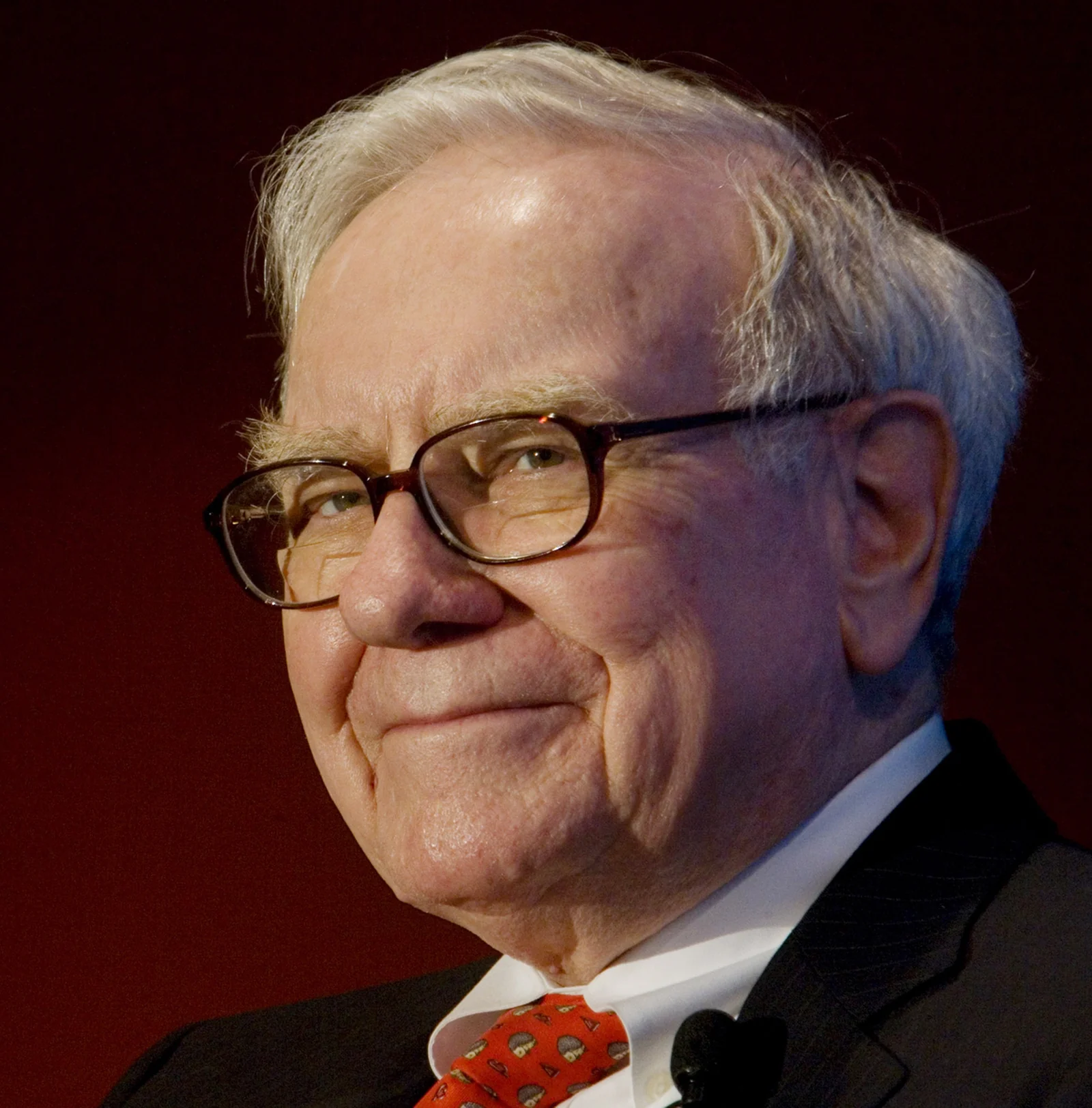
| 52 Quotes | |
| Born as | Warren Edward Buffett |
| Known as | Oracle of Omaha |
| Occup. | Businessman |
| From | USA |
| Born | August 30, 1930 Omaha, Nebraska, U.S. |
| Age | 95 years |
| Cite | |
Citation Formats
APA Style (7th ed.)
Warren buffett biography, facts and quotes. (2026, February 2). FixQuotes. https://fixquotes.com/authors/warren-buffett/
Chicago Style
"Warren Buffett biography, facts and quotes." FixQuotes. February 2, 2026. https://fixquotes.com/authors/warren-buffett/.
MLA Style (9th ed.)
"Warren Buffett biography, facts and quotes." FixQuotes, 2 Feb. 2026, https://fixquotes.com/authors/warren-buffett/. Accessed 12 Feb. 2026.
Early Life and Background
Warren Edward Buffett was born on August 30, 1930, in Omaha, Nebraska, into a household where money was both practical necessity and public language. His father, Howard Buffett, was a stockbroker who later served in the U.S. House of Representatives; his mother, Leila, brought intensity and high expectations to the home. Buffett grew up during the Great Depression and came of age in the shadow of World War II, years that made thrift, patience, and distrust of grand promises feel like common sense rather than ideology.From childhood he treated commerce as a kind of private game with rules he could master: selling chewing gum and Coca-Cola, delivering newspapers, and learning to count margins and repetitions the way other children learned batting averages. By his early teens he was already filing away a mental map of how small advantages compound, and he began to prefer the measurable comfort of numbers to the ambiguity of social life - a preference that later became central to his public persona: genial, plainspoken, but guarded in emotion.
Education and Formative Influences
After attending the University of Pennsylvania's Wharton School briefly, Buffett transferred to the University of Nebraska and graduated in 1950; he then earned an M.S. in economics from Columbia Business School in 1951, drawn there by Benjamin Graham and David Dodd. Graham's discipline of valuing businesses with a margin of safety offered Buffett not just a method but a temperament: skepticism without cynicism, and conviction built from arithmetic. Early work at his father's brokerage and later at Graham-Newman in New York reinforced that investing could be practiced as rational craft, not speculation, even in a country intoxicated by postwar expansion.Career, Major Works, and Turning Points
Back in Omaha, Buffett launched Buffett Partnership Ltd. in 1956, outperforming the market through concentrated value bets and a relentless focus on downside risk; in 1965 he took control of Berkshire Hathaway, a struggling textile firm, and turned it into a holding company that would define modern capital allocation. Under Berkshire he assembled a portfolio of controlled businesses (notably GEICO, See's Candies, and later the Burlington Northern Santa Fe railroad) and major equity stakes (including American Express, Coca-Cola, and Apple), funded increasingly by insurance "float" from National Indemnity and GEICO. His 1978 partnership with Charlie Munger sharpened the shift from "cigar butt" bargains to buying wonderful businesses at fair prices. Publicly, his annual Berkshire letters became a widely read primer on markets, incentives, and accounting reality; personally, his long marriage to Susan Thompson Buffett, their later separation, and his eventual marriage to Astrid Menks unfolded with a discretion that mirrored his preference for stability over spectacle.Philosophy, Style, and Themes
Buffett's inner life as an investor is marked by deliberate humility: he seeks arenas where he can be confidently right, then waits. "I don't look to jump over 7-foot bars: I look around for 1-foot bars that I can step over". That sentence is less folksy than diagnostic - it reveals a man who mistrusts ego as a source of error and treats restraint as a competitive advantage. His style is to simplify, to refuse the intoxicating complexity that lets people confuse activity with insight, and to convert uncertainty into a choice: pass.Time, for Buffett, is not a backdrop but a force he recruits. "Time is the friend of the wonderful company, the enemy of the mediocre". Psychologically, this is a commitment to compounding as a moral discipline - the willingness to endure boredom, criticism, and cyclical fear so that durable economics can assert themselves. When he warns against clinging to failing situations, he is also describing a personal ethic of sunk-cost detachment: "Should you find yourself in a chronically leaking boat, energy devoted to changing vessels is likely to be more productive than energy devoted to patching leaks". In business terms it is about reallocating capital; in human terms it is the refusal to romanticize stubbornness.
Legacy and Influence
Buffett became a central figure in late-20th- and early-21st-century capitalism: a Midwestern investor who proved that patience could scale, that shareholder letters could educate, and that corporate governance could be argued in plain language. His influence runs through value investing, the use of insurance float as financing, and a broader cultural ideal of the "rational" capitalist who reads, waits, and acts decisively when odds are favorable. Through the Giving Pledge and his commitment to donate most of his fortune, he also helped normalize large-scale, public philanthropy among billionaires, complicating his legacy: admired for discipline and candor, debated for the system that made such fortunes possible, and studied because his methods are as much about temperament as technique.Our collection contains 52 quotes written by Warren, under the main topics: Witty One-Liners - Motivational - Wisdom - Sarcastic - Work Ethic.
Other people related to Warren: Chris Chocola (Politician), Benjamin Graham (Economist)
Warren Buffett Famous Works
- 1997 The Essays of Warren Buffett: Lessons for Corporate America (Book)
- 1965 Berkshire Hathaway Letters to Shareholders (Book)
Source / external links