
Warren G. Harding Biography Quotes 5 Report mistakes
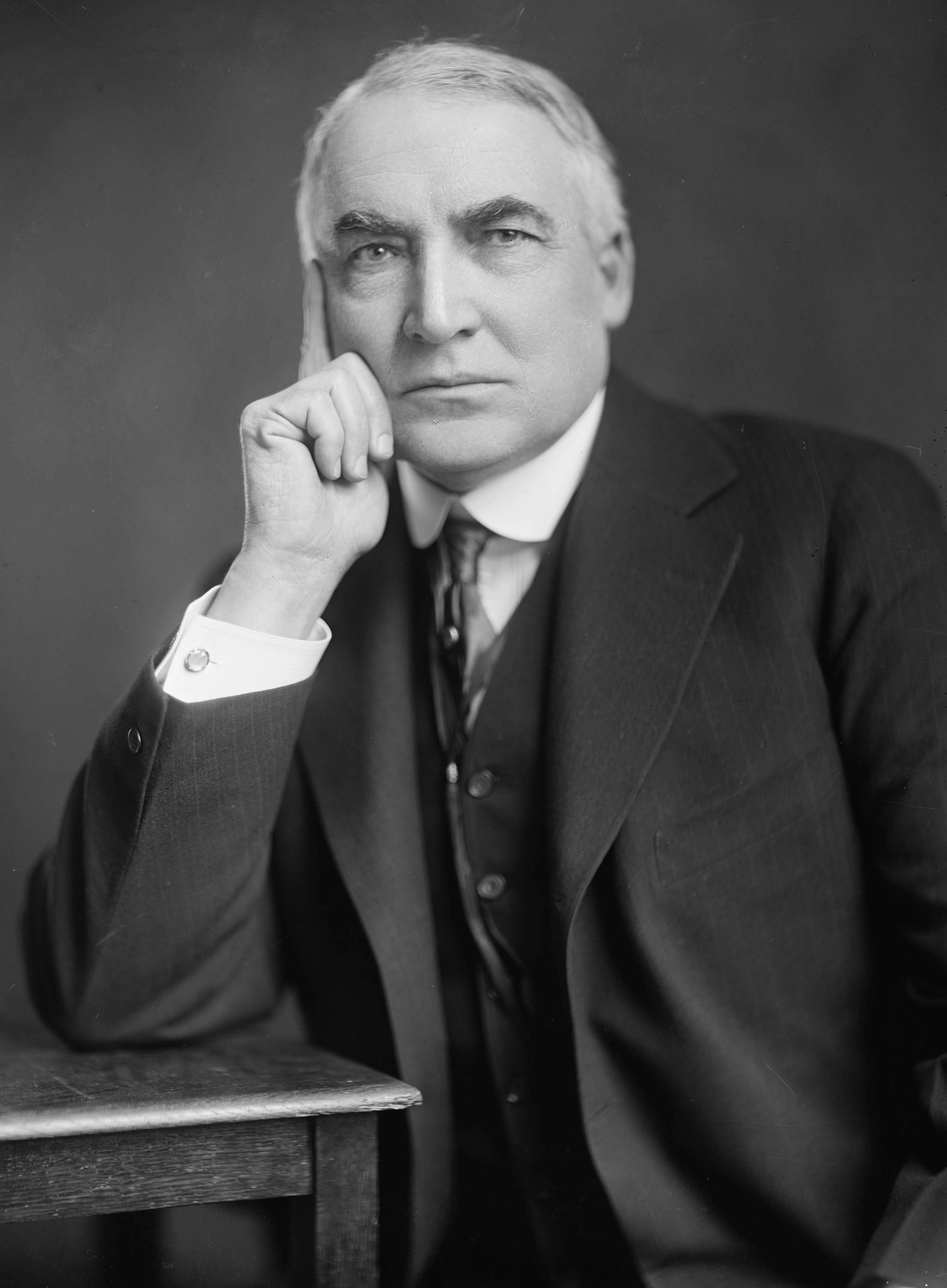
| 5 Quotes | |
| Occup. | President |
| From | USA |
| Born | November 2, 1865 |
| Died | August 2, 1923 |
| Aged | 57 years |
| Cite | |
Citation Formats
APA Style (7th ed.)
Warren g. harding biography, facts and quotes. (2026, March 8). FixQuotes. https://fixquotes.com/authors/warren-g-harding/
Chicago Style
"Warren G. Harding biography, facts and quotes." FixQuotes. March 8, 2026. https://fixquotes.com/authors/warren-g-harding/.
MLA Style (9th ed.)
"Warren G. Harding biography, facts and quotes." FixQuotes, 8 Mar. 2026, https://fixquotes.com/authors/warren-g-harding/. Accessed 27 Mar. 2026.
Early Life and Background
Warren Gamaliel Harding was born on November 2, 1865, near Blooming Grove, Ohio, in the first generation to come of age after the Civil War. He grew up in a small-town, upward-striving household shaped by rural labor, evangelical morality, and the practical ambitions of the postwar Midwest. His father, George Tryon Harding, was a farmer, teacher, and later physician; his mother, Phoebe Dickerson Harding, had been a midwife and carried literary ambitions of her own. The family moved to Caledonia and then Marion, and the boy absorbed the rhythms of an America still more village than metropolis - county fairs, partisan newspapers, church sociability, and the local reputations on which careers were built.
Those surroundings mattered because Harding was less a visionary than a creature of social atmosphere. Tall, handsome, genial, and blessed with a resonant voice, he learned early that likability was a form of power. Yet beneath the ease lay a more fragile interior life: a need for approval, a distaste for conflict carried to the edge of passivity, and a longing to be thought balanced and decent in a political culture increasingly drawn to noise. His rise would come not from intellectual originality but from a remarkable talent for making other people feel heard, soothed, and included - a gift with obvious democratic uses and grave executive limits.
Education and Formative Influences
Harding attended Ohio Central College in Iberia, graduating in 1882, one of the youngest in his class. The school was modest, but it strengthened habits that would define him: public speaking, literary performance, and the confidence that a provincial young man could enter public life through print and persuasion. After brief stints as a teacher and insurance salesman, he found his true medium in journalism. In 1884 he joined, and soon with partners bought, the struggling Marion Daily Star. The paper became his workshop in tone - civic, boosterish, Republican, anti-scandal in theory though not always in practice, and carefully pitched to readers who preferred reassurance to crusade. Running a small-town newspaper taught him patronage, compromise, and the emotional mechanics of politics. His marriage in 1891 to Florence Kling DeWolfe Harding, forceful, disciplined, and socially ambitious, added the managerial energy he lacked; she stabilized the business, sharpened his career, and pushed him toward state and then national office.
Career, Major Works, and Turning Points
Harding served in the Ohio senate from 1900 to 1904, was lieutenant governor from 1904 to 1906, lost a gubernatorial race in 1910, and entered the U.S. Senate in 1915. There he cultivated friendships more than legislative mastery, aligning with mainstream Republicanism while avoiding the doctrinal edge of progressives and reactionaries alike. His great turning point came at the Republican convention of 1920, when deadlock among stronger candidates made him an acceptable compromise. Running from his Marion front porch, he offered an exhausted nation release from war mobilization, Woodrow Wilson's moral intensity, labor unrest, inflation, and Red Scare anxiety. He won in a landslide. As president from 1921, he backed the Budget and Accounting Act, signed the emergency tariff and Fordney-McCumber Tariff, approved immigration restriction, supported tax reduction under Andrew Mellon, and presided over the Washington Naval Conference, one of his administration's genuine diplomatic achievements. He also appointed able men such as Charles Evans Hughes, Herbert Hoover, and Mellon. But his fatal weakness was personal judgment. He tolerated intimates whose corruption later defined his administration: the Teapot Dome scandal under Albert B. Fall, abuses in the Veterans Bureau under Charles Forbes, and a climate of access and favoritism centered on cronies. Exhausted and politically wounded, Harding died suddenly in San Francisco on August 2, 1923, before the full scale of the scandals became public.
Philosophy, Style, and Themes
Harding's political philosophy was less a system than a temperament. He distrusted extremity, preferred consensus to combat, and spoke for a country weary of crusades. His most famous campaign line captured both a shrewd reading of the moment and his own psychological hunger for calm: “America's present need is not heroics but healing; not nostrums but normalcy; not revolution but restoration”. The sentence is often mocked for "normalcy", but its deeper significance is emotional. Harding understood the electorate's fatigue because he shared it. He was a restorative personality in an age that often rewarded prophets. Even his private candor revealed how little he enjoyed the hard edges of statecraft. “I don't know what to do or where to turn in this taxation matter. Somewhere there must be a book that tells all about it, where I could go to straighten it out in my mind. But I don't know where the book is, and maybe I couldn't read it if I found it”. That confession was not merely anti-intellectual comedy; it exposed a president aware of his own limitations, overwhelmed by complexity, and too dependent on stronger subordinates.
His style joined sonorous language to blurred substance. He loved the ceremonial presidency - speeches, handshakes, newspaper rhythms, the theater of national reassurance. But his inward need to be liked weakened the moral discipline of leadership. No line better reveals the tragedy of his administration than this: “I have no trouble with my enemies. I can take care of my enemies in a fight. But my friends, my goddamned friends, they're the ones who keep me walking the floor at nights!” It captures the central Harding paradox: he was personally warm, often generous, and instinctively democratic, yet those very loyalties made him vulnerable to manipulation. His rhetoric of Americanism and unity was sincere enough, but sincerity without rigor became permissiveness. In this sense his presidency dramatized a recurring American tension - between popularity and judgment, comfort and accountability, the desire for peace and the price of inattention.
Legacy and Influence
Harding's reputation collapsed after his death and for decades he ranked near the bottom of presidential surveys, a symbol of mediocrity elevated by party convenience and ruined by cronyism. That verdict remains partly justified, but it is incomplete. He was not the cartoon incompetent of easy satire. He anticipated the modern politics of mood, understanding that voters often choose not a program but a psychic climate. He also presided over real achievements in budgeting, executive reorganization, and naval arms limitation, while his public language helped close the emotional chapter of World War I. Yet the cautionary force of his career endures most strongly: charm is not character, coalition management is not governance, and a decent man without disciplined standards can leave indecency in his wake. Harding remains historically important not because he transformed the republic, but because he revealed how deeply a president's inner life - his appetites, evasions, and need for affection - can shape the fate of institutions.
Our collection contains 5 quotes written by Warren, under the main topics: Witty One-Liners - Friendship - Book - Peace - Fake Friends.
Other people related to Warren: David F. Houston (Politician), Joseph McKenna (Politician), Samuel Hopkins Adams (Writer)
Warren G. Harding Famous Works
- 1921 Address to the American Legion (Non-fiction)
- 1921 Address at the Washington Conference on Limitation of Armament (Non-fiction)
- 1921 First Annual Message to Congress (Non-fiction)
- 1921 Inaugural Address (Non-fiction)
- 1920 Acceptance Speech (Republican National Convention) (Non-fiction)
Source / external links