
Washington Irving Biography Quotes 39 Report mistakes
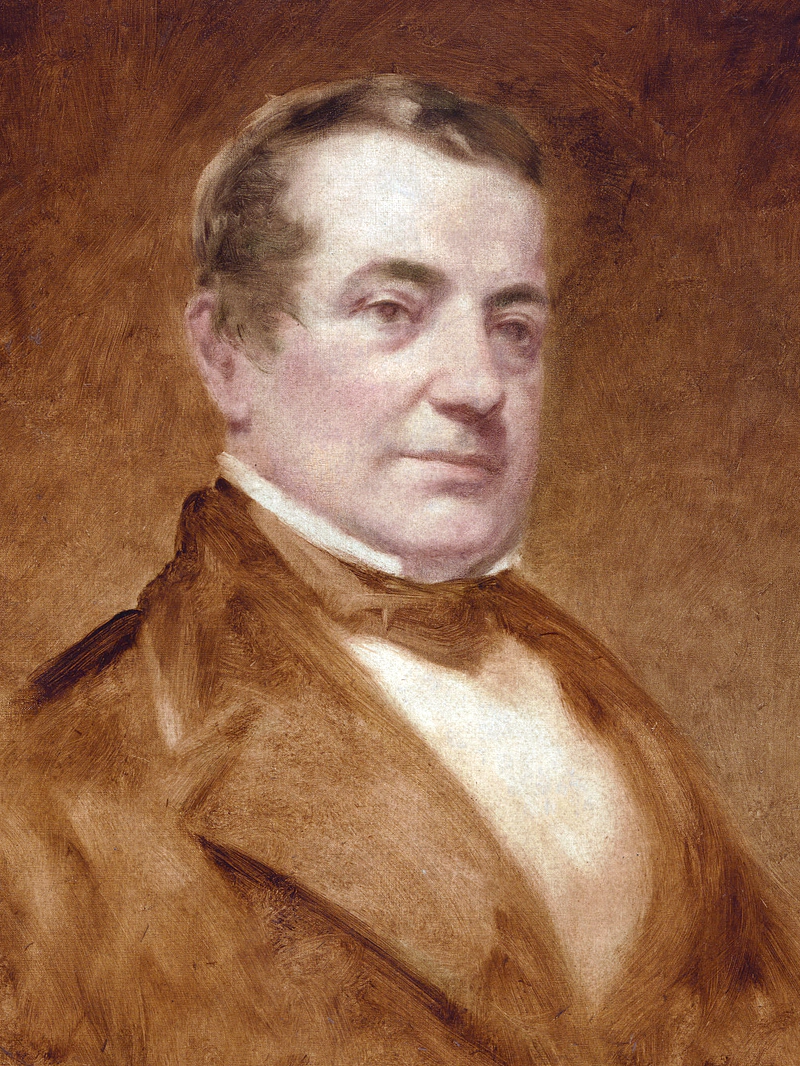
| 39 Quotes | |
| Occup. | Writer |
| From | USA |
| Born | April 3, 1783 New York City |
| Died | November 28, 1859 Tarrytown, New York |
| Aged | 76 years |
| Cite | |
Citation Formats
APA Style (7th ed.)
Washington irving biography, facts and quotes. (2026, February 11). FixQuotes. https://fixquotes.com/authors/washington-irving/
Chicago Style
"Washington Irving biography, facts and quotes." FixQuotes. February 11, 2026. https://fixquotes.com/authors/washington-irving/.
MLA Style (9th ed.)
"Washington Irving biography, facts and quotes." FixQuotes, 11 Feb. 2026, https://fixquotes.com/authors/washington-irving/. Accessed 26 Mar. 2026.
Early Life and Background
Washington Irving was born on April 3, 1783, in New York City, the youngest of eleven children in a mercantile, Presbyterian household shaped by the afterglow of the American Revolution. His parents, Scottish-born William Irving and English-born Sarah Saunders, raised him in a port town where republican politics, Atlantic trade, yellow-fever summers, and theater-going winters all coexisted. The city gave him a lifelong double vision: practical commerce on the docks, and a taste for performance, satire, and storytelling in the coffeehouses and playbills.Fragile health kept him from the straight line of a professional education, but it also trained his inner weather: he learned early how a life can be interrupted, and how imagination fills the gaps. As a boy he wandered lanes and waterfronts, absorbing accents and manners, storing up the human particulars he would later recast as folklore. That habit - attentive, ironic, yet tender - became the basis of his public voice: an American who could look at his own country as if it already had centuries of legend.
Education and Formative Influences
Irving attended local schools irregularly and read widely in English essayists and humorists, especially Addison and Steele, while apprenticing in law offices as a teenager. In 1804-1806, family concern over his health sent him on an extended tour of Europe; he moved through France, Italy, Switzerland, and England, absorbing antiquarian sites, theatrical culture, and the rhythms of travel writing. Returning to New York, he was admitted to the bar in 1806, but the law felt like a costume; his real apprenticeship was in periodicals, conversation, and the urban sociability that taught him how to write as if speaking to an amused friend.Career, Major Works, and Turning Points
Irving first gained attention with the Salmagundi papers (1807-1808), a collaborative satirical magazine that mocked New York fashions with a light touch, then with A History of New-York (1809), published under the comic persona "Diedrich Knickerbocker" - a breakthrough that gave the young republic a past playful enough to be lovable. Financial strain and the death of his beloved fiancee Matilda Hoffman in 1809 darkened his private life; he never married, and grief became a quiet engine behind his later gentleness. From 1815 he lived mainly abroad, and after business failures he committed fully to authorship, producing The Sketch Book of Geoffrey Crayon, Gent. (1819-1820), which included "Rip Van Winkle" and "The Legend of Sleepy Hollow" and made him the first American writer to win broad international literary fame. Later came Bracebridge Hall (1822), Tales of a Traveller (1824), historical work in Spain such as A History of the Life and Voyages of Christopher Columbus (1828) and Chronicle of the Conquest of Granada (1829), and the enduring Alhambra (1832). He returned to the United States in 1832 as a cultural celebrity, wrote on the West in A Tour on the Prairies (1835), served as U.S. minister to Spain (1842-1846), and spent his final years at Sunnyside on the Hudson near Tarrytown, completing a multi-volume Life of George Washington (1855-1859) before dying on November 28, 1859.Philosophy, Style, and Themes
Irving's signature style is urbane and intimate: a narrator who smiles before he argues, who prefers the anecdote to the manifesto, and who softens satire with nostalgia. He invented an American way of being literary without being doctrinaire, blending essay, travel sketch, and short fiction into a form that could domesticate history. Even when he wrote of Spain or the medieval past, he was really building a usable emotional tradition for a nation anxious about its thin lineage, proving that American landscapes and towns could carry myth.His inner life, shadowed by bereavement and lifelong bachelorhood, gives his work its distinctive compassion: he distrusted harshness as a kind of self-poisoning, warning that “A tart temper never mellows with age, and a sharp tongue is the only edged tool that grows keener with constant use”. He treated feeling as a moral faculty rather than a weakness, insisting that “There is a sacredness in tears. They are not the mark of weakness, but of power. They speak more eloquently than ten thousand tongues. They are the messengers of overwhelming grief, of deep contrition, and of unspeakable love”. And in his beloved Christmas sketches - part folklore, part social ideal - he made hospitality into civic religion: “Christmas is a season for kindling the fire for hospitality in the hall, the genial flame of charity in the heart”. Across genres, he returned to the same consolations: community against loneliness, humor against vanity, and old stories as a way to civilize a hurried commercial world.
Legacy and Influence
Irving helped create the professional identity of the American author, showing that a writer from the new republic could command British respect without imitating British certainties. He shaped the short story and the literary sketch, gave enduring icons to American folklore (Rip Van Winkle, Ichabod Crane, the Headless Horseman), and popularized "Knickerbocker" as a symbol of old New York. His diplomacy and historical writing also modeled a public intellectual who could translate cultures, especially between the United States and Spain. More quietly, his lasting influence lies in tone: the conviction that irony need not be cruel, that sentiment can be disciplined, and that a nation becomes real to itself when its places acquire legends, seasons, and voices that people want to remember.Our collection contains 39 quotes written by Washington, under the main topics: Witty One-Liners - Motivational - Justice - Friendship - Love.
Other people related to Washington: Joseph Jefferson (Artist), Philip Hone (Politician), Van Wyck Brooks (Critic)
Washington Irving Famous Works
- 1855 The Life of George Washington (Biography)
- 1850 Mahomet and His Successors (Non-fiction)
- 1837 The Adventures of Captain Bonneville, U.S.A. (Non-fiction)
- 1836 Astoria (Non-fiction)
- 1835 A Tour on the Prairies (Non-fiction)
- 1832 The Alhambra (Book)
- 1829 Chronicle of the Conquest of Granada (Non-fiction)
- 1828 The Life and Voyages of Christopher Columbus (Biography)
- 1824 The Devil and Tom Walker (Short Story)
- 1824 Tales of a Traveller (Collection)
- 1822 Bracebridge Hall; or, The Humorists (Book)
- 1820 The Legend of Sleepy Hollow (Short Story)
- 1819 Rip Van Winkle (Short Story)
- 1819 The Sketch Book of Geoffrey Crayon, Gent. (Collection)
- 1809 A History of New York (Book)
- 1807 Salmagundi (Collection)