
Wayne Dyer Biography Quotes 52 Report mistakes
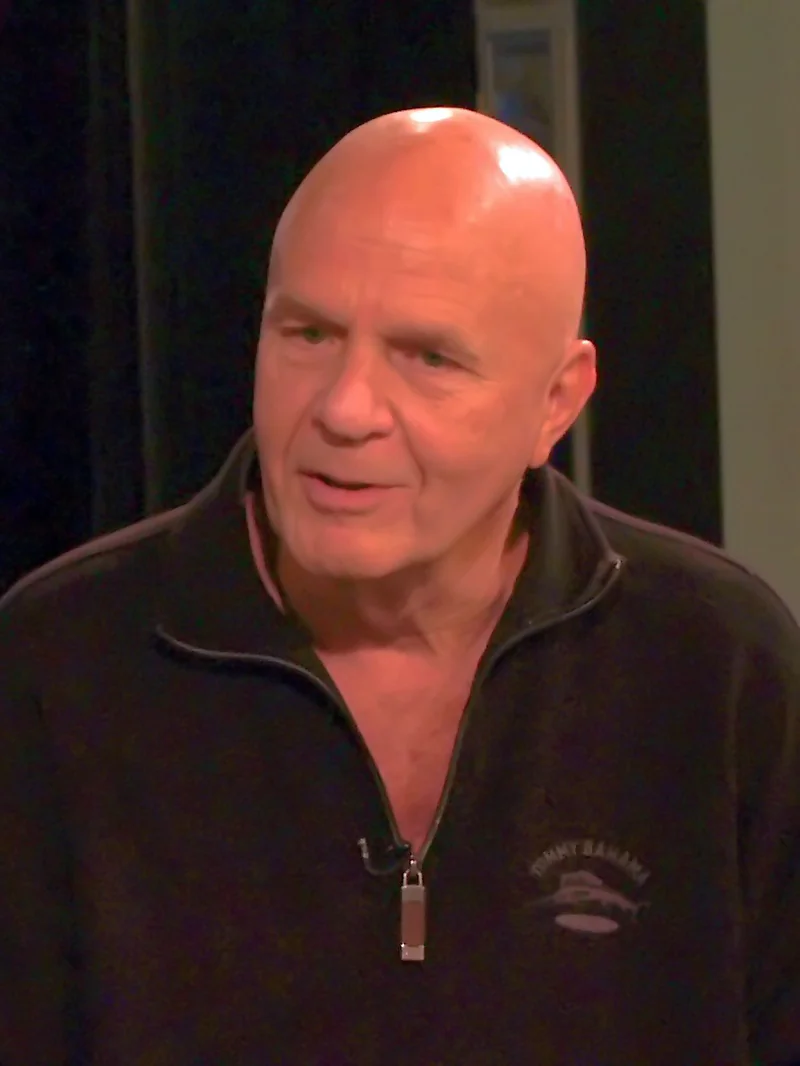
Attr: KUSI-TV in San Diego
| 52 Quotes | |
| Born as | Wayne Walter Dyer |
| Known as | Wayne W. Dyer |
| Occup. | Psychologist |
| From | USA |
| Born | March 10, 1940 Detroit, Michigan, United States |
| Died | August 29, 2015 Maui, Hawaii, United States |
| Aged | 75 years |
| Cite | |
Citation Formats
APA Style (7th ed.)
Wayne dyer biography, facts and quotes. (2026, February 11). FixQuotes. https://fixquotes.com/authors/wayne-dyer/
Chicago Style
"Wayne Dyer biography, facts and quotes." FixQuotes. February 11, 2026. https://fixquotes.com/authors/wayne-dyer/.
MLA Style (9th ed.)
"Wayne Dyer biography, facts and quotes." FixQuotes, 11 Feb. 2026, https://fixquotes.com/authors/wayne-dyer/. Accessed 26 Mar. 2026.
Early Life and Background
Wayne Walter Dyer was born on March 10, 1940, in Detroit, Michigan, and came of age in a United States still shaped by the Great Depression's aftershocks and the moral certainties of World War II. His earliest memories were not of postwar prosperity but of rupture: his father was largely absent and struggled with alcoholism, and the family cycled through instability. Those formative conditions mattered. Dyer later spoke and wrote as someone who had felt the social stigma of poverty and the corrosive power of resentment, then made a life project out of refusing inheritance-by-injury.As a child and teenager he spent years in foster care and an orphanage in Michigan, experiences that sharpened his observational skills and his hunger for belonging. The institutions offered order without warmth; they also made him attentive to how authority, language, and expectation can fix a person's identity long before the person has any say in it. That tension - between imposed labels and self-authored meaning - became a lifelong engine of his work, giving his later optimism a harder edge than many casual readers noticed.
Education and Formative Influences
Dyer joined the U.S. Navy, an early bid for structure and self-determination, and later pursued higher education through the GI Bill pathway typical of mid-century upward mobility. He earned a doctorate in educational counseling from Wayne State University in Detroit, training that placed him at the intersection of psychology, pedagogy, and the era's emerging self-help culture. In the 1960s and early 1970s, humanistic psychology, encounter-group rhetoric, and popularized Eastern spirituality circulated alongside academic counseling models; Dyer absorbed the language of self-actualization while keeping his eye on practical change in daily behavior.Career, Major Works, and Turning Points
Dyer taught at St. John's University in New York and built a reputation as a compelling lecturer before breaking through as a public author. His first major bestseller, "Your Erroneous Zones" (1976), appeared in a decade marked by post-Vietnam disillusionment and therapeutic self-scrutiny; it reframed anxiety, guilt, and dependency as habits of mind that could be unlearned, and it sold in the tens of millions over time. The success turned him into a staple of talk shows and lecture circuits and opened a long publishing arc that blended motivational psychology with spiritual language - later books included "Pulling Your Own Strings" (1978), "The Sky's the Limit" (1980), "You'll See It When You Believe It" (1989), "Wishes Fulfilled" (2009), and "The Shift" (both a book and a film project). Across decades he reinvented his persona from counselor-educator to spiritual teacher, and his late career centered on forgiveness, intention, and what he described as living from a higher self. Dyer died on August 29, 2015, in Maui, Hawaii.Philosophy, Style, and Themes
Dyer's core psychological claim was deceptively simple: perception is a lever, and the inner narrator can be retrained. He spoke in an accessible, directive style - short chapters, list-like reframes, aphorisms - but the underlying method was consistent with cognitive-behavioral instincts filtered through humanistic warmth. The attention he gave to childhood wounds was real, yet he resisted turning biography into a life sentence; his message was that adults can outgrow the emotional contracts they signed in fear. “If you change the way you look at things, the things you look at change”. In Dyer's usage, that was not a metaphysical magic trick so much as a daily discipline: interrupt catastrophic interpretations, choose a more accurate story, and behavior follows.His moral psychology emphasized responsibility without harshness. He separated stimulus from response and treated reactivity as the place where a life is either enlarged or diminished. “How people treat you is their karma; how you react is yours”. The sentence reveals a man who learned early that the world can be unfair and that waiting for fairness can become its own prison; freedom, for Dyer, was the practiced ability to decline the role of victim. He also urged an interior audit under pressure: “When you are squeezed, what comes out is what is inside”. That metaphor locates character not in intentions but in reflexes - what leaks out when pride is wounded, when fatigue sets in, when love is inconvenient - and it explains why his later work leaned toward meditation, forgiveness, and what he called alignment, the cultivation of a self that does not need domination to feel safe.
Legacy and Influence
Dyer's influence sits at the crossroads of late-20th-century self-help, pop psychology, and American spirituality. He helped normalize the idea that everyday unhappiness is not merely a private failing or a medical diagnosis but also a learnable pattern of thought, and he modeled a public journey from academic counselor to mass-audience teacher. Critics have faulted his work for overpromising and for blending psychological claims with metaphysical certainty; admirers counter that his plain language gave millions a first vocabulary for boundaries, self-respect, and intentional living. Whatever one's verdict, his books and recordings remain a durable entry point into the modern self-improvement canon, and his best lines continue to circulate because they compress a larger argument: that inner life is not an ornament to biography but the engine that steers it.Our collection contains 52 quotes written by Wayne, under the main topics: Motivational - Ethics & Morality - Wisdom - Love - Mortality.