
Werner Heisenberg Biography Quotes 6 Report mistakes
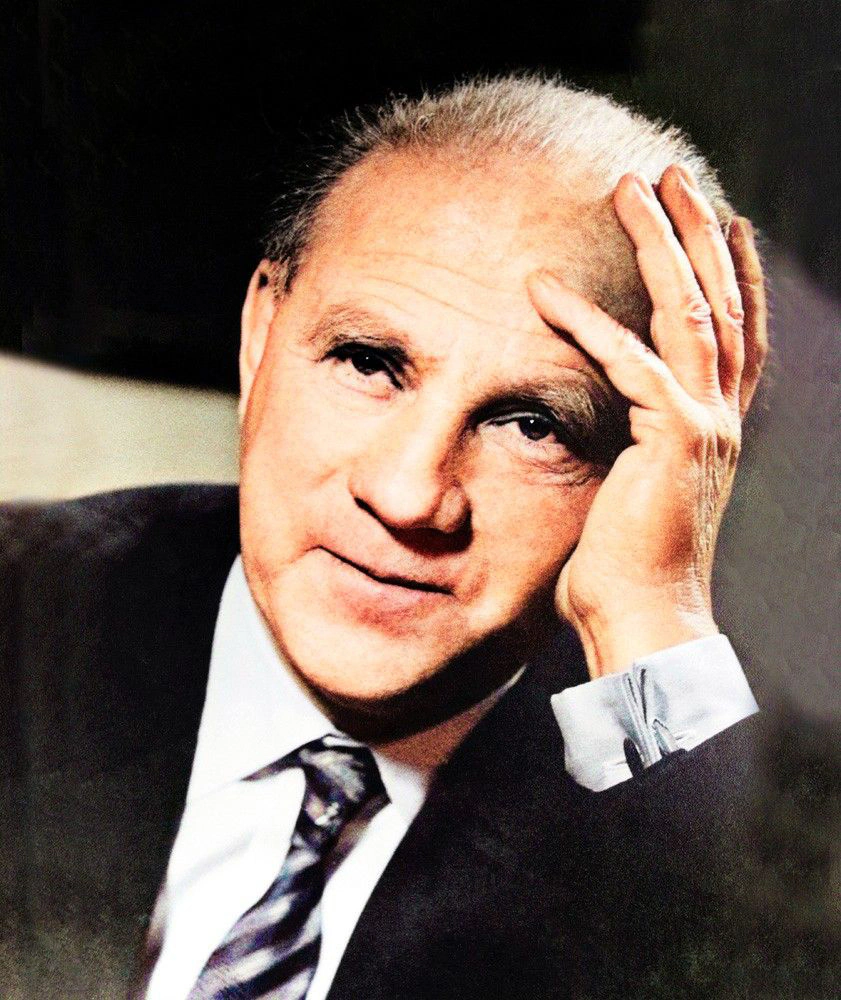
| 6 Quotes | |
| Born as | Werner Karl Heisenberg |
| Occup. | Physicist |
| From | Germany |
| Spouse | Elisabeth Schumacher |
| Born | December 5, 1901 Würzburg, Bavaria, Germany |
| Died | February 1, 1976 Munich, Bavaria, West Germany |
| Cause | Cancer |
| Aged | 74 years |
| Cite | |
Citation Formats
APA Style (7th ed.)
Werner heisenberg biography, facts and quotes. (2026, February 11). FixQuotes. https://fixquotes.com/authors/werner-heisenberg/
Chicago Style
"Werner Heisenberg biography, facts and quotes." FixQuotes. February 11, 2026. https://fixquotes.com/authors/werner-heisenberg/.
MLA Style (9th ed.)
"Werner Heisenberg biography, facts and quotes." FixQuotes, 11 Feb. 2026, https://fixquotes.com/authors/werner-heisenberg/. Accessed 5 Mar. 2026.
Early Life and Background
Werner Karl Heisenberg was born on 1901-12-05 in Wurzburg, in the Kingdom of Bavaria, German Empire, into a cultivated, ambitious household that treated scholarship as a calling. His father, August Heisenberg, was a classical philologist who rose to a chair at the University of Munich; his mother, Annie Wecklein, came from a family tied to Munich civic life. The family moved to Munich in 1910, placing Heisenberg in a city where traditional humanism, Catholic conservatism, and cutting-edge science coexisted uneasily.His adolescence was shaped by the shocks that remade Germany: World War I, defeat, revolution, and the early Weimar years. He participated in the youth movement (the Wandervogel milieu), hiking and singing in idealistic fraternities that sought moral renewal through discipline and nature. That romantic strain, alongside a rigorous mathematical talent, fed a lifelong inner tension - between an almost classical desire for order and the new physics insistence that nature could not be made to yield a single, pictorial certainty.
Education and Formative Influences
Heisenberg studied physics and mathematics at the University of Munich under Arnold Sommerfeld, whose seminar trained him to think in approximations, symmetry, and calculation rather than visual models; Max Born and James Franck in Gottingen would soon reinforce that habit. In 1922 he attended Niels Bohr's lectures in Gottingen, an encounter that became decisive: Bohr recognized both his brilliance and his impatience with vague imagery, and their later collaboration at Copenhagen set the psychological tone of Heisenberg's mature work - relentless self-criticism, intense argument, and a willingness to abandon familiar pictures if the formalism proved truer.Career, Major Works, and Turning Points
After a 1923 doctorate in Munich (with an oral exam in which experimental physics went poorly), Heisenberg became Born's assistant at Gottingen and, in 1925 on Helgoland, wrote the paper that founded matrix mechanics, the first coherent formulation of quantum mechanics built from observable quantities. With Born and Pascual Jordan he developed the formal structure; with Bohr he helped articulate complementarity; and in 1927 he published the uncertainty principle, making limits of simultaneous knowledge a theorem rather than a philosophical shrug. He was appointed professor at Leipzig in 1927, won the 1932 Nobel Prize in Physics, and became a leading figure in German theoretical physics. Under the Third Reich he was attacked by "Deutsche Physik" ideologues as a "White Jew" for defending Einstein, yet he stayed, navigating compromises while trying to preserve institutions and students. During World War II he led parts of the German Uranverein (uranium project), focusing largely on reactor theory rather than an operational bomb; after Germany's defeat he was interned at Farm Hall in England in 1945. Returning to a ruined country, he directed the Max Planck Institute for Physics (initially in Gottingen, later Munich) and helped rebuild West German science, advocating peaceful nuclear policy and European cooperation until his death on 1976-02-01 in Munich.Philosophy, Style, and Themes
Heisenberg's science was inseparable from a philosophy of limits - not as resignation, but as discipline. He insisted that physics begins with how questions are put and how answers are registered: “What we observe is not nature itself, but nature exposed to our method of questioning”. The sentence is often read as subjectivism, but his own temperament was anti-sentimental and exacting; he meant that experimental arrangements carve the world into describable aspects, and the theorist must be honest about what a setup can and cannot warrant. The uncertainty principle, in his hands, became a moral and methodological rule: do not smuggle in properties that the act of measurement cannot, even in principle, secure.His writing returns again and again to the fragility of concepts at the frontiers, where language lags behind mathematics. “Every word or concept, clear as it may seem to be, has only a limited range of applicability”. That caution was personal as well as epistemic - a learned distrust of grand metaphysical pictures after the cultural collapse of his youth and the political catastrophe of his middle age. When he explained wave-particle duality, he framed it as the disciplined use of partial images rather than a mystical paradox: “The solution of the difficulty is that the two mental pictures which experiment lead us to form - the one of the particles, the other of the waves - are both incomplete and have only the validity of analogies which are accurate only in limiting cases”. Behind the technical prose lies a psychological profile: a mind that sought certainty through formal structure, yet accepted that the deepest honesty in modern physics is to name the boundaries of what can be said.
Legacy and Influence
Heisenberg helped create the working language of quantum theory, and his matrix mechanics and uncertainty principle remain foundational to atomic, nuclear, condensed-matter, and particle physics. Equally enduring is his example of the theorist as a custodian of intellectual integrity under pressure - admired for conceptual daring, scrutinized for wartime choices, and invoked in debates about responsibility in science. Through textbooks, lectures, and his leadership in rebuilding German research, he shaped generations of physicists; through his epistemic humility about concepts and observation, he also shaped how modern culture talks about knowledge itself, especially wherever precision meets the limits of description.Our collection contains 6 quotes written by Werner, under the main topics: Wisdom - Truth - Science.
Other people related to Werner: Felix Bloch (Scientist), Otto Hahn (Scientist), Johannes Stark (Physicist)
Werner Heisenberg Famous Works
- 1969 Across the Frontiers (Book)
- 1966 Introduction to the Unified Field Theory of Elementary Particles (Book)
- 1958 Physics and Philosophy: The Revolution in Modern Science (Book)
- 1930 The Physical Principles of the Quantum Theory (Book)
Source / external links