
Whitey Ford Biography Quotes 9 Report mistakes
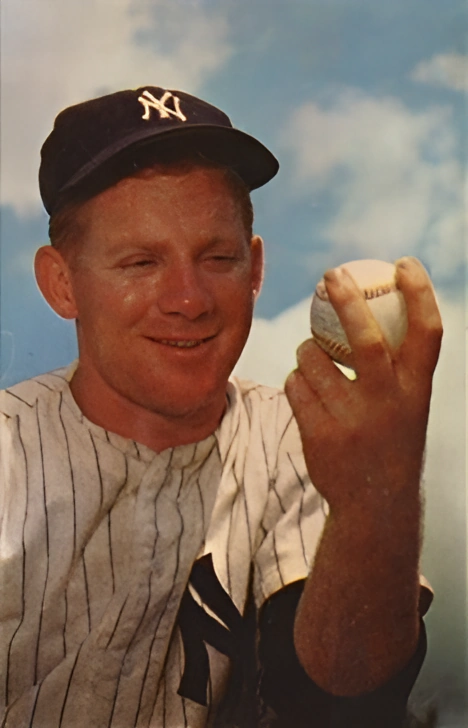
| 9 Quotes | |
| Occup. | Athlete |
| From | USA |
| Born | October 21, 1928 |
| Age | 97 years |
| Cite | |
Citation Formats
APA Style (7th ed.)
Whitey ford biography, facts and quotes. (2026, March 3). FixQuotes. https://fixquotes.com/authors/whitey-ford/
Chicago Style
"Whitey Ford biography, facts and quotes." FixQuotes. March 3, 2026. https://fixquotes.com/authors/whitey-ford/.
MLA Style (9th ed.)
"Whitey Ford biography, facts and quotes." FixQuotes, 3 Mar. 2026, https://fixquotes.com/authors/whitey-ford/. Accessed 5 Mar. 2026.
Early Life and Background
George Michael "Whitey" Ford was born on October 21, 1928, in New York City and grew up in working-class Astoria, Queens, a borough that produced ballplayers and boxers as readily as it produced dockworkers and machinists. Left-handed, compact, and wiry, he learned early that a pitcher without overpowering size survives by being smarter than the hitter and steadier than the moment. The nickname "Whitey" clung to him in youth, a familiar street tag that followed him into clubhouses and headlines.
Ford came of age during the Depression's aftershocks and the Second World War, when neighborhood identity and loyalty mattered, and when baseball was both escape and instruction. The postwar city around him was booming, but the route out for a talented kid still ran through sandlots and semi-pro diamonds, where reputations were made on short rest and with little protection. Those early years hardened his competitive instincts and taught him the value of control - of the ball, the pace, and his own nerves.
Education and Formative Influences
Signed by the New York Yankees as a teenager, Ford entered a system that treated pitching as craft: repeatable mechanics, precise location, and relentless attention to hitters' habits. He lost prime development time to military service during the Korean War era, an interruption that sharpened rather than softened his sense of baseball as work; he returned to a franchise that expected immediate usefulness and offered little patience for self-pity. The Yankees' veteran culture - accountability, scouting reports, and October expectations - became his real schooling, and it shaped him into a pitcher who treated every inning as a problem to be solved.
Career, Major Works, and Turning Points
Ford debuted with the Yankees in 1950, then became the staff's left-handed anchor after returning from service, winning the Cy Young Award in 1961 and helping drive a dynasty that seemed to treat pennants as routine. Across a career spent entirely in the Bronx (1950-1967), he compiled 236 wins, a.690 winning percentage, and a 2.75 ERA, starring on six World Series champions and earning repeated All-Star selections. His turning points were less about reinvention than refinement: learning to pitch to contact behind elite defenses, mastering tempo and fielding his position, and embracing postseason pressure until he set World Series records - including 33 2/3 consecutive scoreless innings - that stamped him as "Chairman of the Board". In 1974 he was inducted into the National Baseball Hall of Fame, a formal recognition of what October crowds had long understood.
Philosophy, Style, and Themes
Ford's artistry was never brute force; it was deception, angle, and decision-making. He lived at the edges with a darting fastball, a tight curve, and change-of-pace variations, exploiting the old truth that hitters swing at stories as much as pitches. He also understood the body as a finite instrument, and his candor about wear carried an undertone of fatalism: “Sooner or later the arm goes bad. It has to... Sooner or later you have to start pitching in pain”. That sentence reads like an inner contract - accept the cost, do the job anyway - and it helps explain why he could seem both relaxed and ruthless, joking in the clubhouse while guarding his arm and his advantage.
Just as central was his feel for psychology, the chess match inside the count. He believed outs were purchased with misdirection and timing, not just velocity: “You would be amazed how many important outs you can get by working the count down to where the hitter is sure you're going to throw to his weakness, and then throw to his power instead”. That is Ford in miniature - a pitcher who preferred the hitter to be certain, then wrong. And because he spent his prime inside a machine built for late-season baseball, he carried a sense of entitlement that was also a quiet burden: “You kind of took it for granted around the Yankees that there was always going to be baseball in October”. The line exposes the Yankee-era psychology he inhabited: excellence normalized, pressure disguised as tradition, winning treated as the default setting.
Legacy and Influence
Ford remains the model of the modern control-and-craft ace, proof that a pitcher can dominate without looking like a prototype. His World Series record, his left-handed savvy, and his cool under the brightest lights continue to shape how October pitching is judged, while his place in Yankees history links the DiMaggio-to-Mantle era to the later mythology of postseason inevitability. For generations of pitchers who lacked overwhelming velocity, Ford offered a usable blueprint: learn hitters, own the count, protect your body as best you can, and trust that intelligence - applied pitch by pitch - can make greatness repeatable.
Our collection contains 9 quotes written by Whitey, under the main topics: Witty One-Liners - Sports - Military & Soldier - Training & Practice.
Other people related to Whitey: Yogi Berra (Athlete), Mickey Mantle (Athlete), Billy Martin (Athlete), Enos Slaughter (Athlete), Jerry Coleman (Athlete), Phil Rizzuto (Celebrity)
Source / external links