
Whitfield Diffie Biography Quotes 12 Report mistakes
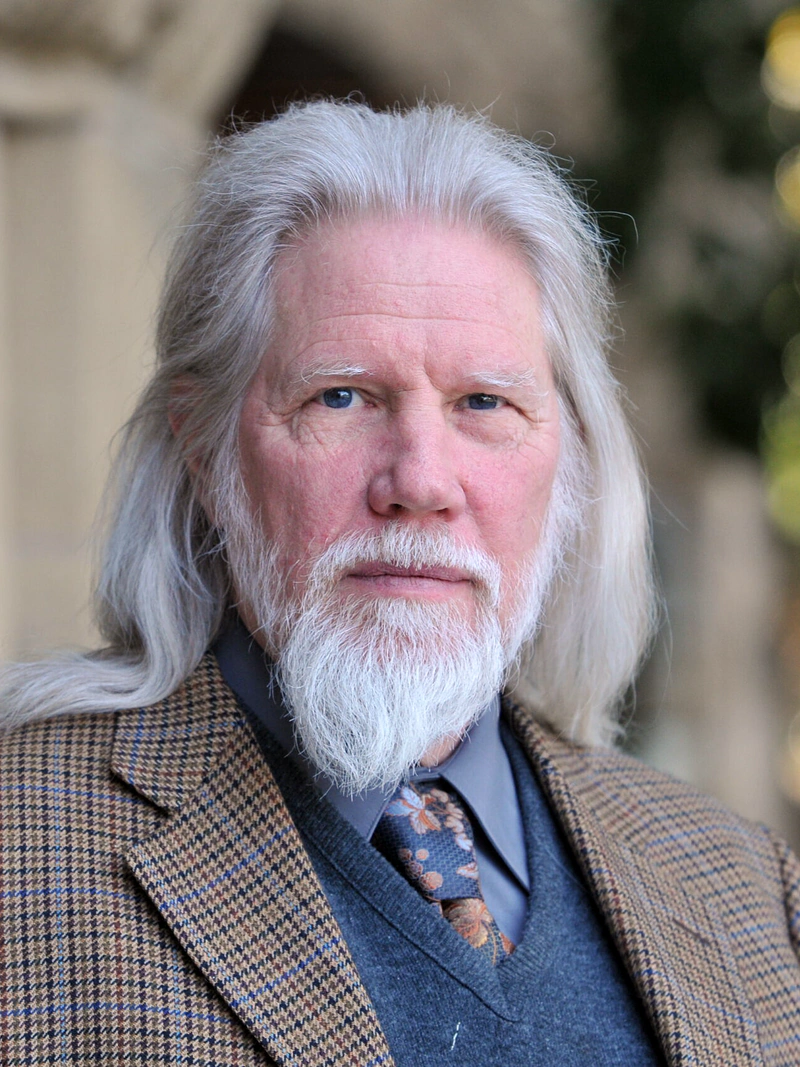
Attr: MIT Press
| 12 Quotes | |
| Occup. | Scientist |
| From | USA |
| Born | June 5, 1944 |
| Age | 81 years |
| Cite | |
Citation Formats
APA Style (7th ed.)
Whitfield diffie biography, facts and quotes. (2026, February 11). FixQuotes. https://fixquotes.com/authors/whitfield-diffie/
Chicago Style
"Whitfield Diffie biography, facts and quotes." FixQuotes. February 11, 2026. https://fixquotes.com/authors/whitfield-diffie/.
MLA Style (9th ed.)
"Whitfield Diffie biography, facts and quotes." FixQuotes, 11 Feb. 2026, https://fixquotes.com/authors/whitfield-diffie/. Accessed 6 Mar. 2026.
Early Life and Background
Whitfield Diffie was born on June 5, 1944, in Washington, D.C., and raised in a United States reshaped by World War II and the early Cold War, when computing was emerging from government laboratories into universities and industry. His family life set him near the gravitational field of technical work and public institutions, and he grew up with the sense that problems of national power were increasingly problems of information - who could calculate, who could communicate, and who could keep secrets.As a young man he developed a temperament that mixed solitary curiosity with a suspicion of inherited authority. The era around him offered two contradictory lessons: centralized bureaucracies could mobilize staggering resources, and yet individuals with the right ideas could overturn entrenched assumptions. That tension would later surface in his career-long focus on how ordinary people might protect their communications without having to rely on the moral purity or competence of intermediaries.
Education and Formative Influences
Diffie studied at the Massachusetts Institute of Technology and later earned a B.S. in mathematics from Stanford University in 1965, absorbing an intellectual climate where abstraction was celebrated but the social meaning of technology was becoming impossible to ignore. In the late 1960s and early 1970s he moved through the West Coast computer world as both participant and observer - reading widely, meeting programmers, and tracking debates about surveillance, civil liberties, and the expanding reach of networked systems. The rise of time-sharing and early networking sharpened a question that felt newly urgent: if computers would mediate life at scale, what would keep communication private when the channels were owned by others?Career, Major Works, and Turning Points
Diffie's turning point came in the early 1970s, when he set aside conventional career security to pursue cryptography as a public problem rather than a classified craft. At Stanford he met Martin Hellman, and together they reframed encryption for an age of computer networks. Their 1976 paper "New Directions in Cryptography" introduced the concept of public-key cryptography and described what became known as the Diffie-Hellman key exchange, a method for two parties to establish a shared secret over an open channel. That conceptual breakthrough - paired with Ralph Merkle's parallel ideas and, later, the RSA system by Rivest, Shamir, and Adleman - laid foundations for authentication, secure web traffic, and modern digital identity. Diffie later worked at Sun Microsystems as chief security officer and remained a prominent voice in policy, standardization, and the politics of encryption, including debates over export controls and government access.Philosophy, Style, and Themes
Diffie's inner life as a scientist has been defined less by laboratory routine than by a continuous argument with the world about trust. He returned again and again to the notion that security should reduce the need for faith in institutions, not increase it - a psychological stance that blends libertarian instinct with practical engineering. “I thought cryptography was a technique that did not require your trusting other people-that if you encrypted your files, you would have the control to make the choice as to whether you would surrender your files”. In that sentence is both an ethical claim and a personal one: the desire for autonomy in a society where files, identities, and conversations increasingly live on other people's machines.His style was intellectually ambitious but notably collaborative, and he treated ideas as things to be tested in conversation as much as on paper. “Two people can work on a problem better than one”. That preference shaped the Diffie-Hellman partnership itself: Hellman provided academic structure and institutional anchoring, while Diffie brought restless synthesis and an outsider's refusal to accept that cryptography must remain the property of states. Yet he also retained a measured humility about technological trajectories, admitting surprise at the scale of what followed. “I understood the importance in principle of public key cryptography but it's all moved much faster than I expected. I did not expect it to be a mainstay of advanced communications technology”. The remark reveals a mind oriented toward principle rather than prediction - confident enough to bet on an idea, cautious enough to distrust forecasts.
Legacy and Influence
Diffie's influence is both technical and cultural: he helped shift cryptography from a restricted military discipline into an enabling layer for civilian computing, commerce, and dissent. Diffie-Hellman key exchange became a cornerstone for secure protocols, while the larger public-key framework made scalable security possible for strangers on global networks. His career also helped define the modern scientist-citizen role in security policy - arguing that privacy tools are not merely conveniences but infrastructure for democratic life. Honors such as the 2015 A.M. Turing Award (shared with Martin Hellman) recognized not only a breakthrough algorithmic idea, but a decisive change in how societies think about secrecy, trust, and power in the information age.Our collection contains 12 quotes written by Whitfield, under the main topics: Motivational - Wisdom - Deep - Science - Teamwork.
Other people related to Whitfield: Bruce Scheneier (Writer), Steven Levy (Journalist)
Whitfield Diffie Famous Works
- 1998 Privacy on the Line: The Politics of Wiretapping and Encryption (Book)
- 1988 The First Ten Years of Public-Key Cryptography (Research Paper)
- 1976 New Directions in Cryptography (Scientific Research Paper)
Source / external links