
Wilfrid Laurier Biography Quotes 19 Report mistakes
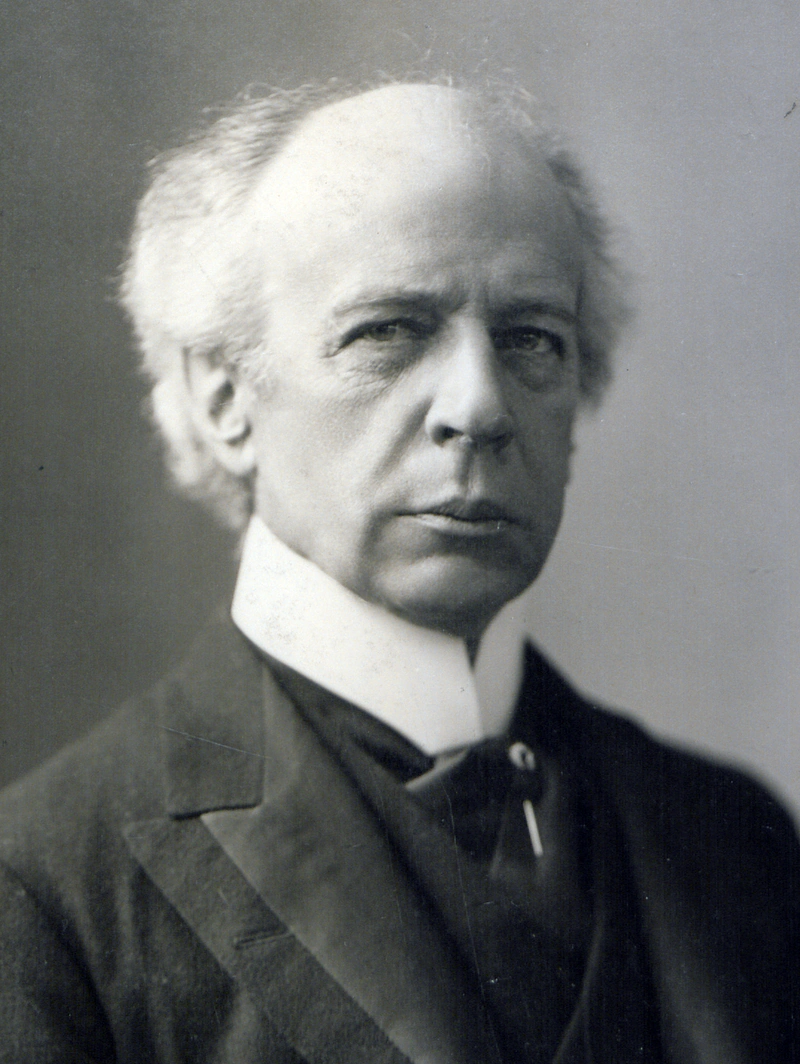
| 19 Quotes | |
| Born as | Henri Charles Wilfrid Laurier |
| Known as | Sir Wilfrid Laurier |
| Occup. | Statesman |
| From | Canada |
| Born | November 20, 1841 Saint-Lin, Canada East |
| Died | February 17, 1919 Ottawa, Ontario, Canada |
| Aged | 77 years |
| Cite | |
Citation Formats
APA Style (7th ed.)
Wilfrid laurier biography, facts and quotes. (2026, February 11). FixQuotes. https://fixquotes.com/authors/wilfrid-laurier/
Chicago Style
"Wilfrid Laurier biography, facts and quotes." FixQuotes. February 11, 2026. https://fixquotes.com/authors/wilfrid-laurier/.
MLA Style (9th ed.)
"Wilfrid Laurier biography, facts and quotes." FixQuotes, 11 Feb. 2026, https://fixquotes.com/authors/wilfrid-laurier/. Accessed 11 Feb. 2026.
Early Life and Background
Henri Charles Wilfrid Laurier was born on November 20, 1841, in Saint-Lin (later Saint-Lin-Laurentides), Canada East, into a French-Canadian Catholic world still marked by the aftershocks of the 1837-38 rebellions and the Union of the Canadas. His father, Carolus Laurier, combined the practicality of a farmer and surveyor with an appetite for politics, and the household absorbed the daily lesson of minority life: language, faith, and law were never abstract ideas but protections that could be lost.When the family moved to New Glasgow (today Rivierre-du-Loup area of Quebec), Laurier grew up near an anglophone enclave and learned early how power sounded in another tongue. That proximity did not make him deferential; it made him bilingual, socially nimble, and alert to the quiet humiliations that produced lasting political resentments. The tension between French-Canadian survival and the pull of a larger North American modernity became the private engine of his public life.
Education and Formative Influences
Laurier studied at the College of LAssomption, where classical training met the rough edge of contemporary politics, and then read law at McGill College in Montreal, called to the bar in 1864. Montreal in the 1860s was a crucible of Confederation debate, clerical influence, and liberal anticlerical currents; Laurier gravitated to liberal ideas without breaking with his community, building a temperament that prized moderation, constitutionalism, and persuasion over denunciation. His early practice and journalism in Arthabaska (Victoriaville) honed a gift for courtroom clarity and parliamentary cadence, while his partnership and later marriage to Zoe Lafontaine tied him to a family network comfortable in both French and English milieus.Career, Major Works, and Turning Points
Elected to the Legislative Assembly of Quebec in 1871 and soon after to the House of Commons (1874), Laurier rose within the Liberal Party as a bridge figure after the Pacific Scandal era and the long dominance of John A. Macdonald. He became party leader in 1887, navigating the explosive legacy of Louis Riel and the Manitoba Schools Question, and won power in 1896 as Canadas first French-Canadian prime minister. His government pursued immigration and western settlement under Clifford Sifton, expanded railways, and sought reciprocal trade while balancing empire and continent. The greatest turning points were the compromises that both elevated and wounded him: the 1896 Manitoba settlement that satisfied few purists, the 1910-11 Naval Service crisis, and the 1911 election defeat after reciprocity with the United States became a referendum on identity; by 1917 his opposition to conscription split Liberals along linguistic lines, and he died on February 17, 1919, as the country he helped enlarge struggled to remain a single moral community.Philosophy, Style, and Themes
Lauriers inner life was ruled by an idea of Canada as an argument that must never become a divorce. His most revealing formula - "Fraternity without absorption, union without fusion". - captures both his ambition and his anxiety: he wanted coexistence that preserved difference, not a melting pot enforced by state or majority. The psychology beneath the phrase is defensive and hopeful at once, the stance of a minority leader determined to avoid permanent grievance by turning pluralism into a national ethic.His style was patient, legalistic, and rhetorical rather than bureaucratic, trusting that a country could be talked into being. In moments of high tension he insisted on a civic identity that reached beyond creed and language: "Two races share today the soil of Canada. These people had not always been friends. But I hasten to say it. There is no longer any family here but the human family. It matters not the language people speak, or the altars at which they kneel". Yet his continental realism could flash into candor that unsettled imperial loyalists: "I am a subject of the British Crown, but whenever I have to choose between the interests of England and Canada it is manifest to me that the interests of my country are identical with those of the United States of America". The tension between these sentences is the key to Laurier: a man trying to keep emotional nations inside a constitutional frame, while admitting that geography and commerce exert their own gravity.
Legacy and Influence
Laurier left Canada bigger, richer, and more self-confident, but also more aware that unity required continuous negotiation. He normalized the idea that a French-Canadian Catholic could lead a dominion still tied to the British Crown, and he modeled a liberal nationalism that sought autonomy without rupture. Later prime ministers would inherit his dilemmas - Quebec and the West, empire and continent, rights and cohesion - and often return to his vocabulary when they needed a language for compromise. His enduring influence lies less in any single statute than in the temperament he tried to instill: that a diverse country survives by refusing both absorption and separation, and by treating politics as the art of keeping faith with more than one memory at once.Our collection contains 19 quotes written by Wilfrid, under the main topics: Witty One-Liners - Wisdom - Justice - Writing - Freedom.
Other people related to Wilfrid: William Lyon Mackenzie King (Politician), John McDonald (Leader), Alexander Mackenzie (Statesman), Edward Blake (Politician), Charles Tupper (Statesman)