
Wilhelm II Biography Quotes 11 Report mistakes
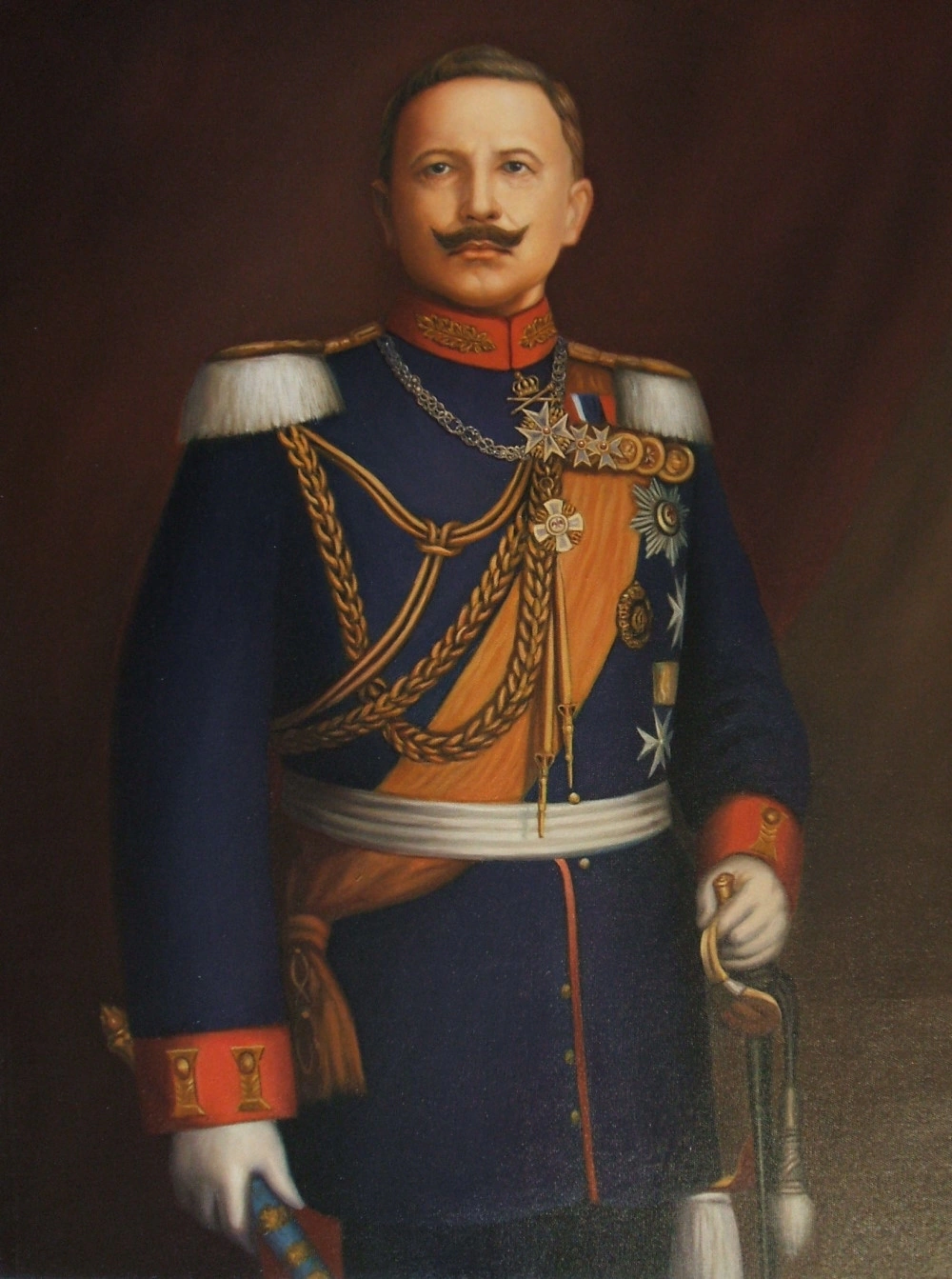
| 11 Quotes | |
| Born as | Friedrich Wilhelm Viktor Albert |
| Known as | William II |
| Occup. | Statesman |
| From | Germany |
| Spouse | Augusta Victoria of Schleswig-Holstein |
| Born | January 27, 1859 Berlin, Germany |
| Died | June 4, 1941 Doorn, Netherlands |
| Cause | Natural causes |
| Aged | 82 years |
| Cite | |
Citation Formats
APA Style (7th ed.)
Wilhelm ii biography, facts and quotes. (2026, February 11). FixQuotes. https://fixquotes.com/authors/wilhelm-ii/
Chicago Style
"Wilhelm II biography, facts and quotes." FixQuotes. February 11, 2026. https://fixquotes.com/authors/wilhelm-ii/.
MLA Style (9th ed.)
"Wilhelm II biography, facts and quotes." FixQuotes, 11 Feb. 2026, https://fixquotes.com/authors/wilhelm-ii/. Accessed 26 Mar. 2026.
Early Life and Background
Wilhelm II was born Friedrich Wilhelm Viktor Albert on 1859-01-27 in Berlin, heir to the Hohenzollern dynasty of Prussia. He entered life as a political symbol before he could speak: his father was Crown Prince Frederick (later Frederick III), steeped in liberal constitutional ideas, and his mother was Victoria, the British-born eldest daughter of Queen Victoria. From the beginning his identity was pulled between a stern Prussian court and an Anglophile household that prized reform, science, and moral earnestness.A traumatic birth left his left arm with lasting paralysis and pain, shaping his posture, vanity, and temper. The court and family subjected him to punishing therapies and constant scrutiny, feeding a fierce need to prove vigor and command. In a Germany newly unified under Bismarck in 1871, Wilhelm grew up amid military ceremony, industrial acceleration, and nationalist triumphalism - conditions that rewarded willpower and spectacle, and that made personal insecurity a political risk.
Education and Formative Influences
Wilhelm was educated privately and then at the University of Bonn (1877-1879), studying law and statecraft in a setting that mixed aristocratic sociability with modern scholarship. He absorbed Prussian officer culture through early commissions and court life, while his mother pressed him toward British-style constitutional monarchy - a tension he never resolved. Religion, dynastic history, and the theater of uniforms and reviews became his language of authority; he learned to see public life as a stage where a monarch must be seen, heard, and obeyed.Career, Major Works, and Turning Points
He became German Emperor and King of Prussia in 1888, the "Year of the Three Emperors", after Frederick III died within months of ascending the throne. Determined to rule personally, Wilhelm dismissed Chancellor Otto von Bismarck in 1890, ending the cautious system of alliances that had stabilized Europe and launching a more volatile Weltpolitik. He backed colonial expansion and, crucially, a massive naval buildup under Alfred von Tirpitz, sharpening rivalry with Britain. His reign lurched through diplomatic crises - the Kruger Telegram (1896), the Moroccan Crises (1905, 1911), the Daily Telegraph interview fiasco (1908) - each revealing a talent for dramatic intervention and a weakness for improvised, injurious candor. In July 1914 he encouraged Austria-Hungary after Sarajevo, then proved unable to control the escalation; during World War I effective power shifted to Hindenburg and Ludendorff. Defeat and revolution forced his abdication in November 1918, and he lived in Dutch exile at Huis Doorn until his death on 1941-06-04, writing memoirs, annotating history, and watching Germany convulse again without him.Philosophy, Style, and Themes
Wilhelm's inner life was a contest between craving affection and insisting on dominance. He believed monarchy should not merely arbitrate but direct, and he fused personal fate with national destiny. That psychology surfaces in his insistence, “I believe in the divine right of kings and the necessity of strong leadership”. It reads less like detached doctrine than self-justification: the injured child turned anxious adult sought metaphysical cover for impulsive decisions, and reacted to criticism as if it were treason against the state.His rhetoric favored struggle, hierarchy, and spectacle, and he framed politics as a Darwinian arena where weakness invited extinction. “The future belongs to the strong; the weak will be swept away by the tide of history”. Such phrases aligned with the era's militarism and Social Darwinist talk, but for Wilhelm they also masked fear - fear of rivals, of parliaments, of clever counselors who might expose his uncertainty. His angriest outbursts, especially about Britain, revealed a wounded kinship: he both admired and resented the maritime empire tied to his mother's family, turning geopolitical competition into personal vendetta.
Legacy and Influence
Wilhelm II's legacy is inseparable from the catastrophe that ended his reign. He did not single-handedly cause World War I, but his dismissal of Bismarck, encouragement of naval rivalry, and repeated diplomatic theatrics helped create an atmosphere in which miscalculation became fatal. To later generations he became a case study in the dangers of personalized power inside modern mass politics: a monarch with vast formal authority, limited self-discipline, and an information ecosystem that rewarded bravado. His exile writings and the survival of imperial iconography kept him present as a cautionary symbol - of nationalism inflated into destiny, and of a leader whose need to appear strong helped push a continent toward ruin.Our collection contains 11 quotes written by Wilhelm, under the main topics: Witty One-Liners - Sarcastic - Leadership - Knowledge - War.
Other people related to Wilhelm: Hjalmar Schacht (Economist), Walter Anderson (Writer), Roland Freisler (Politician), Paul von Hindenburg (President), Edward Grey (Politician), Ludwig Quidde (Critic), Bernhard von Bulow (Statesman), Gustav Krupp (Businessman)
Source / external links