
Wilhelm Keitel Biography Quotes 5 Report mistakes
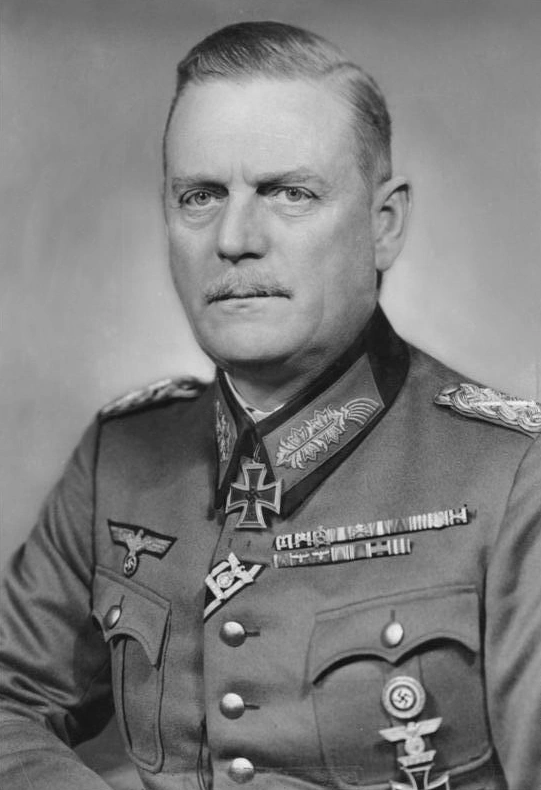
| 5 Quotes | |
| Born as | Wilhelm Bodewin Gustav Keitel |
| Occup. | Celebrity |
| From | Germany |
| Born | September 22, 1882 Helmscherode, Brunswick, German Empire |
| Died | October 16, 1946 Nuremberg, Allied-occupied Germany |
| Aged | 64 years |
| Cite | |
Citation Formats
APA Style (7th ed.)
Wilhelm keitel biography, facts and quotes. (2026, February 11). FixQuotes. https://fixquotes.com/authors/wilhelm-keitel/
Chicago Style
"Wilhelm Keitel biography, facts and quotes." FixQuotes. February 11, 2026. https://fixquotes.com/authors/wilhelm-keitel/.
MLA Style (9th ed.)
"Wilhelm Keitel biography, facts and quotes." FixQuotes, 11 Feb. 2026, https://fixquotes.com/authors/wilhelm-keitel/. Accessed 5 Mar. 2026.
Early Life and Background
Wilhelm Bodewin Gustav Keitel was born on September 22, 1882, in Helmscherode near Bad Gandersheim, in the Prussian Province of Hanover. He came from a Protestant, landowning family rooted in the agrarian conservatism of north Germany - a world of duty, hierarchy, and deference to state authority. That milieu prized steadiness over brilliance, and Keitel carried into adulthood a farmer's patience and an administrator's caution, traits that later made him more pliable than visionary.His early adulthood unfolded during the Kaiserreich's last confident decades, when the officer corps functioned as a social ladder and a moral order. For Keitel, the army was not just employment but identity: a place where obedience was synonymous with honor, and where personal conscience could be submerged into command responsibility. The collapse of 1918 and the humiliations associated with Versailles would sharpen these instincts into a desire for restored German power, even as they narrowed his willingness to challenge authority.
Education and Formative Influences
Keitel entered the Prussian Army as a Fahnenjunker in 1901, receiving the practical schooling of a professional officer rather than a university education - regiment life, staff methods, and the culture of disciplined conformity. He served in the field artillery and during World War I rose through staff work, learning the language of orders, logistics, and "necessity" that can sanitize violence. In the Reichswehr of the Weimar era he became, like many career officers, both politically cautious and institutionally ambitious, absorbing the lesson that survival depended on keeping the army intact while waiting for a national revival.Career, Major Works, and Turning Points
Keitel's defining rise came under Adolf Hitler. After appointments in the Army Personnel Office and the War Ministry, he became Chief of the Oberkommando der Wehrmacht (OKW) in 1938, effectively Hitler's senior military clerk and coordinator of the armed forces - a role that offered proximity to power but little independent authority. During the war he signed and transmitted major criminal directives, including orders tied to the invasion of the Soviet Union, anti-partisan warfare, and the treatment of prisoners, helping translate ideological war aims into administrative routine. He was present at key moments of the regime's military decision-making, and his name became synonymous with compliant obedience - the officer who lent a field marshal's seal to policies of annihilation. Captured in 1945, he was tried at Nuremberg, convicted of war crimes and crimes against humanity, and executed by hanging on October 16, 1946.Philosophy, Style, and Themes
Keitel was not a strategist in the mold of a Moltke; his "style" was bureaucratic submission elevated into doctrine. His inner life, as far as it can be reconstructed, seems governed by a need to belong to the chain of command and to be seen as reliable by the leader who dispensed favor. The result was a tragic fusion of personal timidity and institutional power: he often recognized the extremity of measures but treated moral hesitation as a kind of professional error, something to be suppressed for the sake of unity and momentum.This psychology surfaces in the language of the orders he endorsed, where war is recast as a moral exception in which restraint becomes betrayal. “This war no longer has anything to do with knightly conduct or with the agreements of the Geneva Convention”. That sentence is less a description than a permission slip - a way to quiet doubts by declaring an older ethical code obsolete. Even more revealing is his insistence that compassion itself threatened the nation: “Consideration of any kind are a crime against the German people and the soldier at the front”. By framing empathy as treason, Keitel helped create an emotional economy in which cruelty could masquerade as duty. And when he argued for escalation, he made brutality sound like mere arithmetic: “If this war is not fought with the greatest brutality against the bands both in the East and in the Balkans then in the foreseeable future the strength at our disposal will not be sufficient to be able to master this plague”. The fear underneath - of disorder, of partisan war, of losing control - did not produce caution; it produced authorization.
Legacy and Influence
Keitel's legacy is inseparable from the moral collapse of the Wehrmacht's senior leadership under Nazism. He became a cautionary exemplar of how administrative talent and personal loyalty can lubricate radical violence, especially when a state encourages officers to equate legality with the leader's will. At Nuremberg, his signature on directives mattered as much as any battlefield decision: it showed how atrocity can be organized through paperwork, not only through fanaticism. In historical memory he endures less as a "celebrity" than as a symbol - the field marshal who chose obedience over judgment, and whose career demonstrates that the deadliest decisions are often made by men who mistake compliance for virtue.Our collection contains 5 quotes written by Wilhelm, under the main topics: Military & Soldier - Father - War.
Other people related to Wilhelm: Albert Speer (Criminal), Alfred Jodl (Soldier)
Source / external links