
Wilhelm Reich Biography Quotes 7 Report mistakes
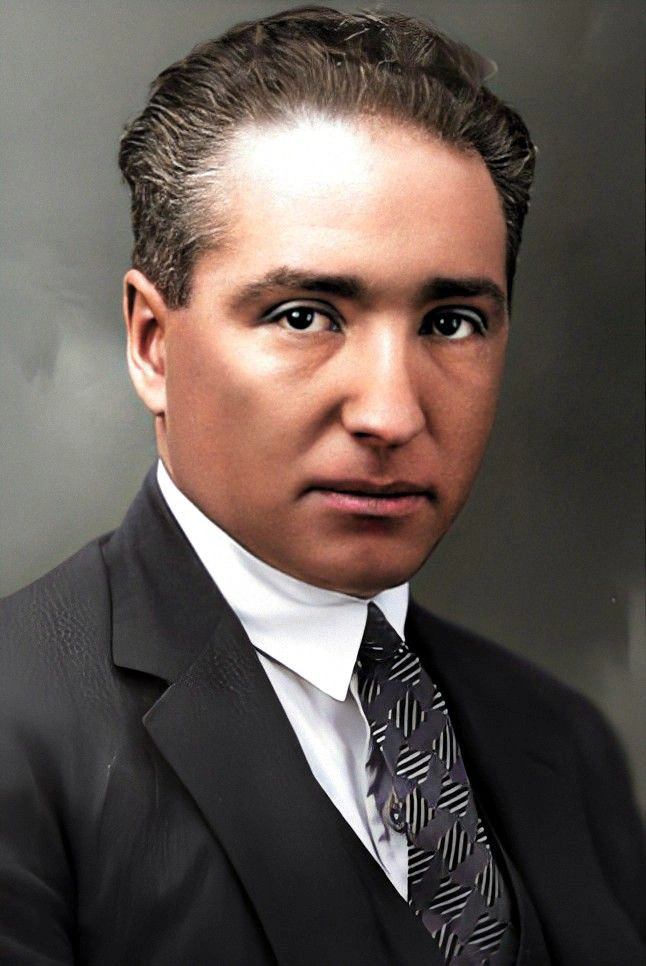
Attr: Ludwig Gutmann
| 7 Quotes | |
| Occup. | Psychologist |
| From | Austria |
| Born | March 24, 1897 Dobrzcynica, Austria-Hungary |
| Died | November 3, 1957 Lewisburg, Pennsylvania, United States |
| Cause | Heart attack |
| Aged | 60 years |
| Cite | |
Citation Formats
APA Style (7th ed.)
Wilhelm reich biography, facts and quotes. (2026, February 20). FixQuotes. https://fixquotes.com/authors/wilhelm-reich/
Chicago Style
"Wilhelm Reich biography, facts and quotes." FixQuotes. February 20, 2026. https://fixquotes.com/authors/wilhelm-reich/.
MLA Style (9th ed.)
"Wilhelm Reich biography, facts and quotes." FixQuotes, 20 Feb. 2026, https://fixquotes.com/authors/wilhelm-reich/. Accessed 31 Mar. 2026.
Early Life and Background
Wilhelm Reich was born on March 24, 1897, on a farm estate in Bukovina, then the eastern fringe of the Austro-Hungarian Empire (today in Ukraine). Raised amid German-speaking rural culture and the hard arithmetic of land, labor, and livestock, he absorbed early lessons about authority and dependency that later reappeared in his thinking about character, obedience, and revolt. The region's ethnic mixture and imperial bureaucracy offered a lived primer in how institutions press on intimate life.
His private world was harsher. Reich described a turbulent household marked by a domineering father and a mother whose death by suicide in 1910 followed a family crisis that Reich always treated as a psychological origin point rather than mere biography. War arrived as the final rupture: after serving as an officer in the Austro-Hungarian Army during World War I, he returned to a dissolved empire and a shattered social order. The combination of personal guilt, bereavement, and the collapse of an entire political universe gave his later work its urgent tone - as if psychic suffering and historical catastrophe were the same problem at different scales.
Education and Formative Influences
In 1918 Reich entered the University of Vienna to study medicine, in a city where postwar hunger, revolutionary politics, and artistic modernism collided. He trained in psychiatry and neurology while immersing himself in the Vienna Psychoanalytic Society, quickly becoming one of Sigmund Freud's most forceful younger colleagues and a clinician at the Psychoanalytic Polyclinic. Vienna also exposed him to socialist organizing and sex reform debates; the period's public anxieties about degeneration, venereal disease, and authoritarian backlash sharpened his conviction that private life was political terrain.
Career, Major Works, and Turning Points
Reich's clinical reputation rose fast in the 1920s through his work on character analysis, culminating in the foundational book Character Analysis (1933), where he argued that neurosis is organized as a "character armor" expressed in habitual posture, affect, and behavior. Breaking with orthodox psychoanalysis, he fused libido theory with social critique in The Mass Psychology of Fascism (1933), claiming authoritarian movements feed on sexually repressed, fear-trained personalities. His activism in socialist and sex-pol (sex politics) circles, and his increasingly biological language about sexuality and energy, led to expulsions - first from communist organizations and then from the psychoanalytic establishment. Driven out of Germany after Hitler's rise, he worked in Scandinavia, publishing The Function of the Orgasm (1942, based on earlier German work), before emigrating to the United States in 1939, where he pursued controversial experiments on "orgone" energy, built orgone accumulators, founded the Orgone Institute in Maine, and later faced U.S. Food and Drug Administration injunctions; in 1956 he was imprisoned for contempt of court, dying on November 3, 1957, in federal custody in Pennsylvania.
Philosophy, Style, and Themes
Reich's inner life reads as a mixture of healer's tenderness and besieged combativeness: a man trying to rescue innocence from the machinery of shame while expecting - almost inviting - institutional retaliation. His best work insists that mental health is not merely insight but a capacity for vibrant contact, a bodily and emotional aliveness he linked to sexual fulfillment, creative labor, and intellectual honesty. He framed this as an ethical triad: “Love, work, and knowledge are the wellsprings of our lives, they should also govern it”. In practice, he treated the inability to love freely as both a symptom and a social product, and he saw cruelty not as innate destiny but as a distorted byproduct of blocked tenderness: “Only the liberation of the natural capacity for love in human beings can master their sadistic destructiveness”.
His prose combines clinical observation, polemic, and manifesto - sometimes brilliantly diagnostic, sometimes reckless - because he believed human reality is too unruly for tidy systems. That skepticism toward intellectual idols extends to politics and theory alike; he argued that mass ideologies can become contagious substitutes for genuine vitality, warning that social facts are not automatically healthy. In the same spirit, he treated scientific models as provisional tools rather than sacred truths: “Scientific theory is a contrived foothold in the chaos of living phenomena”. The stance reveals his psychology: an almost compulsive need to keep experience primary, to keep life from being embalmed by abstraction, even as his later orgone claims increasingly isolated him and hardened his suspicion that critics were agents of a life-denying culture.
Legacy and Influence
Reich's legacy is split between durable contributions and cautionary legend. In psychotherapy, his early insights helped seed modern body-oriented approaches (vegetotherapy, bioenergetics, and somatic traditions) and sharpened the field's attention to how defenses live in muscle, voice, and posture. In political and cultural thought, The Mass Psychology of Fascism influenced later critiques of authoritarian personality, sexual repression, and the emotional economy of propaganda, echoing in parts of the 1960s counterculture and subsequent sex-positive movements. Yet his American period - orgone devices, cosmic claims, and a tragic conflict with regulators that ended in imprisonment and book destruction - remains a textbook case of how visionary drive, scientific overreach, and institutional power can collide, leaving behind both genuine clinical ideas and an enduring debate about where liberation ends and delusion begins.
Our collection contains 7 quotes written by Wilhelm, under the main topics: Truth - Love - Meaning of Life - Poetry - Science.
Other people related to Wilhelm: Fritz Perls (Psychologist)
Source / external links