
Will Eisner Biography Quotes 3 Report mistakes
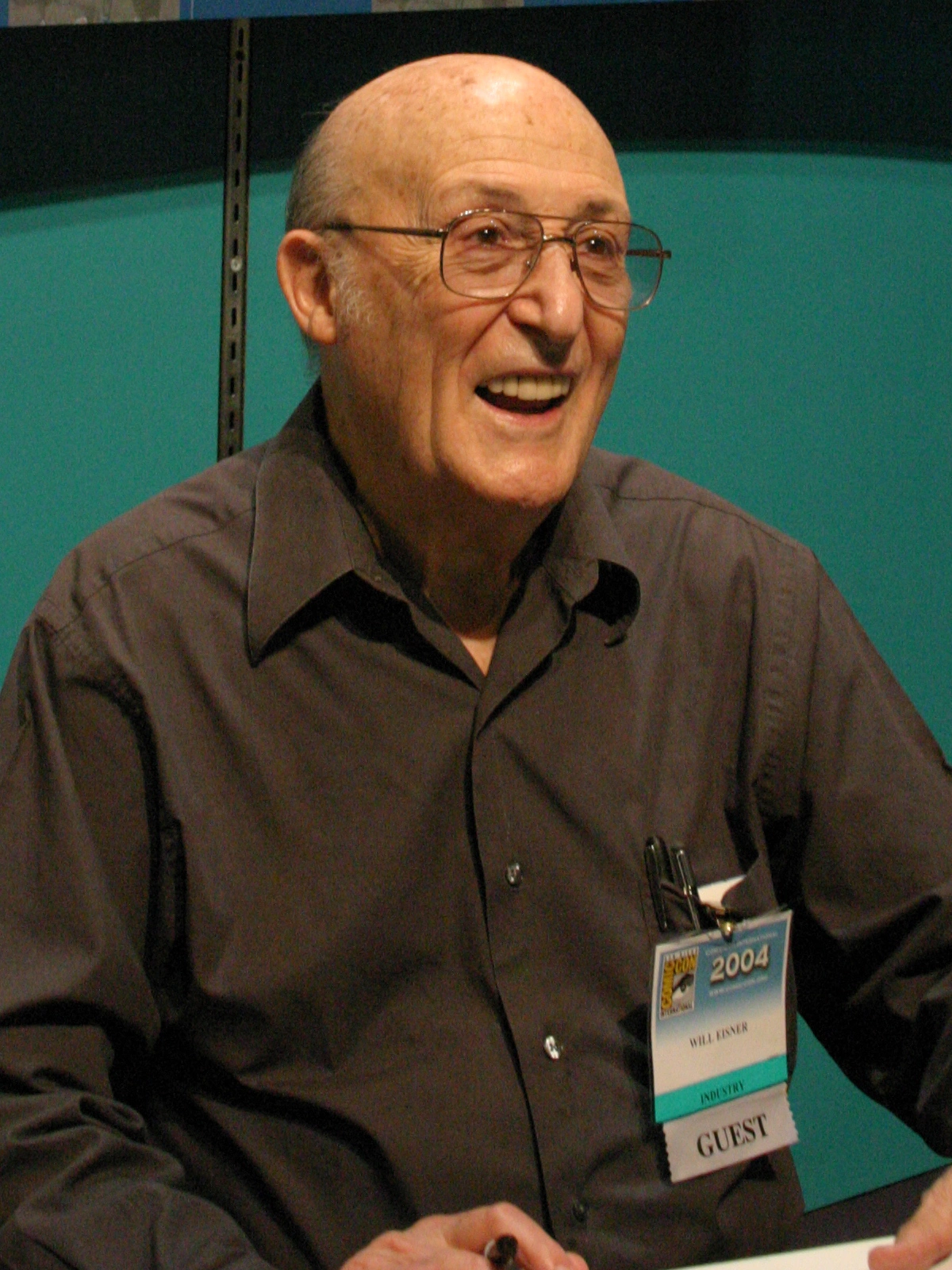
Attr: Pattymooney, CC BY-SA 3.0
| 3 Quotes | |
| Born as | William Erwin Eisner |
| Occup. | Cartoonist |
| From | USA |
| Born | March 6, 1917 Brooklyn, New York, USA |
| Died | January 3, 2005 Fort Lauderdale, Florida, USA |
| Cause | Complications from quadruple bypass heart surgery |
| Aged | 87 years |
| Cite | |
Citation Formats
APA Style (7th ed.)
Will eisner biography, facts and quotes. (2026, February 11). FixQuotes. https://fixquotes.com/authors/will-eisner/
Chicago Style
"Will Eisner biography, facts and quotes." FixQuotes. February 11, 2026. https://fixquotes.com/authors/will-eisner/.
MLA Style (9th ed.)
"Will Eisner biography, facts and quotes." FixQuotes, 11 Feb. 2026, https://fixquotes.com/authors/will-eisner/. Accessed 11 Mar. 2026.
Early Life and Education
William Erwin Eisner was born on March 6, 1917, in Brooklyn, New York, and grew up in the working-class neighborhoods of the city during a period when newspapers and pulp magazines were the daily currency of storytelling. The son of immigrants, he discovered drawing early and treated the bustling streets, crowded tenements, and storefront theaters of New York as both classroom and subject. He attended DeWitt Clinton High School in the Bronx, a fertile ground for young artists, where he honed his craft on school publications and pursued illustration jobs that helped him understand the rhythms of deadlines and narrative clarity.As a teenager he absorbed the dramatic lighting and staging of the newspaper adventure strips and the storytelling emphasis of magazine illustration. Those influences, layered atop his disciplined work ethic, prepared him for an industry that did not yet fully exist: the modern comic book business.
First Steps into Comics
By the mid-1930s, Eisner was freelancing, learning the practical mechanics of publication: page rates, editorial expectations, and the tug-of-war between speed and quality. He sensed that the new comic books, spun off from newspaper strips, could become their own medium rather than mere reprint anthologies. That conviction shaped all the decisions that followed.Eisner & Iger Studio
In 1936 he co-founded a production shop with Jerry Iger. The Eisner & Iger studio supplied complete comic-book features to publishers hungry for content, and it became a proving ground for talent. Among the artists and writers who passed through or worked with the shop were Bob Kane, Jack Kirby, and Lou Fine, each absorbing lessons about pacing, page design, and character from the fast-moving assembly of features. The studio also helped originate characters for client publishers, notably Sheena, Queen of the Jungle, which signaled that original material could thrive in comic books. The experience taught Eisner how to build teams and develop properties, but it also sharpened his belief that comics could carry sophisticated stories.The Spirit
In 1940 Eisner launched The Spirit, an eight-page Sunday newspaper supplement distributed by the Register and Tribune Syndicate, with printing and packaging support in the orbit of publisher Everett "Busy" Arnold. The Spirit, nominally a masked detective, provided Eisner with a stage to experiment: moody opening splash pages, cinematic angles, expressive lettering, and self-contained short stories that mixed crime, comedy, and human drama. He built a small studio to support the feature; Jules Feiffer, then a teenager, became a key assistant and later an important writer in his own right. Letterer Abe Kanegson elevated the look of the strip with inventive typography and sound effects that acted as visual performance. At times Lou Fine contributed art, and the shop system let Eisner supervise while maintaining the strip's signature tone. The Spirit reached a broad general audience and proved that comics in the American press could be stylistically daring.World War II and Instructional Comics
During World War II, Eisner served in the U.S. Army, where his skills were redirected to training and technical communication. He learned that comics could explain complex procedures more effectively than dense prose. That insight would echo through his postwar career and expand the definition of what comics could do in government and industry.American Visuals and PS Magazine
After the war he founded American Visuals Corporation, a studio dedicated to educational and promotional comics for companies and public agencies. The best-known project was PS, The Preventive Maintenance Monthly, produced for the U.S. Army, where cartoon characters demonstrated how to keep machinery operational. Eisner managed artists and writers as a creative director, applying narrative economy and visual clarity to pragmatic ends. The work did not earn the spotlight of The Spirit, but it sharpened his understanding of audience, function, and design.Return to Long-Form Work
In the 1970s, as interest in The Spirit revived through curated reprints, Eisner reentered the public conversation about comics as literature. With support from publishers such as Denis Kitchen, he assembled collections and contributed new material to reintroduce his work to younger readers. In 1978 he published A Contract with God and Other Tenement Stories, a book-length cycle set in a Bronx-like tenement. It presented adult themes of faith, grief, and aspiration and helped establish the term graphic novel in the American marketplace. Subsequent books such as Life on Another Planet, The Building, Dropsie Avenue, To the Heart of the Storm, and later The Plot pursued social history, memory, urban life, and the mechanics of propaganda. His storytelling became spare and incisive, focused on gesture and expression rather than ornate rendering, and he treated New York as a living character.Teacher and Advocate
Eisner taught for years at the School of Visual Arts in New York, where he systematized his approach to what he called sequential art. He published the textbooks Comics and Sequential Art and Graphic Storytelling and Visual Narrative, distilling lessons about timing, composition, and reader engagement. In the ecosystem of American comics education, he stood alongside influential teachers such as Harvey Kurtzman and Burne Hogarth, and he mentored students who would help shape the medium's next decades. His ideas resonated with a wide circle of creators and critics; artists such as Art Spiegelman, Frank Miller, and Scott McCloud publicly acknowledged his impact, and writers like Neil Gaiman and Alan Moore cited the narrative possibilities he helped legitimize.Later Years and Legacy
In his final decades Eisner remained productive, probing historical subjects and revisiting the moral questions that animated his earliest stories. He welcomed curated reprint programs and new formats that brought The Spirit and his graphic novels to bookstores and libraries, broadening the audience he had sought since the 1940s. The industry honored him through the establishment of the Will Eisner Comic Industry Awards, presented annually at San Diego, recognizing excellence across the field he helped define.Will Eisner died on January 3, 2005, in Florida, following complications from surgery. He left behind a body of work that bridged newsprint and bookshelves, commerce and art, instruction and storytelling. The colleagues who grew with him at the Eisner & Iger studio, the assistants who helped shape The Spirit, the publishers like Everett "Busy" Arnold and Denis Kitchen who backed his experiments, and the generations of students and professionals who learned from his methods constitute the community around him. Through them, and through the ongoing presence of the Eisner Awards, his name remains a shorthand for ambition, craft, and the continuing maturation of comics as a literary and visual art.
Our collection contains 3 quotes written by Will, under the main topics: Funny - Art - Writing.
Other people related to Will: Jonathan Shapiro (Cartoonist)
Source / external links