
Willem de Kooning Biography Quotes 9 Report mistakes
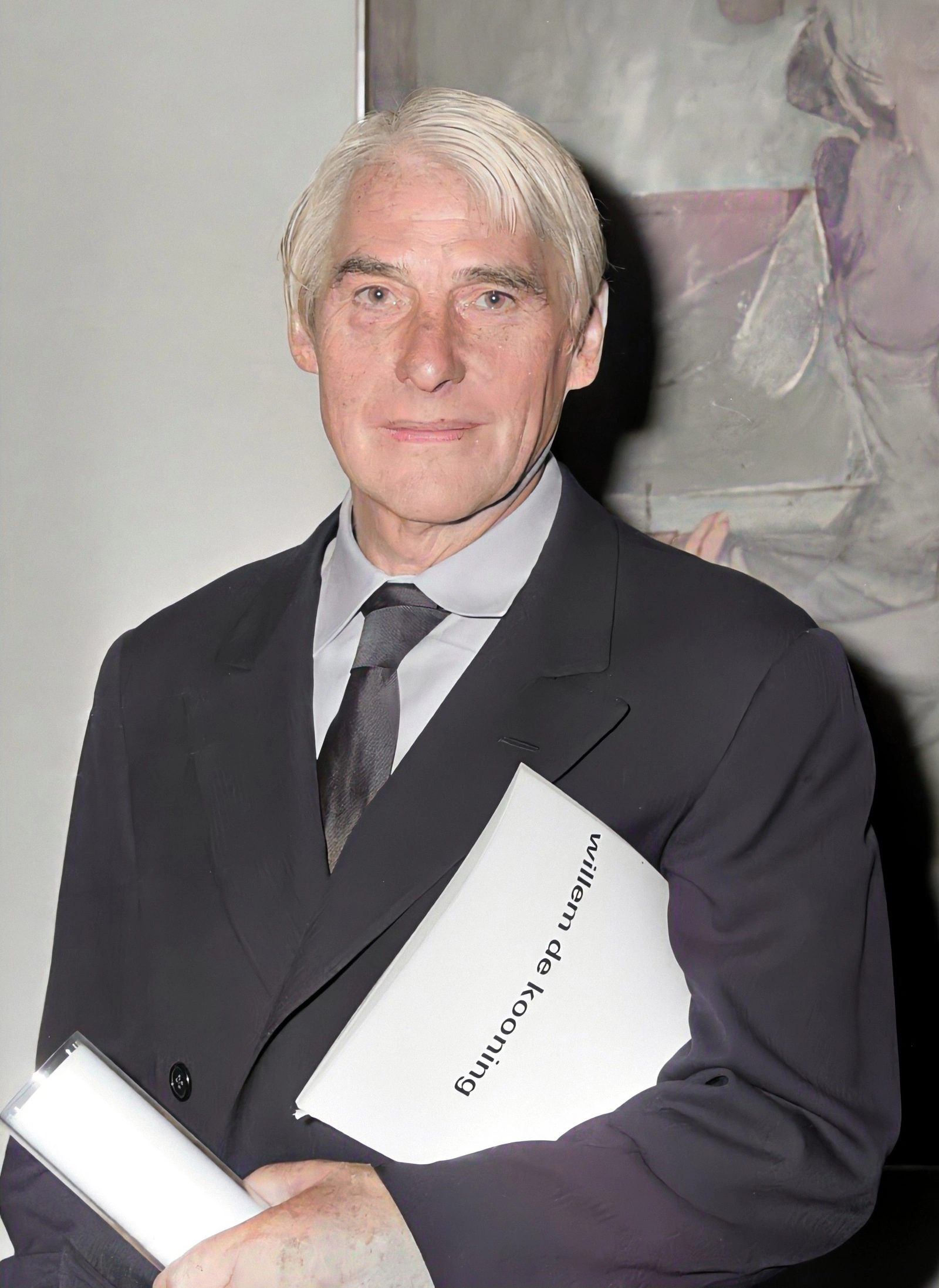
Attr: Jack de Nijs for Anefo, CC0
| 9 Quotes | |
| Occup. | Artist |
| From | USA |
| Born | April 24, 1904 Rotterdam, Netherlands |
| Died | March 19, 1997 East Hampton, New York, USA |
| Cause | Alzheimer's Disease |
| Aged | 92 years |
| Cite | |
Citation Formats
APA Style (7th ed.)
Willem de kooning biography, facts and quotes. (2026, February 11). FixQuotes. https://fixquotes.com/authors/willem-de-kooning/
Chicago Style
"Willem de Kooning biography, facts and quotes." FixQuotes. February 11, 2026. https://fixquotes.com/authors/willem-de-kooning/.
MLA Style (9th ed.)
"Willem de Kooning biography, facts and quotes." FixQuotes, 11 Feb. 2026, https://fixquotes.com/authors/willem-de-kooning/. Accessed 12 Feb. 2026.
Early Life and Training
Willem de Kooning was born in 1904 in Rotterdam, the Netherlands, and trained in the rigorous craft traditions of commercial and academic art. As a teenager he apprenticed in graphic and commercial studios while studying nights at the Rotterdam Academy of Fine Arts and Techniques. The discipline of careful drawing, sign painting, and design stayed with him, even as he moved toward radical forms of abstraction. He absorbed European modernism from books and glimpses of works by Pablo Picasso and Joan Miro, yet his early formation also prized hand skills, economy of means, and the feel of materials, all of which would define his mature painting.Emigration and New York Beginnings
In 1926 de Kooning emigrated to the United States and settled in New York City, working as a house painter, carpenter, and commercial artist while painting at night. The urban fabric of New York offered him both survival and inspiration. He frequented studios, modest galleries, and the informal gatherings that incubated the New York School. Friends and colleagues helped him navigate the art world and the city's precarious economics. For a brief period in the 1930s he worked under a federal art program, but, as a noncitizen at the time, he could not remain on the rolls; nonetheless the experience pulled him deeper into mural scale and public ambitions for painting.The New York School and Artistic Breakthrough
De Kooning's close friendship with Arshile Gorky in the late 1930s and early 1940s was formative. Gorky's studio discipline and embrace of synthetic modernism helped de Kooning widen his vocabulary while preserving his own restless line. He also became close to Franz Kline, whose incisive black-and-white canvases paralleled de Kooning's own experiments at the edge of figuration and abstraction. In downtown discussions at The Club and nightly debates at the Cedar Tavern, he sparred and mingled with Jackson Pollock, Mark Rothko, Barnett Newman, Philip Guston, and Robert Motherwell. Critics Harold Rosenberg and Clement Greenberg visited studios and argued over what the new painting meant, with Rosenberg's term action painting often attached to de Kooning's method of repainting, scraping, and revising.Black-and-White Works and Excavation
By the late 1940s, de Kooning reached a new clarity in austere black-and-white paintings that fused drawing and painterly touch. His first solo exhibition at the Charles Egan Gallery in 1948 presented this language: slashed contours and open forms that suggested figures dissolving into space. Excavation (1950) synthesized his drawing-based structure with densely layered color and earned him national attention. These works confirmed that he could hold line, plane, and motion in a single surface, an achievement as rigorous as it was improvisational.Woman Series and Critical Debates
Around 1950, de Kooning began a prolonged engagement with the female figure, culminating in the Woman paintings. Woman I (1950, 52) was the lightning rod: ferocious and humorous, a composite of archaic idol, billboard glamour, and painterly attack. Some critics, including Greenberg, preferred his purer abstractions, while Rosenberg championed the raw immediacy of the series. Elaine de Kooning, a painter and critic who married him in 1943, wrote and lectured insightfully on the work, situating it within a history of art and a lived, studio-based struggle with representation. The debate around the Woman paintings, sometimes charged with accusations of misogyny, revealed deeper questions of subject matter, modernist decorum, and the possibilities of painting after Surrealism and Cubism.Teaching, Exhibitions, and Recognition
In 1948 de Kooning taught for a session at Black Mountain College, joining a faculty that exposed students to new art and interdisciplinary experiment. Through the 1950s he showed frequently at the Egan Gallery and later at the Sidney Janis Gallery, solidifying his place among the leading figures of the New York School. Major museum exhibitions followed, including retrospectives that positioned him alongside Pollock and Rothko as central to postwar American art. His work entered the Museum of Modern Art, the Whitney Museum of American Art, and other institutions. He became a United States citizen in 1962, a formal confirmation of the American identity he had already helped to redefine in painting.Personal Life and Collaborations
Elaine de Kooning was both partner and interlocutor, advocating for his art while developing a distinct practice of her own. Their marriage weathered separations, reconciliations, and the pressures of art world fame, yet their dialogue remained a constant. De Kooning also had a relationship with Joan Ward, with whom he had a daughter, Lisa de Kooning. Friends such as Kline and Gorky provided intense, sometimes tumultuous fellowship; Gorky's death in 1948 resonated deeply. The circle extended to poets and dancers affiliated with the downtown scene, where de Kooning's studio was a locus for exchange across disciplines.East Hampton and Shifting Modes
In the early 1960s de Kooning moved his primary studio to Springs, East Hampton, where the low light, marsh grasses, and proximity to water transformed his palette and touch. Paintings such as Door to the River and North Atlantic Light opened his forms and introduced a buoyant colorism, as if the figure had dissolved into a landscape of light and tide. He also modeled clay and produced bronzes, transferring his supple drawing into three dimensions through twisting, compressed forms. The 1970s and early 1980s yielded sweeping, luminous canvases whose arabesques and ribbons of color suggested bodies, shorelines, and currents without settling into stable images.Late Years
In his later years de Kooning faced health challenges and the effects of alcoholism, which he gradually overcame. As memory and cognition declined, assistants helped maintain the studio, and his daughter Lisa took an increasing role in his care. Late paintings, pared to floating strokes and pale grounds, prompted debate: some saw a serene culmination, others worried about authorship under diminished capacity. Institutions and scholars approached these works with caution and care, recognizing the need to weigh process, documentation, and the artist's long-established procedures.Method and Influence
De Kooning rebuilt paintings through cycles of addition and erasure, scraping back with knives, repainting, drawing into wet paint, and collaging body parts from previous canvases. The result was a living surface where decision and revision were both visible, a record of time in the studio. This method influenced painters across generations, from peers like Kline and Guston to later artists who sought an embodied, gestural language. Critics like Rosenberg drew on his practice to argue that the canvas had become an arena of action rather than a window onto a scene.Legacy
Willem de Kooning died in 1997 in East Hampton. By then he had reshaped the possibilities of painting in the United States and beyond. The tension he sustained between figure and abstraction, between drawing and paint, and between urban grit and coastal light remains instructive. Major retrospectives and scholarly catalogues have continued to refine understanding of his oeuvre. Works such as Woman I and Excavation anchor the narrative of postwar modernism, while the East Hampton paintings attest to the durability of sensation and place in his art. The dialogue with Elaine de Kooning, the camaraderie and rivalry with Pollock, Kline, and Rothko, and the friction with critics like Greenberg and Rosenberg formed a crucible in which de Kooning forged a singular path. His career stands as a testament to process as discovery and to a life spent testing what an image can be.Our collection contains 9 quotes written by Willem, under the main topics: Art - Deep - Money.
Other people related to Willem: Hans Hofmann (Artist), Morton Feldman (Composer), Ad Reinhardt (Artist), Helen Frankenthaler (Artist), Harold Rosenberg (Writer), Jean Dubuffet (Artist)
Source / external links