
William Arthur Ward Biography Quotes 25 Report mistakes
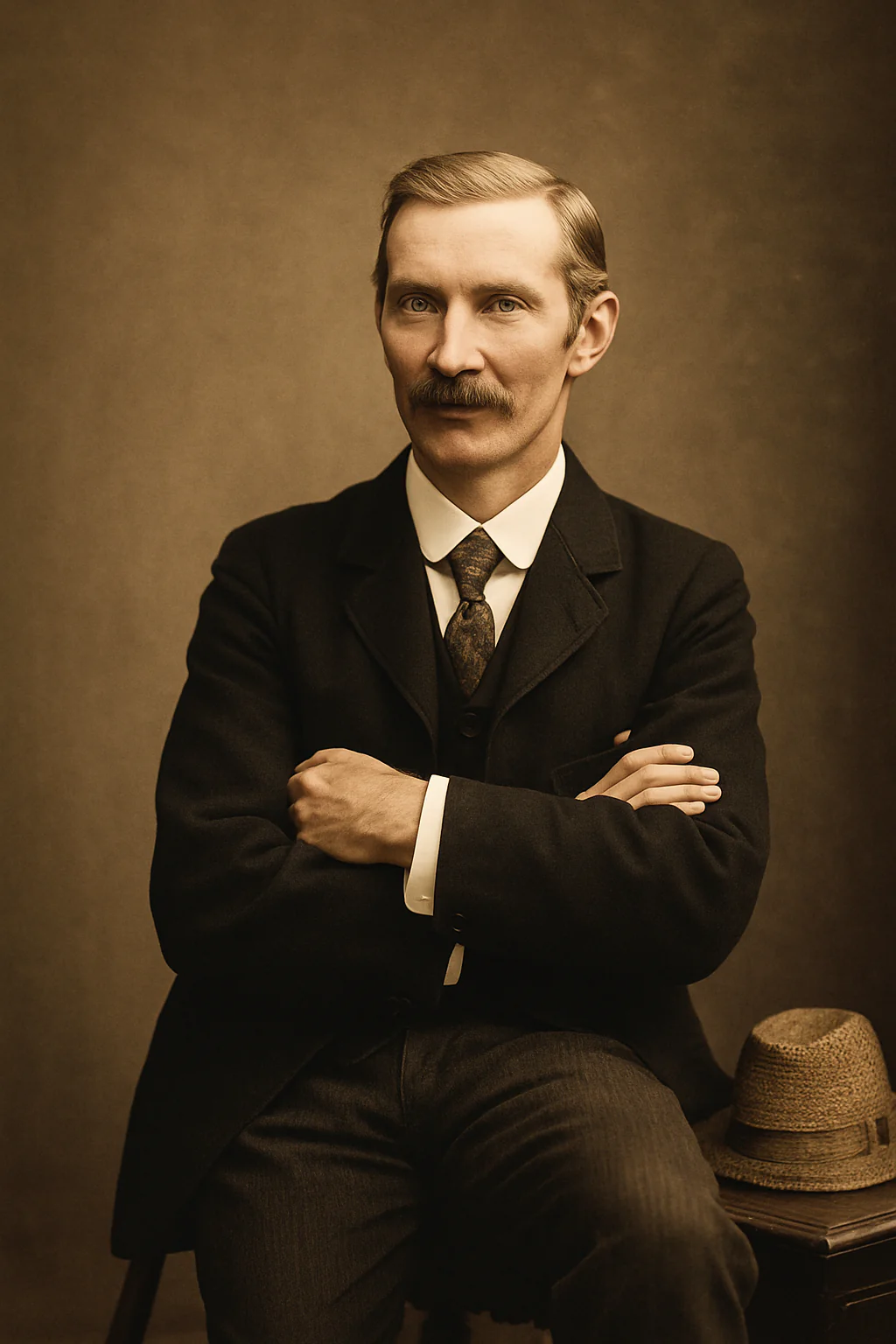
| 25 Quotes | |
| Occup. | Writer |
| From | USA |
| Born | December 17, 1921 Louisiana, United States |
| Died | March 30, 1994 Fort Worth, Texas, United States |
| Aged | 72 years |
| Cite | |
Citation Formats
APA Style (7th ed.)
William arthur ward biography, facts and quotes. (2026, February 2). FixQuotes. https://fixquotes.com/authors/william-arthur-ward/
Chicago Style
"William Arthur Ward biography, facts and quotes." FixQuotes. February 2, 2026. https://fixquotes.com/authors/william-arthur-ward/.
MLA Style (9th ed.)
"William Arthur Ward biography, facts and quotes." FixQuotes, 2 Feb. 2026, https://fixquotes.com/authors/william-arthur-ward/. Accessed 12 Feb. 2026.
Early Life and Background
William Arthur Ward was born on December 17, 1921, in the United States, and came of age in the long shadow of the Great Depression, a period that trained many Americans to prize steadiness, thrift, and quiet perseverance. The public record on his childhood is thin, but the emotional contours of his later writing suggest a young man shaped less by drama than by the steady pressures of responsibility - the kind of early atmosphere that makes encouragement feel practical rather than ornamental.Ward reached adulthood as World War II remade American civic life and the language of duty. In that national climate, character was often discussed in terms of service, self-command, and usefulness - themes that would later surface in his brief, quotable counsels. His eventual identity as a writer was not the bohemian archetype of the solitary artist; it was closer to the mid-century American moralist: a man convinced that words, correctly aimed, could improve the day-to-day conduct of ordinary people.
Education and Formative Influences
Ward's renown rests primarily on short inspirational statements rather than on a richly documented academic biography, and specific details of his schooling are not reliably attested in widely available sources. What can be said with confidence is that his mind belonged to the postwar ecosystem of practical self-help, civic uplift, and educational idealism - the world of speeches, church bulletins, school assemblies, and workplace motivation - where concise, memorable phrasing is a craft and where the writer's authority is measured by usefulness.Career, Major Works, and Turning Points
Ward worked as an American writer best known for aphorisms on attitude, gratitude, learning, and moral resilience, widely circulated in quotation collections and motivational materials; the exact boundaries of his bibliography are harder to secure than the reach of his lines. His turning point was less a single publication than a mode of transmission: once his sentences entered the shared repertoire of teachers, managers, clergy, and counselors, they achieved a kind of folk-canonical status, repeated because they solved a recurring need - to name a virtue, correct a habit, or give a student or employee a usable image for change.Philosophy, Style, and Themes
Ward's philosophy is optimistic without being naive, and it is psychologically shrewd in the way it handles agency: he does not deny hardship so much as redirect attention toward response. His famous line, "The pessimist complains about the wind; the optimist expects it to change; the realist adjusts the sails". is less a weather metaphor than an inner-life instruction - a three-step map of temperament in which maturity is defined as adaptive action. Beneath it sits a quiet ethic of self-management: feeling, for Ward, is real, but it is not sovereign; character is the practiced ability to convert circumstance into direction.His style is built for recall: parallel clauses, clear contrasts, concrete images, and a cadence that sounds at home on a classroom wall. Education, in particular, becomes a moral theater where the self is formed by example as much as by information: "The mediocre teacher tells. The good teacher explains. The superior teacher demonstrates. The great teacher inspires". The ladder of verbs reveals his psychology - he mistrusts mere instruction and reveres transmission of spirit, implying that the deepest learning is motivational and relational. Gratitude, too, is framed as behavior rather than sentiment, as if he suspected that private virtue unexpressed can curdle into self-regard: "Feeling gratitude and not expressing it is like wrapping a present and not giving it". In that image, gratitude becomes a social bond and a discipline of attention, a way of turning inward feeling outward into community.
Legacy and Influence
Ward died on March 30, 1994, but his afterlife has been unusually durable for a writer whose fame is concentrated in short forms: he persists where memorability matters - in classrooms, leadership seminars, devotional readings, and the informal literature of encouragement. His influence is less about doctrine than about tone: a steady, civic-minded belief that inner posture shapes outward life, and that a well-made sentence can nudge conduct. In an era increasingly saturated with information, Ward's continued circulation testifies to an older power - not to explain everything, but to offer a small, repeatable lever for the will.Our collection contains 25 quotes written by William, under the main topics: Witty One-Liners - Motivational - Ethics & Morality - Wisdom - Love.
Frequently Asked Questions
- William Arthur Ward poems: Known for inspirational poems; Risk is a popular piece.
- William Arthur Ward risk: To try is to risk failure.
- William Arthur Ward quotes The purpose of life: The purpose of life is to grow.
- William Arthur Ward the pessimist: The pessimist complains about the wind.
- William Arthur Ward: books: Best known for quotes; wrote essays, poems, and devotionals, often anthologized.
- William Arthur Ward The adventure of life: The adventure of life is to learn.
- How old was William Arthur Ward? He became 72 years old
Source / external links