
William Banting Biography Quotes 13 Report mistakes
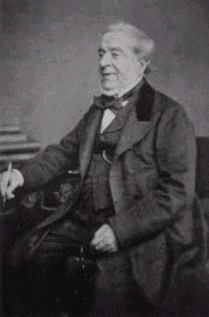
| 13 Quotes | |
| Occup. | Celebrity |
| From | England |
| Born | December 1, 1796 |
| Died | March 16, 1878 |
| Aged | 81 years |
| Cite | |
Citation Formats
APA Style (7th ed.)
William banting biography, facts and quotes. (2026, February 19). FixQuotes. https://fixquotes.com/authors/william-banting/
Chicago Style
"William Banting biography, facts and quotes." FixQuotes. February 19, 2026. https://fixquotes.com/authors/william-banting/.
MLA Style (9th ed.)
"William Banting biography, facts and quotes." FixQuotes, 19 Feb. 2026, https://fixquotes.com/authors/william-banting/. Accessed 5 Mar. 2026.
Early Life and Trade
William Banting (1796, 1878) was an English craftsman and businessman whose name became synonymous with dieting in the Victorian era. Born into a London family engaged in the undertaking trade, he came of age in a city whose expanding middle and upper classes depended on skilled specialists for public ceremonies and private rites. Apprenticed in the family business, he learned the meticulous skills of coffin-making, the organization required of a funeral director, and the discretion expected by clients of means. His working life unfolded in the West End, where proximity to court circles and fashionable neighborhoods brought steady business and social visibility.Professional Standing
Banting's firm earned a reputation for competence and decorum, and he prospered in a field that, though somber, demanded artistry and exacting standards. Success granted him comfort and a measure of public note; in a London that celebrated expertise and reliability, an undertaker who could manage complicated arrangements smoothly was a recognizable figure. The work required dealings with clergy, local officials, and families from the aristocracy and affluent bourgeoisie. Over time, his name was well known in the capital, and within his trade his methods were emulated.Health and Personal Struggle
Middle age brought Banting a challenge that overshadowed his professional life: severe corpulence. He described progressive weight gain that left him short of breath, awkward in movement, and exhausted by the simplest exertions. Climbing stairs became so difficult that he once wrote of the need to descend backwards for safety. The strain affected his hearing and comfort, and, as was common in his day, he tried the era's customary advice: exercise, sea air, Turkish baths, and tonics. None offered lasting relief. His plight brought him to the care of the contemporary ear surgeon William Harvey, who paid attention to the broader metabolic picture rather than symptoms alone.Turning Point Under Medical Guidance
William Harvey, not to be confused with the seventeenth-century physician of the same name, was a London specialist who had followed emerging physiological work on nutrition, including ideas circulating from France through figures like Claude Bernard regarding sugar, starch, and the regulation of fat. Harvey advised Banting to avoid what he termed "saccharine and starchy" foods and drinks and to favor meat, fish, and non-starchy vegetables in measured portions. Wine, if taken, was to be dry and moderate; beer, sweets, and rich puddings were to be avoided. Under this regimen, Banting experienced steady, dramatic weight loss and, equally important to him, a return of vigor and ease of movement. He credited Harvey's counsel for his transformation and took pains thereafter to say that his experience did not replace medical advice."Letter on Corpulence"
In 1863 Banting self-published "Letter on Corpulence, Addressed to the Public", a short, plainspoken pamphlet recounting his history of unsuccessful attempts, the guidance he received from William Harvey, and the practical details of the diet that restored his health. He presented the document not as a commercial venture but as a civic-minded testimony, insisting that he sought no profit beyond the hope of helping others in the same condition. The pamphlet offered a daily plan with simple rules, avoid sugar and starch, eat moderate portions of meat and certain vegetables, and keep to regular meals, expressed in candid, accessible prose. Its tone was strikingly modern: he emphasized personal responsibility, careful self-observation, and respect for professional medical oversight.Public Reception and Debate
The "Letter on Corpulence" became a publishing phenomenon. It went through multiple editions, was reprinted widely, and reached readers far beyond London. Newspapers discussed it, caricaturists lampooned it, and medical journals weighed its claims. The term "to bant" entered common speech as a verb meaning to diet, and "Bantingism" became a familiar label in discussions of food reform. Supporters cited Banting's personal success and the regimen's simplicity; critics worried about the diet's balance, the risk of laypeople adopting a strict plan without supervision, and the generalizability of one man's case. In the back-and-forth, Banting remained consistent in acknowledging William Harvey as the originator of the approach he followed and in urging readers to consult their physicians. Harvey himself contributed to the medical conversation by explaining the rationale of carbohydrate restriction as he understood it, drawing on contemporary physiology and clinical observation.Influence on Ideas of Diet and Health
Banting's pamphlet helped shift public discourse about overweight from moral failing toward something that could be managed with knowledge, measurement, and specific adjustments to food. By singling out sugar and starch, he gave lay readers a tangible framework at a time when nutrition science was fragmented and often contradictory. His experience also highlighted the role of physicians who engaged with new laboratory ideas, like those of Claude Bernard, while translating them into practical advice. Although later generations would refine, contest, and recast the principles he popularized, the broad theme he championed, that curbing refined carbohydrates can reduce body mass for some people, echoed through subsequent waves of dietary theory. The episode shows how a collaboration between a concerned patient and a thoughtful clinician can influence culture well beyond the clinic.Later Editions, Clarifications, and Ongoing Work
As the pamphlet circulated, Banting issued revised editions to clarify points, temper overzealous interpretations, and expand on his results. He repeated that his account was descriptive rather than prescriptive and that age, occupation, and constitution mattered. He warned against extremes, emphasizing moderation and a return to the doctor's care if difficulties arose. Meanwhile, he maintained his professional responsibilities in the undertaking business, which remained the foundation of his livelihood and standing. Colleagues in trade and medicine alike found in him a courteous correspondent who answered inquiries with the same straightforwardness that marked his pamphlet.Final Years and Legacy
William Banting died in 1878, remembered both as a successful London undertaker and as the unexpected author of one of the most influential health tracts of the nineteenth century. The constellation of figures around his story, his physician William Harvey, the physiologist Claude Bernard whose ideas informed Harvey's thinking, and the editors and doctors who debated the pamphlet in the press, underlines how individual experience, medical insight, and public conversation can combine to change everyday habits. Long after his death, his surname lived on as a common word for slimming, and his "Letter on Corpulence" continued to be cited as a landmark in the popular history of diet. In Victorian Britain, where industry, science, and self-help converged, Banting exemplified the era's belief that practical knowledge, clearly described, could help ordinary people solve stubborn problems.Our collection contains 13 quotes written by William, under the main topics: Witty One-Liners - Wisdom - Work Ethic - Health - Gratitude.
Source / external links