
William Beebe Biography Quotes 1 Report mistakes
| 1 Quotes | |
| Occup. | Explorer |
| From | USA |
| Born | July 29, 1877 Brooklyn, New York, United States |
| Died | June 4, 1962 |
| Aged | 84 years |
| Cite | |
Citation Formats
APA Style (7th ed.)
William beebe biography, facts and quotes. (2026, February 11). FixQuotes. https://fixquotes.com/authors/william-beebe/
Chicago Style
"William Beebe biography, facts and quotes." FixQuotes. February 11, 2026. https://fixquotes.com/authors/william-beebe/.
MLA Style (9th ed.)
"William Beebe biography, facts and quotes." FixQuotes, 11 Feb. 2026, https://fixquotes.com/authors/william-beebe/. Accessed 5 Mar. 2026.
Overview
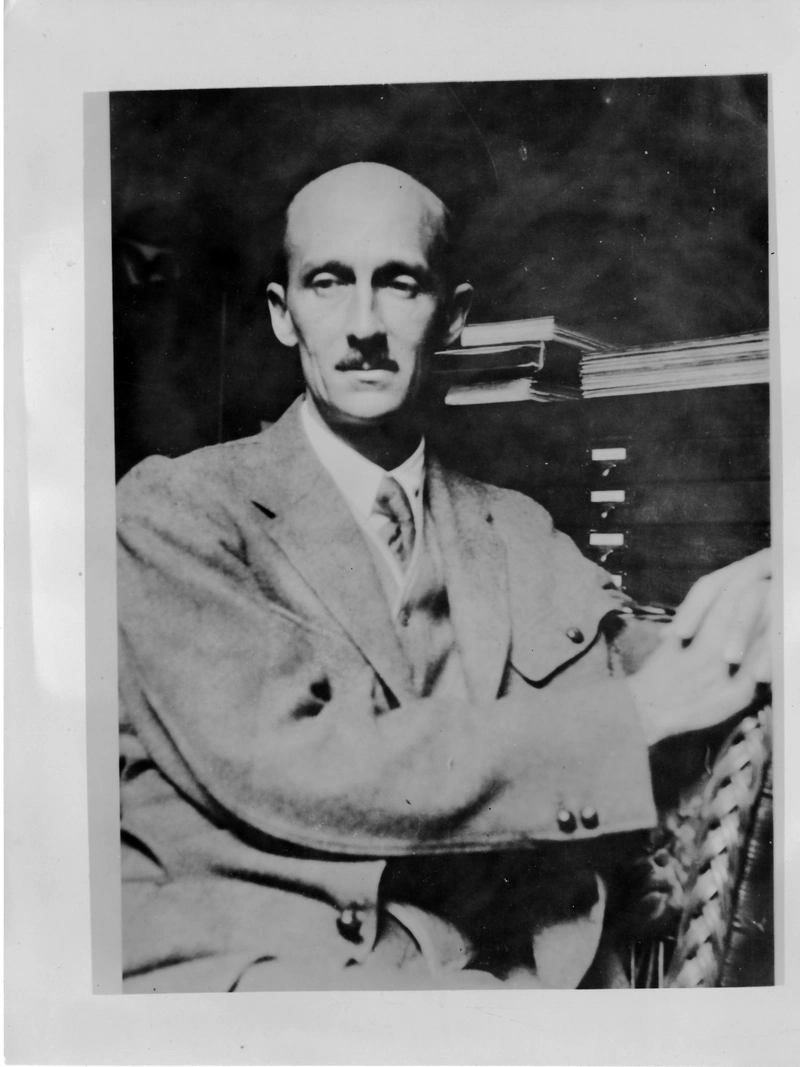
William Beebe (1877, 1962) was an American naturalist, ornithologist, and explorer whose career bridged rigorous field biology, oceanic exploration, and popular science writing. Working for the New York Zoological Society (today the Wildlife Conservation Society), he led expeditions across tropical forests and the open ocean, communicated science to broad audiences, and helped define the public image of the twentieth-century explorer-scientist. His collaborations with engineers, artists, and field biologists created a multidisciplinary model of research that left a durable imprint on both ecology and the culture of exploration.Early Life and First Steps in Science
Born in the United States in 1877, Beebe showed an early fascination with birds and natural history that quickly translated into museum and zoo work. As a young professional he joined the New York Zoological Society and rose within the New York Zoological Park (the Bronx Zoo), where he became associated with William T. Hornaday, the institution's founding director and a driving force in American wildlife conservation. Under this institutional umbrella, Beebe developed a pragmatic approach to science: combine field observation with careful collection and synthesis, and then convey discoveries to the public with clarity and enthusiasm.Ornithology and Global Expeditions
Beebe first gained international recognition as an ornithologist. His monumental work on pheasants, produced over years of travel in Asia and grounded in painstaking field observation, established him as a leading authority on bird biology and behavior. He wrote influential volumes that blended natural history, artful description, and comparative anatomy, including early syntheses that introduced readers to the functional biology of birds. Even as his interests broadened beyond ornithology, the close, patient watching that defines a field ornithologist remained the hallmark of his style.As his career unfolded, Beebe led the New York Zoological Society's Department of Tropical Research, carrying teams into rainforests and coastal waters. He set up seasonal camps in places such as what was then British Guiana (now Guyana), along with other sites in the Caribbean and northern South America, and he reported these studies in widely read books and articles. Works like Jungle Peace and The Edge of the Jungle drew on months of immersive observation, conveying the rhythms of tropical ecosystems to audiences far from the equator.
Department of Tropical Research and Team Science
Beebe's leadership of the Department of Tropical Research turned field biology into a decidedly collaborative enterprise. He recruited talented assistants and gave artists and writers a central place in scientific work. John Tee-Van, a meticulous zoologist and organizer, became one of his key associates, helping to coordinate field operations and collections. Gloria Hollister, a biologist and diver, served as a crucial member of the deep-sea team and later set depth records of her own. The department also embraced visual art: Else Bostelmann produced vivid paintings of marine life based on descriptions and sketches from the field, bringing the unseen deep to magazine pages and museum halls. This blend of science and art allowed Beebe's crews to document organisms that could not be preserved or photographed under the conditions of the time, and it helped the public grasp the diversity of tropical and oceanic life.Books, Public Voice, and the Popular Imagination
Beebe communicated science with unusual range. Beyond technical reports, he wrote bestselling narratives that combined adventure with exacting observation, including Galapagos: World's End and The Arcturus Adventure, the latter chronicling an oceanographic voyage through the Sargasso Sea and the wider Atlantic. His prose balanced wonder with careful description, creating a style that many later science writers would emulate. Magazines and newspapers amplified his fieldwork, and his teams' illustrations and photographs offered readers a window into habitats that were, at the time, almost entirely inaccessible.His personal life also intersected with literary circles. His first wife, Mary Blair Rice, later known as the travel writer Blair Niles, shared his interest in distant places before the couple eventually separated; her later publications, while independent of his work, extended a public appetite for travel and natural history that Beebe helped cultivate.
The Bathysphere and the Deep Sea
In the early 1930s, Beebe entered a new frontier: the deep ocean. Partnering with engineer and inventor Otis Barton, he used the Bathysphere, a steel ball lowered by cable from the surface, to descend to depths far beyond the reach of free divers of the era. Off Bermuda, with a shore station on Nonesuch Island, Beebe directed a series of dives that pushed observation to more than half a mile down. These descents, conducted under challenging conditions and reported in real time to the surface by telephone, yielded a cascade of descriptions of bioluminescent fishes, gelatinous drifters, and a dark seascape that few had imagined with such detail.Barton's engineering and Beebe's observational skills complemented each other, while the Department of Tropical Research team on deck ensured that logs, sketches, and communications were accurate and continuous. Gloria Hollister and other colleagues contributed directly to the diving program, with Hollister achieving her own depth milestones. Else Bostelmann translated the verbal reports into detailed paintings that fixed the ephemeral flashes of deep-sea life onto canvas. Beebe summarized the endeavor in Half Mile Down, a book that became a landmark of ocean literature. Although some specific sightings later sparked debate, the enterprise decisively expanded the scope of observational oceanography and helped define deep-sea biology for the public.
Field Stations and Later Years
After decades of leading expeditions, Beebe focused much of his later work on field stations that could support longer-term studies. In Trinidad, he helped establish a research base in the forested Northern Range, often referred to as the Simla station, where he and his colleagues examined rainforest ecology from canopy to stream. By rooting research in one place for extended periods, he reinforced the idea that understanding tropical systems required both patient residency and a team with diverse skills.Even as he aged, Beebe continued to write, advise, and mentor younger naturalists and artists passing through the Department of Tropical Research. He stayed committed to the principle that careful field observation, when paired with effective communication, could shift public attitudes toward wildlife and habitats. He died in 1962, having lived long enough to see the scientific culture he helped shape mature into a broader conservation movement.
Legacy
Beebe's legacy rests on three intertwined achievements. First, he expanded the practice of field biology by treating teams of scientists and artists as coequal contributors, a model that continues in modern expeditionary science. Second, he opened the deep ocean to direct human observation in collaboration with Otis Barton, and with the support of colleagues like Gloria Hollister, producing a body of descriptions that inspired later generations of ocean explorers. Third, through his books and public outreach, he made remote biomes vivid to readers, helping establish a popular appetite for ecological understanding. The institutions he served and the colleagues who collaborated with him carried forward his methods. From ornithology to bathysphere dives, William Beebe moved across frontiers with an eye trained equally on the living world and the people he needed beside him to reveal it.Our collection contains 1 quotes written by William, under the main topics: Deep.