
William Blake Biography Quotes 67 Report mistakes
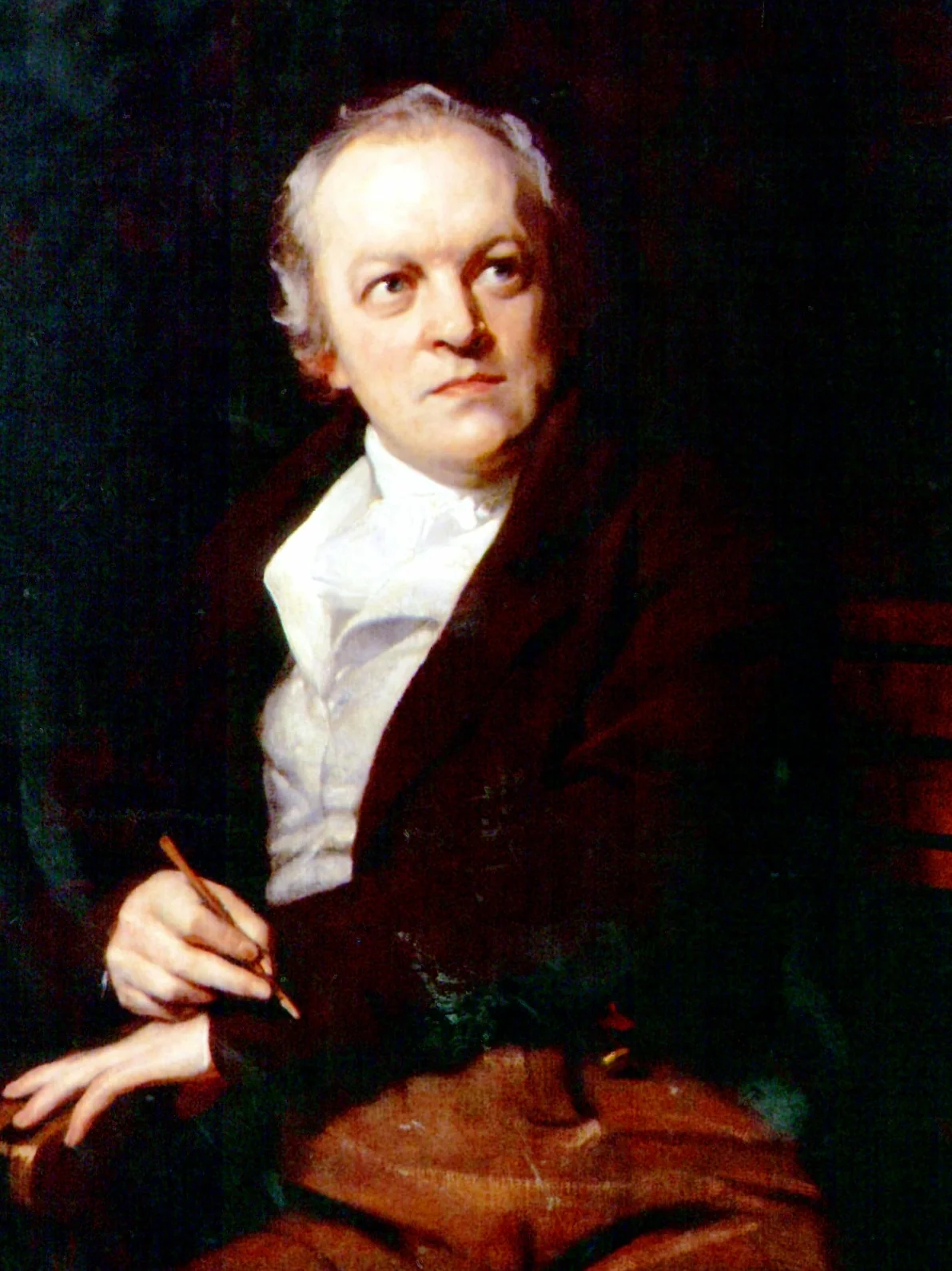
| 67 Quotes | |
| Occup. | Poet |
| From | England |
| Spouse | Catherine Boucher |
| Born | November 28, 1757 London, England |
| Died | August 12, 1827 London, England |
| Aged | 69 years |
| Cite | |
Citation Formats
APA Style (7th ed.)
William blake biography, facts and quotes. (2026, February 2). FixQuotes. https://fixquotes.com/authors/william-blake/
Chicago Style
"William Blake biography, facts and quotes." FixQuotes. February 2, 2026. https://fixquotes.com/authors/william-blake/.
MLA Style (9th ed.)
"William Blake biography, facts and quotes." FixQuotes, 2 Feb. 2026, https://fixquotes.com/authors/william-blake/. Accessed 26 Mar. 2026.
Early Life and Background
William Blake was born on 28 November 1757 in Soho, London, into the dense, quarrelsome energy of a city becoming the workshop of an empire. His father, James Blake, was a modest hosiery dealer; the family belonged to the dissenting margins of English Protestant life, a position that predisposed Blake to distrust established authority without requiring fashionable unbelief. London offered him both fuel and friction: the bustle of markets, the brutality of poverty, and the omnipresence of church and crown as instruments of social discipline.From early childhood Blake reported visions - angels in trees, prophetic figures in the streets - experiences his parents did not extinguish, partly through prudence and partly through a household that tolerated odd intensity so long as it became work. He grew up during the years that led toward the American and French Revolutions, and his imagination absorbed the era's promises and terrors. Even as a boy he developed a private cosmology in which spiritual reality was not an abstraction but a pressure on the senses, and in which repression - moral, political, or artistic - was an injury to the soul.
Education and Formative Influences
Blake received little formal schooling, reading widely at home and being trained early as an artist rather than a gentleman. At ten he studied drawing, and in 1772 he was apprenticed to the engraver James Basire, a decisive formation: the discipline of line, backward lettering, and patient craft became his way of thinking. Basire sent him to sketch Gothic monuments in Westminster Abbey, where medieval tombs and stained stone taught him a symbolic language older than neoclassical decorum. He later studied at the Royal Academy but resisted Joshua Reynolds's preference for generalized "grand style", preferring precise outline, intense color, and the particular image charged with meaning.Career, Major Works, and Turning Points
After completing his apprenticeship, Blake worked as an engraver and married Catherine Boucher in 1782; she became his collaborator, learning to print and hand-color his plates. In the 1780s and 1790s he forged the method that made his art inseparable from his poetry: relief etching, which allowed him to write and draw on copper and print books himself. Songs of Innocence (1789) and Songs of Experience (1794) made the child, the chimney sweep, and the street into moral emblems of a society that sanctified exploitation. In the revolutionary decade he composed The Marriage of Heaven and Hell, and later the prophetic books - America a Prophecy, Europe a Prophecy, The Book of Urizen, Milton, and Jerusalem - where political upheaval, biblical cadence, and personal myth merged. Accused in 1803 of sedition after an altercation with a soldier, he was acquitted, but the episode sharpened his sense that the state polices imagination. Late recognition came quietly through younger admirers and through his work for the patron Thomas Butts; he died in London on 12 August 1827, still laboring over Dante illustrations.Philosophy, Style, and Themes
Blake's inner life was a sustained argument against spiritual anemia. He believed perception was not passive reception but moral creation, and his poems and images were meant to rewire the reader's seeing, not merely decorate it. “If the doors of perception were cleansed everything would appear to man as it is, infinite”. That sentence is not a slogan for intoxication but a diagnosis: the mind's habits - fear, obedience, abstraction - grime the senses until the world shrinks to what power permits. His insistence that vision can be trained made him both mystical and practical, a craftsman of liberation.His style fused nursery rhyme and apocalypse, lyric tenderness and corrosive satire, because he distrusted single moods as forms of coercion. He prized energy over restraint, arguing that instruction without passion produces compliant emptiness: “The tigers of wrath are wiser than the horses of instruction”. Yet he was equally wary of the mind's tendency to flatten lived reality into categories; the prophetic books attack "Urizenic" reason not because reason is useless, but because it can become a prison that declares its own limits to be nature. “To generalize is to be an idiot”. Psychologically, these maxims reveal a man who feared inner betrayal more than outer poverty - the slow surrender of desire, specificity, and imaginative courage that makes people manageable.
Legacy and Influence
Blake died marginal to the institutions of his day, but his afterlife has been unusually fertile because his work anticipated modern conflicts between industry and spirit, state power and private conscience, theory and embodied perception. The Pre-Raphaelites learned from his line and sincerity; Yeats helped revive him as a visionary system-builder; modernists and psychologists found in his myth a map of divided selves; and the counterculture seized his language of expanded perception. His poems remain quoted not because they offer comfort, but because they insist the reader take responsibility for seeing - and, therefore, for the kind of world that seeing makes possible.Our collection contains 67 quotes written by William, under the main topics: Witty One-Liners - Motivational - Ethics & Morality - Truth - Wisdom.
Other people related to William: Jim Morrison (Musician), Philip Pullman (Writer), Galway Kinnell (Poet), William Bolcom (Composer), John Bunyan (Clergyman), Alex Grey (Artist), Leonard Baskin (Artist), J. G. Stedman (Soldier), June Singer (Scientist)
Frequently Asked Questions
- William Blake analysis: His works critique societal norms and explore mysticism
- William Blake as a Romantic poet: Emphasized imagination, emotion, and individualism
- William Blake poetry: Explores themes of innocence, experience, and spirituality
- William Blake parents: James Blake and Catherine Wright Armitage
- William Blake notable works: "Songs of Innocence and of Experience," "The Marriage of Heaven and Hell"
- William Blake famous poems: "The Tyger," "The Lamb," and "The Chimney Sweeper"
- How old was William Blake? He became 69 years old
William Blake Famous Works
- 1804 Jerusalem: The Emanation of the Giant Albion (Book)
- 1804 Milton: A Poem in Two Books (Book)
- 1794 The Book of Urizen (Book)
- 1794 Songs of Experience (Book)
- 1790 The Marriage of Heaven and Hell (Book)
- 1789 Songs of Innocence (Book)
Source / external links