
William Dampier Biography Quotes 7 Report mistakes
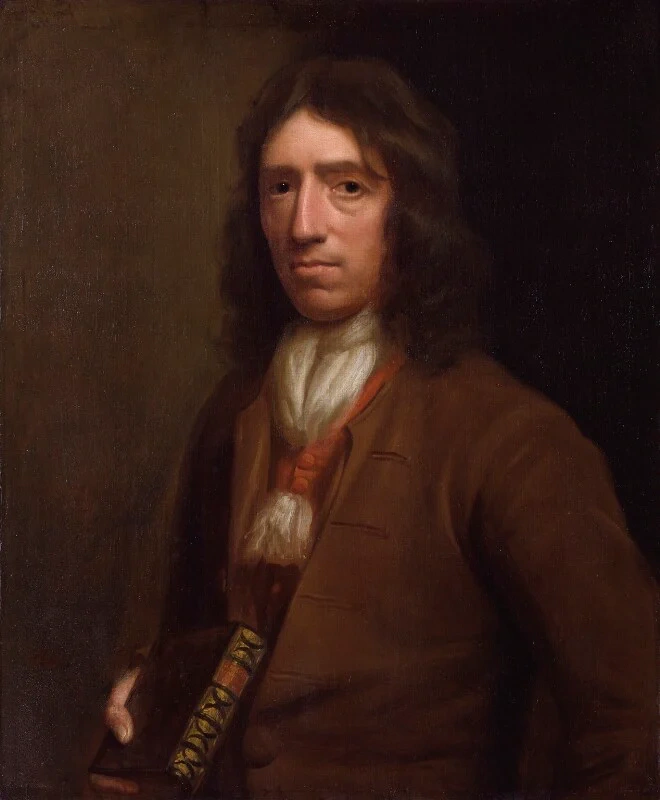
Attr: Thomas Murray
| 7 Quotes | |
| Occup. | Explorer |
| From | England |
| Born | 1651 AC East Coker, Somerset, England |
| Died | 1715 AC London, England |
| Cite | |
Citation Formats
APA Style (7th ed.)
William dampier biography, facts and quotes. (2026, March 17). FixQuotes. https://fixquotes.com/authors/william-dampier/
Chicago Style
"William Dampier biography, facts and quotes." FixQuotes. March 17, 2026. https://fixquotes.com/authors/william-dampier/.
MLA Style (9th ed.)
"William Dampier biography, facts and quotes." FixQuotes, 17 Mar. 2026, https://fixquotes.com/authors/william-dampier/. Accessed 28 Mar. 2026.
Early Life and Background
William Dampier was born in 1651 or 1652 at East Coker, Somerset, into the unsettled England of the Interregnum and Restoration. His father was a yeoman farmer, and Dampier's childhood combined rural discipline with proximity to the coastward world that was pulling English ambition outward. Orphaned young, he inherited modest property, but the inheritance did not anchor him. What marked him early was restlessness joined to sharp observation: he belonged to the first generation for whom the sea was not only a trade route or battlefield but a mobile frontier of profit, science, and self-making. England's growing empire, privateering culture, and maritime wars formed the background to his imagination.
As a youth he went to sea, served briefly on merchant and naval vessels, and spent time in Newfoundland, Java, and other distant waters before settling for a period in Jamaica. The Caribbean of the 1670s was a hard school: plantation wealth, Spanish imperial rivalry, slavery, disease, and the semi-legal violence of buccaneering all met there. Dampier moved within this world not simply as a marauder but as a practical seaman who learned winds, coasts, currents, provisioning, and the economics of predation. His life would remain morally mixed - explorer, natural observer, navigator, privateer, sometime captive of failure - but from the beginning his distinctive trait was that he watched as closely as he acted.
Education and Formative Influences
Dampier had no university education, yet he became one of the most literate and intellectually consequential seamen of his age. His real schooling came from ships, logbooks, charts, and the cosmopolitan ports of the Atlantic and Pacific worlds. He absorbed the empirical habits prized by the Royal Society's age: measure, compare, classify, record. During long cruises with buccaneer bands across the Spanish Main, through the Isthmus of Darien, down the Pacific coast of South America, and eventually across the ocean to Guam, Mindanao, and New Holland, he trained himself to notice everything - tides, anchorages, birds, breadfruit, indigenous customs, storms, shoals, and the practical behavior of crews under stress. This self-education made him unusual among freebooters. He could move in violent company while producing observations valued by mapmakers, natural philosophers, and statesmen.
Career, Major Works, and Turning Points
Dampier's career divides into three arcs: buccaneer voyager, published author, and embattled commander. Between 1679 and 1691 he circumnavigated the globe, much of it in the company of privateers, and visited regions then barely known to English readers, including the northwest coast of Australia, which he called New Holland. From journals kept in extreme conditions he fashioned A New Voyage Round the World (1697), a publishing success that made him famous. It was followed by Voyages and Descriptions (1699) and A Voyage to New Holland (1703, 1709), works remarkable for hydrography, ethnography, and natural history. Backed by Admiralty interest, he commanded HMS Roebuck to Australia in 1699, but the voyage ended in shipwreck at Ascension in 1701. Later he sailed again as privateer captain and then as pilot with Woodes Rogers's expedition, helping to rescue Alexander Selkirk in 1709 - an episode that later fed the imagination behind Robinson Crusoe. Yet his command reputation suffered from quarrels, accusations of cruelty and mismanagement, and a notorious court-martial after the Roebuck voyage. He died in London in 1715, celebrated as a writer and navigator but not securely rewarded by the state he had served.
Philosophy, Style, and Themes
Dampier's writing reveals a mind divided between appetite and discipline. He loved movement, gain, and the fellowship of dangerous enterprises, yet he persistently converted experience into ordered knowledge. His prose is plain, exact, and cumulative, built from bearings, depths, weather, labor, and comparison. “The 6th of August in the morning we saw an opening in the land and we ran into it, and anchored in 7 and a half fathom water, 2 miles from the shore, clean sand”. That sentence is more than seamanship; it shows his trust in observation as a way to master uncertainty. Even pleasure enters his pages through attention to climate and terrain: “I commonly went ashore every day, either upon business, or to recreate myself in the fields, which were very pleasant, and the more for a shower of rain now and then, that ushers in the wet season”. He is sensuous without ornament, curious without innocence.
Yet Dampier's empiricism sits beside the harsher assumptions of empire. He looked closely at peoples Europeans scarcely knew, and his accounts are often less fantastical than many contemporaries', but they are still framed by the asymmetry of armed arrival. His description of encounter in New Holland - “While we were at work there came nine or 10 of the natives to a small hill a little way from us, and stood there menacing and threatening of us, and making a great noise. At last one of them came towards us, and the rest followed at a distance”. - captures both his alertness and his inability to escape the colonial grammar of suspicion. Another line exposes the private wound beneath his public career: “The world is apt to judge of everything by the success; and whoever has ill fortune will hardly be allowed a good name”. That is nearly a self-portrait. Dampier knew that in an age of patronage and maritime risk, failure could erase skill, and this sharpened the defensive, scrupulous quality of his narrative voice.
Legacy and Influence
Dampier's legacy is larger than his rank. He helped bring the Pacific, the East Indies, and Australia into English prose with unprecedented concreteness, and later navigators - including James Cook - used his observations. Natural historians valued his descriptions of plants, animals, and trade winds; literary writers borrowed his stores of incident, tone, and setting. Jonathan Swift and Daniel Defoe read him, and the Selkirk episode linked him permanently to the rise of the modern adventure novel. He also stands as a revealing figure in the history of knowledge: a buccaneer who became an authority, a man of violence whose notebooks enriched geography, ethnography, and natural history. His life does not resolve into heroism. Rather, it shows how exploration in the early modern world was made from greed, endurance, precision, and words - and how a self-taught mariner could turn perilous wandering into literature that outlived empire's immediate victories.
Our collection contains 7 quotes written by William, under the main topics: Nature - Success - Ocean & Sea - Adventure - Travel.
Frequently Asked Questions
- William Dampier 1699: In 1699 William Dampier set sail on HMS Roebuck on a voyage of exploration for the British Admiralty, during which he explored parts of the coast of Australia and New Guinea.
- William Dampier guacamole: William Dampier wrote an early English description of guacamole, describing a sauce made from avocados that he encountered in Central America.
- William Dampier pirate: William Dampier was an explorer and privateer who sometimes sailed with buccaneers, blurring the line with piracy but mainly remembered today for his scientific and geographic discoveries.
- William Dampier Manga: There is no famous manga specifically about William Dampier; most information about him comes from historical biographies and his own travel writings.
- William Dampier words: William Dampier introduced or popularized many words in English, including “barbecue,” “avocado,” and “subspecies,” through his careful descriptions of new foods, animals, and landscapes.
- William Dampier journal: William Dampier kept detailed journals of his voyages, recording navigation, natural history, weather, and local cultures, which later formed the basis of his published travel narratives.
- William Dampier book: William Dampier’s best‑known book is “A New Voyage Round the World,” published in 1697 and widely read for its detailed travel observations.
Source / external links