
William Dean Howells Biography Quotes 21 Report mistakes
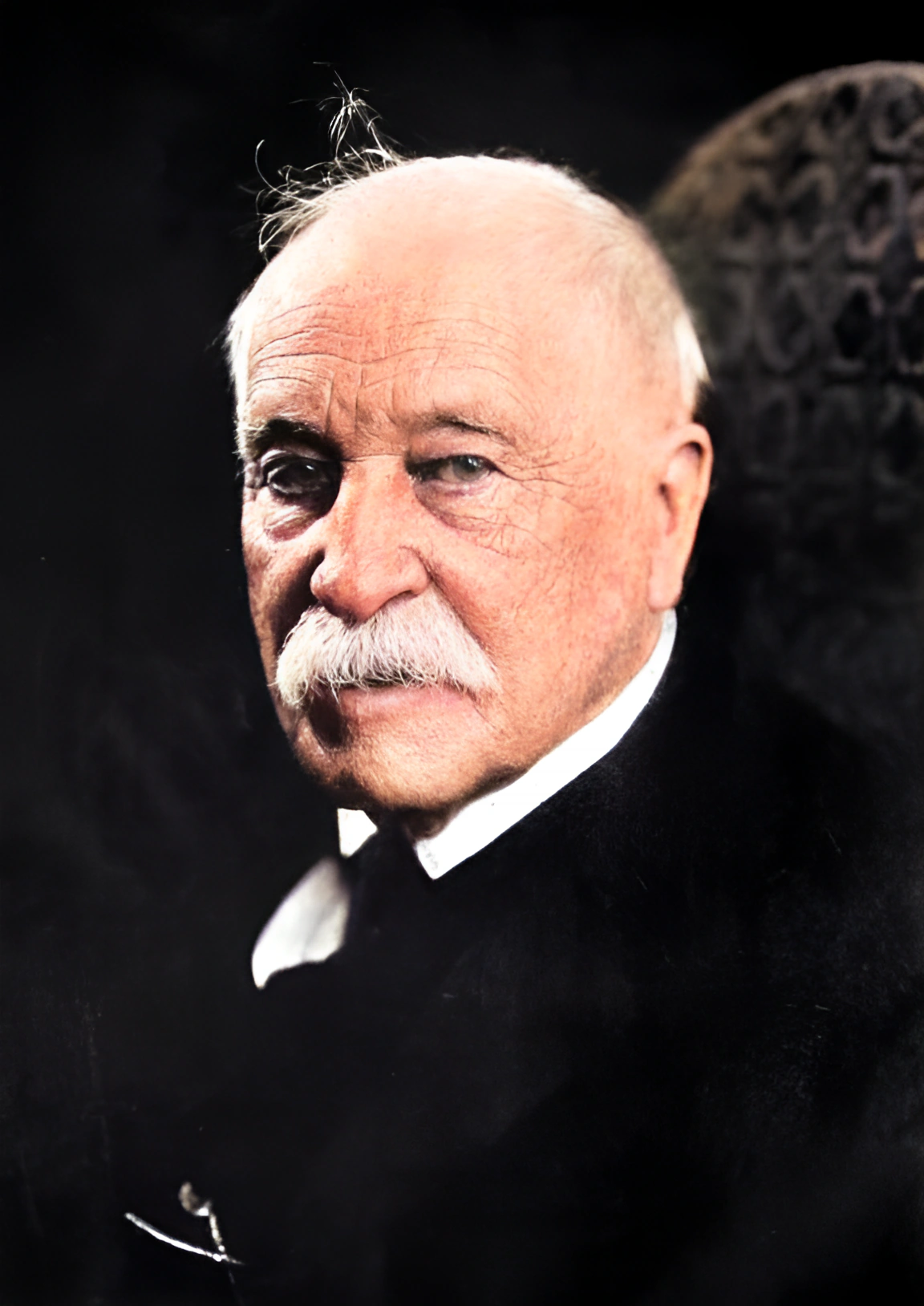
Attr: Underwood & Underwood
| 21 Quotes | |
| Occup. | Author |
| From | USA |
| Spouse | Elinor Mead Howells (1862-1920) |
| Born | March 1, 1837 Martins Ferry, Ohio, USA |
| Died | May 11, 1920 New York City, New York, USA |
| Cause | Natural Causes |
| Aged | 83 years |
| Cite | |
Citation Formats
APA Style (7th ed.)
William dean howells biography, facts and quotes. (2026, February 11). FixQuotes. https://fixquotes.com/authors/william-dean-howells/
Chicago Style
"William Dean Howells biography, facts and quotes." FixQuotes. February 11, 2026. https://fixquotes.com/authors/william-dean-howells/.
MLA Style (9th ed.)
"William Dean Howells biography, facts and quotes." FixQuotes, 11 Feb. 2026, https://fixquotes.com/authors/william-dean-howells/. Accessed 7 Apr. 2026.
Early Life and Background
William Dean Howells was born March 1, 1837, in Martins Ferry, Ohio, and grew up along the Ohio River in a household where print was both livelihood and moral education. His father, William Cooper Howells, was a restless, principled newspaper man who moved the family through a string of river and canal towns - Hamilton, Dayton, and others - chasing editorships, political causes, and solvency. The result for the son was a boyhood tuned to the cadence of public argument: presses, pamphlets, sermons, stump speeches, and the daily drama of American democracy as it was actually lived in small places.
Illness and limited formal schooling pushed Howells toward self-reliance early. Partly through eyesight problems and partly through the simple economics of a large family, he learned to set type and to read voraciously, taking literature as apprenticeship rather than ornament. The antebellum Midwest gave him a double vision that never left him: faith in American possibility paired with an intimate knowledge of its compromises - class anxiety, boosterism, and the quiet humiliations of money.
Education and Formative Influences
Howells was largely self-taught, shaped by the discipline of the print shop and by the cosmopolitan reach of books. Early translations and reviews honed a plain, exact style, and his discovery of European realism - especially Italian culture, which he later absorbed firsthand - gave him an alternative to melodrama and romantic posturing. A Lincoln campaign biography he wrote in 1860 helped draw national notice and reflected his early Republican idealism, but his real education came from learning how public language can flatter a nation and how private observation can correct it.
Career, Major Works, and Turning Points
Appointed U.S. consul in Venice in 1861, Howells used the post to transform experience into art, most memorably in "Venetian Life" (1866), a book that taught American readers to value the observed detail over the staged effect. Returning to the United States, he became a central arbiter of taste as editor and then editor-in-chief at The Atlantic Monthly (1871-1881), championing Henry James, Mark Twain, and a new seriousness in American prose. His own novels traced the moral weather of a modernizing nation: "A Modern Instance" (1882) treated divorce with unprecedented realism; "The Rise of Silas Lapham" (1885) anatomized wealth, self-making, and conscience in Boston; "A Hazard of New Fortunes" (1890) confronted labor conflict and urban inequality in New York. A late-life intensification of social concern followed personal grief, including the death of his daughter Winifred (1889), and the violence of the Haymarket aftermath sharpened his skepticism toward state power and his sympathy for the vulnerable.
Philosophy, Style, and Themes
Howells became the era's most consistent theorist-practitioner of American realism, insisting that moral meaning arises from ordinary pressures rather than exceptional plots. His characters are tested less by villains than by the slow grind of choice under social constraint: marriage that curdles, ambition that compromises, money that recasts identity. He distrusted spectacle because he believed experience arrives in fragments, not crescendos; “We are creatures of the moment; we live from one little space to another, and only one interest at a time fills these”. That sentence is not just a maxim but a method: scenes built from attention, from the mind's narrow beam, creating an ethical intimacy that grander storytelling can evade.
His realism also carried a democratic critique of entertainment and power. With a satirist's ear for national self-deception, he noted that “What the American public wants in the theater is a tragedy with a happy ending”. The line exposes an anxiety at the core of his art: a culture that demands consolation will pressure writers to lie, and will pressure citizens to accept comforting myths about class and virtue. Against that, Howells turned to the quiet authority of conscience and incremental kindness - “It is the still, small voice that the soul heeds, not the deafening blasts of doom”. In his best work, ethical action is rarely heroic; it is the decision not to cheat, not to sneer, not to abandon someone when social advantage beckons.
Legacy and Influence
Howells died in New York on May 11, 1920, having helped define what serious American fiction could be after the Civil War: attentive to the commonplace, alert to social forces, and morally inquisitive without sermonizing. As editor, critic, and novelist, he legitimized realism as a national style and made space for writers who extended or contested his program, from James and Twain to later naturalists and modern social novelists. His influence persists less as a set of rules than as a stance - the belief that truth in art begins with accurate seeing, and that the small decisions of ordinary lives are where a democracy reveals its character.
Our collection contains 21 quotes written by William, under the main topics: Witty One-Liners - Ethics & Morality - Wisdom - Art - Mortality.
Other people related to William: Edmund C. Stedman (Poet), Charles W. Chesnutt (Novelist), George Washington Cable (Novelist)
William Dean Howells Famous Works
- 1890 A Hazard of New Fortunes (Novel)
- 1888 Annie Kilburn (Novel)
- 1886 The Minister's Charge (Novel)
- 1886 Indian Summer (Novel)
- 1885 The Rise of Silas Lapham (Novel)
Source / external links