
William E. Gladstone Biography Quotes 20 Report mistakes
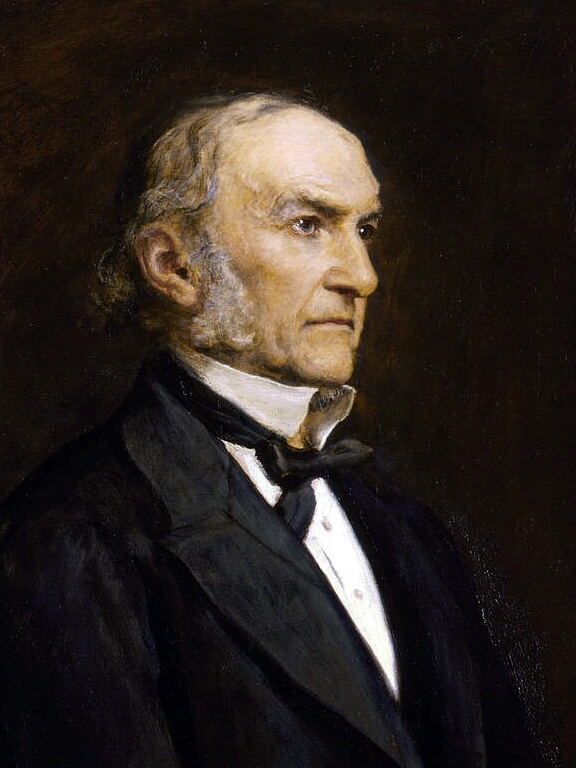
| 20 Quotes | |
| Born as | William Ewart Gladstone |
| Known as | W. E. Gladstone; William Gladstone |
| Occup. | Leader |
| From | United Kingdom |
| Born | December 29, 1809 Liverpool, England |
| Died | May 19, 1898 Hawarden Castle, Flintshire, Wales |
| Aged | 88 years |
| Cite | |
Citation Formats
APA Style (7th ed.)
William e. gladstone biography, facts and quotes. (2026, February 11). FixQuotes. https://fixquotes.com/authors/william-e-gladstone/
Chicago Style
"William E. Gladstone biography, facts and quotes." FixQuotes. February 11, 2026. https://fixquotes.com/authors/william-e-gladstone/.
MLA Style (9th ed.)
"William E. Gladstone biography, facts and quotes." FixQuotes, 11 Feb. 2026, https://fixquotes.com/authors/william-e-gladstone/. Accessed 26 Mar. 2026.
Early Life and Background
William Ewart Gladstone was born on 1809-12-29 in Liverpool, a port city fattened by Atlantic commerce and sharpened by the moral controversies that commerce carried. His father, Sir John Gladstone, was a wealthy merchant and politician with West Indian plantation interests; the household was prosperous, disciplined, and steeped in the obligations and anxieties of property. That origin mattered: Gladstone would spend his life arguing about the ethical limits of power while benefiting from systems that placed power in a few hands.In temperament he was intense, self-auditing, and driven by conscience as much as by ambition. Early observers noted his quickness to feel and his equal quickness to master feeling through study and duty. England in his youth was undergoing reform shocks - Catholic emancipation, the 1832 Reform Act, and the pressure of industrial poverty - and Gladstone grew up in a nation learning that stability required change, and that change without moral ballast could turn revolutionary.
Education and Formative Influences
Gladstone was educated at Eton and Christ Church, Oxford, where he became a celebrated speaker and a rigorous student of classics and theology. The Oxford of the 1820s shaped his cast of mind: high-church Anglican seriousness, reverence for institutions, and a belief that public life was a moral vocation. Early reading in Aristotle and the Bible, and later the influence of the Oxford Movement, fed his conviction that policy must answer to conscience, not merely interest - a conviction that would evolve from Tory paternalism into Liberal reform without losing its religious intensity.Career, Major Works, and Turning Points
Elected to Parliament in 1832 for Newark as a Conservative, Gladstone entered politics as a defender of establishment order, serving under Sir Robert Peel and becoming President of the Board of Trade (1843-1845), where he helped steer the practical liberalization associated with Peel. He moved with Peel on free trade and the repeal of the Corn Laws (1846), a rupture that began his long migration toward Liberalism. As Chancellor of the Exchequer (1852, 1859-1866) he became the era's master of budgets, treating finance as moral pedagogy - reducing tariffs, widening the tax base, and demanding administrative economy. He led the Liberal Party and served four times as Prime Minister (1868-1874, 1880-1885, 1886, 1892-1894): disestablishing the Church of Ireland (1869), passing major Irish land legislation, advancing civil service reform and education, and wrestling with empire, war, and the franchise. The great turning point was Ireland. His conversion to Irish Home Rule made him both heroic and divisive, splitting the Liberals in 1886; yet he returned again in the 1890s, old and stubborn, to press the cause, retiring in 1894 and dying on 1898-05-19 at Hawarden Castle in Wales.Philosophy, Style, and Themes
Gladstone's inner life was a workshop of conscience: he treated the self as something to be governed, corrected, and offered up to duty. His political imagination was moral before it was strategic, which made him capable of both soaring persuasion and severe self-justification. He insisted that public acts had to be answerable to ethical law, not merely parliamentary arithmetic: “Nothing that is morally wrong can be politically right”. This was not a slogan for him but a discipline that often increased the cost of leadership, because it drove him to confront inconvenient implications - about coercion in Ireland, about the uses of military force, about the temptations of class rule.His style fused legal exactitude with evangelical urgency. He could overwhelm the House of Commons with detail, then pivot to prophetic appeal, as if budgets and sermons belonged to the same genre. He distrusted reflex passion in himself and others, warning that “Men are apt to mistake the strength of their feeling for the strength of their argument. The heated mind resents the chill touch and relentless scrutiny of logic”. Yet he also believed history had a moral direction and that statesmanship meant aligning with it rather than barricading against it: “You cannot fight against the future. Time is on our side”. The theme running through his speeches and measures is a paradox - reform as conservation of a deeper order: widen political participation, cleanse administration, restrain imperial swagger, and treat the governed as moral agents. Even his failures show the same psychology: an inability to abandon a righteous cause once conscience had baptized it.
Legacy and Influence
Gladstone endures as the emblematic Victorian Liberal - a premier who made political economy sound like ethics and made ethics contend with facts. He helped define modern British governance through professional administration, fiscal transparency, and the idea that government should justify itself to an enlarged public. His Irish policy remains contested: his Home Rule crusade exposed the limits of Westminster unionism but also hardened sectarian fears; nonetheless it set the terms of debate for decades. More broadly, his career demonstrates how a democratic age can still be led by a man formed in patrician institutions, provided he is willing to be changed by argument, crisis, and the long pressure of public conscience.Our collection contains 20 quotes written by William, under the main topics: Witty One-Liners - Ethics & Morality - Wisdom - Justice - Friendship.
Other people related to William: Benjamin Disraeli (Statesman), John Morley (Statesman), John Acton (Historian), Auberon Herbert (Philosopher), Archibald Primrose (Politician), John Tenniel (Artist), John Stuart Blackie (Writer), Joseph Chamberlain (Politician), C. P. Scott (Journalist), Charles Bradlaugh (Activist)
William E. Gladstone Famous Works
- 1876 The Bulgarian Horrors and the Question of the East (Essay)
- 1874 The Vatican Decrees in their Bearing on Civil Allegiance (Essay)
- 1858 Studies on Homer and the Homeric Age (Non-fiction)