
William Ellery Channing Biography Quotes 33 Report mistakes
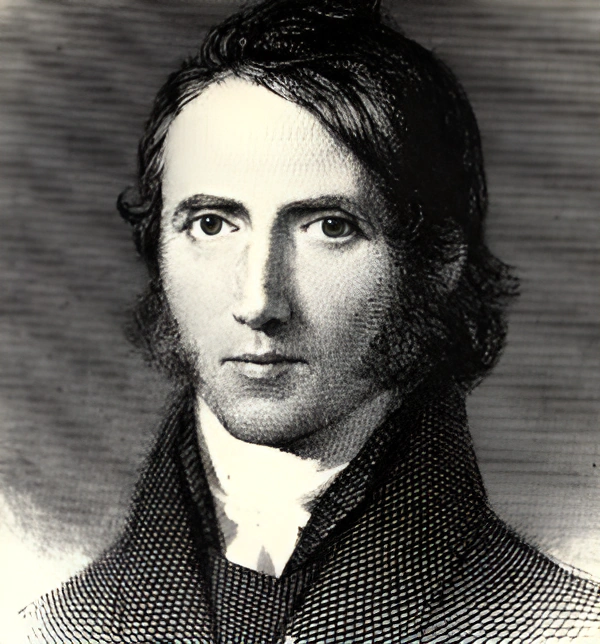
| 33 Quotes | |
| Occup. | Writer |
| From | USA |
| Born | April 7, 1780 |
| Died | October 2, 1842 |
| Aged | 62 years |
| Cite | |
Citation Formats
APA Style (7th ed.)
William ellery channing biography, facts and quotes. (2026, February 11). FixQuotes. https://fixquotes.com/authors/william-ellery-channing/
Chicago Style
"William Ellery Channing biography, facts and quotes." FixQuotes. February 11, 2026. https://fixquotes.com/authors/william-ellery-channing/.
MLA Style (9th ed.)
"William Ellery Channing biography, facts and quotes." FixQuotes, 11 Feb. 2026, https://fixquotes.com/authors/william-ellery-channing/. Accessed 12 Feb. 2026.
Early Life and Background
William Ellery Channing was born on April 7, 1780, in Newport, Rhode Island, into a seaport world being remade by revolution, embargo, and the long aftershocks of war. Newport had been occupied during the American Revolution, and its commercial decline shaped the atmosphere of his childhood - a community proud of its past, anxious about its future, and newly attentive to the moral meaning of the republic it had helped create. Channing grew up amid a prominent New England family network that valued public service and conscience; the very name "William Ellery" linked him to Revolutionary patriotism and to the expectation that a life should answer to principle.His temperament, reported by contemporaries as intense, scrupulous, and inwardly driven, formed early. Fragile health and a sensitive nervous energy pushed him toward reflection, while the social world of coastal New England trained him in restraint and verbal precision. The young Channing absorbed the rhythms of Protestant piety, yet he was already restless with inherited formulas. He would carry into adulthood a persistent tension between reverence and critique - a desire to honor tradition without surrendering the sovereignty of the mind.
Education and Formative Influences
Channing entered Harvard College and graduated in 1798, during the anxious years of the early republic when Federalists and Republicans battled over the nation's soul and when Enlightenment rationalism pressed against inherited Calvinist doctrine. Harvard exposed him to moral philosophy, classical rhetoric, and the broadening currents of liberal Christianity; just as decisively, the college environment honed his lifelong belief that ideas shape character. After graduation he spent time as a tutor in Richmond, Virginia, where he encountered slavery more directly than in New England - an experience that did not instantly make him an abolitionist but seeded a moral unease that later matured into public witness.Career, Major Works, and Turning Points
Ordained in 1803, Channing became pastor of Boston's Federal Street Church, a pulpit he held for decades while New England religion fractured and realigned. He emerged as the most recognizable voice of Unitarian Christianity, not by founding a party so much as by giving a vocabulary to a sensibility already forming among Boston clergy and lay elites. His 1819 sermon "Unitarian Christianity", preached at the Baltimore ordination of Jared Sparks, became a turning point - a calm but forceful declaration against Trinitarian orthodoxy and inherited depravity, and for the moral dignity of the person. Later writings such as "Likeness to God" (1828) and "Self-Culture" (1838) extended his influence beyond theology into ethics, education, and civic life, while his anti-slavery addresses in the 1830s - notably "Slavery" (1835) - positioned him as a moderate reformer whose moral clarity sometimes outpaced his political caution. He died on October 2, 1842, while traveling in Vermont, leaving behind a body of sermons and essays that circulated widely on both sides of the Atlantic.Philosophy, Style, and Themes
Channing's inner life revolved around a disciplined hope: the conviction that human beings are not fixed in corruption but capable of ascent through conscience, reason, and spiritual aspiration. He framed Christianity less as a system of metaphysical propositions than as a moral awakening, and he wrote to persuade the reader's better self. His prose is deliberately plain, built on steady cadence rather than ornament, because he distrusted rhetorical intoxication; he wanted the mind free, not captured. That temperamental seriousness also made him attentive to struggle as a necessary engine of growth: "Difficulties are meant to rouse, not discourage. The human spirit is to grow strong by conflict". The sentence reads like self-instruction as much as public counsel, revealing a man who managed doubt and frailty by translating them into moral work.Two complementary themes run through his writing - education as liberation and aspiration as the soul's native motion. Channing argued that ignorance deforms not only intellect but character, insisting, "Every mind was made for growth, for knowledge, and its nature is sinned against when it is doomed to ignorance". This faith in improvability underwrote his interest in schools, reading, and civic culture, and it also explains his cautious radicalism: he wanted reform that strengthened persons, not movements that dissolved responsibility. Yet he never reduced life to mere self-help; he saw yearning as evidence of the divine within the human. "The reveries of youth, in which so much energy is wasted, are the yearnings of a Spirit made for what it has not found but must forever seek as an Ideal". In that line sits his signature psychology - a gentle revaluation of restlessness as vocation, and a theology of desire that helped make liberal religion emotionally credible.
Legacy and Influence
Channing's influence endured less through institutional control than through a style of moral argument that fit the American republic's self-image: rational, earnest, improvement-minded, and suspicious of coercive dogma. He helped define Unitarianism as a public intellectual force in Boston and beyond, shaping sermons, lecture culture, and the rhetoric of reform. His stress on human dignity fed later currents in abolitionism, educational reform, and the broader liberal Protestant tradition, while his insistence that faith be compatible with moral reason anticipated the nineteenth century's struggles between inherited authority and modern conscience. In American letters, he stands as a writer whose sermons functioned as essays of character - mapping the interior life onto public duty, and making spiritual aspiration a language for democratic self-respect.Our collection contains 33 quotes written by William, under the main topics: Motivational - Wisdom - Truth - Writing - Meaning of Life.
Other people related to William: George Ripley (Activist)
William Ellery Channing Famous Works
- 1841 The Works of William E. Channing, D.D. (Essay Collection/Text)
- 1838 Self-Culture (Essay/Text)
- 1828 Remarks on Associations (Tract/Text)
- 1820 Moral Argument Against Calvinism (Essay/Text)
- 1816 A Sermon on War (Sermon/Text)
Source / external links